Replacement & Installation
Replacing wood shake roofs in San Jose with Class A roofing
Shake roofs look great and age badly, and in fire zones they no longer meet code. Replacing one is more than a re-roof: the spaced boards underneath usually have to become a solid deck first.
What we treat
- Concrete and clay tile
- Composition shingle
- Flat, torch-down and TPO
- Spray foam
- Standing seam metal
Quick answer. Wood shake roof replacement in San Jose removes the shakes and the spaced boards beneath them, installs new plywood decking, and puts on a Class A roof assembly: architectural shingle, synthetic shake or stone-coated steel. A typical single-family replacement takes four to seven working days once the permit issues.
Updated September 2026
The job
Why shake roofs are being replaced
Cedar shake lasts decades when it is maintained, but it dries, splits and curls in the sun, and moss and rot take over on shaded slopes. More importantly, untreated shake is not Class A fire-rated, and many insurers now want Class A before they will issue or renew a policy.
Most shake roofs sit on spaced boards with gaps between them so the wood can breathe. Modern Class A roofs need a solid deck, which is why decking is part of every shake replacement scope.
Your options
What should replace the shake?
All three can be Class A; look and budget usually decide.
| Question | Architectural shingle | Synthetic shake | Stone-coated steel |
|---|---|---|---|
| Look | Wood-tone blends | Closest to real shake | Shake profile, textured |
| Weight | Light | Light | Lightest |
| Class A | As an assembly | Product or assembly | Yes |
| Relative cost | Lowest | Higher | Higher |
Jobs this page covers
Shake tear-off and new solid decking
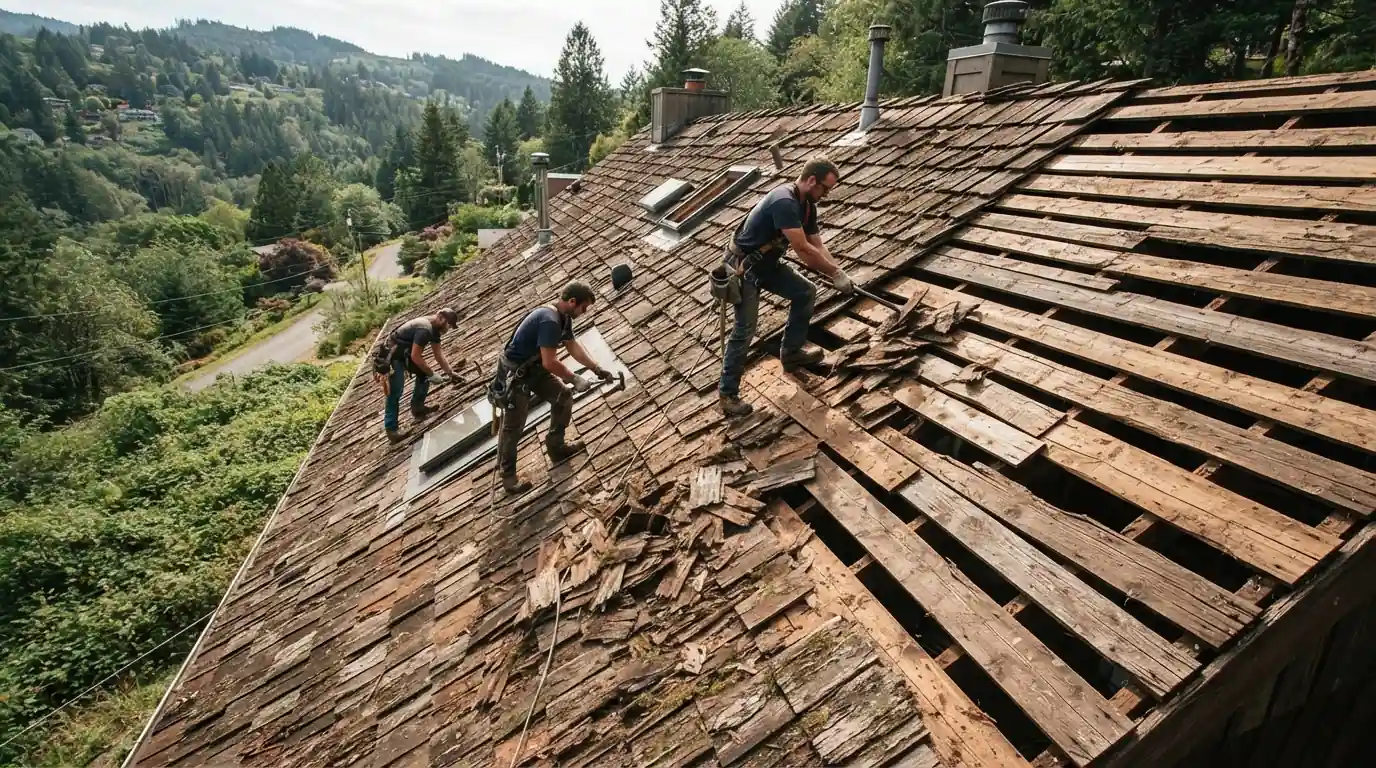
Shake tear-off is heavy, dusty work, and the debris has to be handled carefully around landscaping. Once the shakes and old felt interlayers are off, the spaced boards underneath are either covered with new plywood or removed and replaced, depending on their condition and the framing. The result is a flat, solid deck that any Class A system can go on. Rotted rafter tails and fascia found at the eaves are replaced before the new roof starts. Tarps protect beds and walkways below throughout.
Class A shingle over new decking
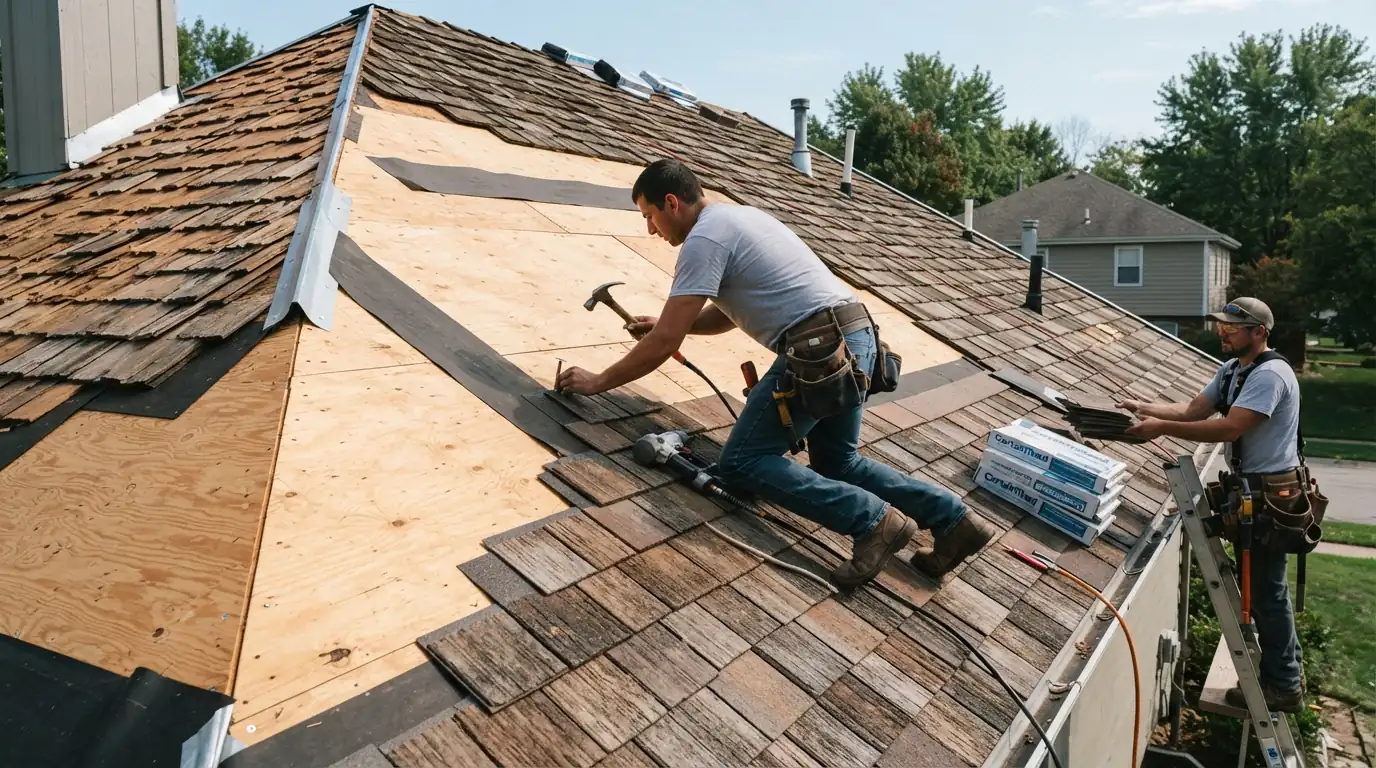
Architectural shingles in weathered wood and brown blends are the most economical replacement and reach Class A over the right underlayment. They keep the warm look many shake houses were built around, weigh far less than tile, and are simple to repair. We pair them with ember-resistant vents and new metal flashing at every wall and chimney, since those details matter as much as the covering in a fire zone. Ridge caps and starter strips come from the same system, which keeps the fire rating and the warranty intact.
Synthetic shake and stone-coated steel
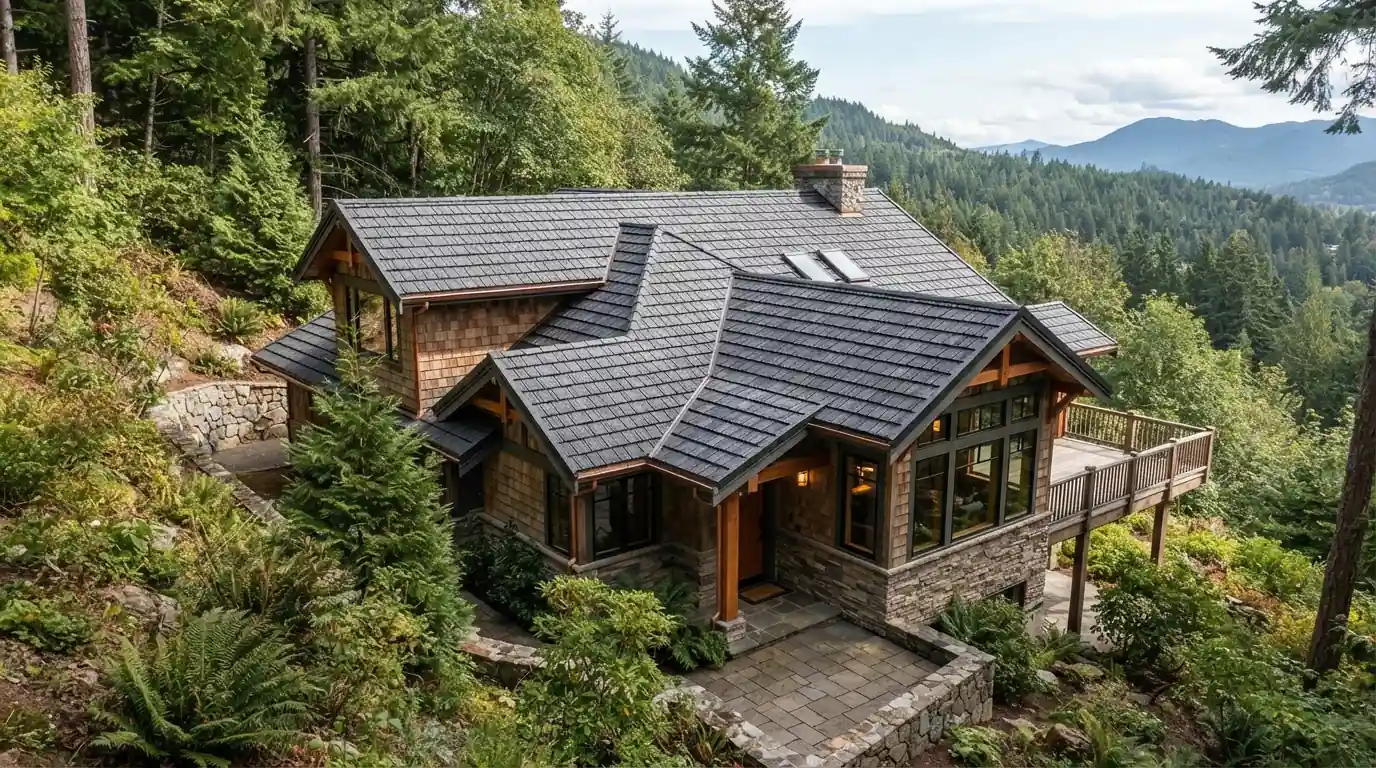
For owners who want the look of shake without the fire risk, synthetic shake made from composite materials and stone-coated steel in a shake profile are the two main options. Some synthetic products carry a Class A rating on their own; others reach it as part of an assembly. Stone-coated steel is light, Class A and walks well. We show you samples on the roof so the texture can be judged in real light. Color is chosen from a sample board held against the siding, not from a brochure.
Shake repairs and when they stop making sense
Replacing a few split shakes on a sound roof is still possible, and we do it. But once shakes are cupped and splitting across whole slopes, the felt interlayers have failed, or the house sits in a mapped fire zone where a re-roof must be Class A, repairs only buy time and each one has to be redone. At that point we price the replacement alongside the repair so the choice is clear. Insurers asking for Class A coverage often decide the timing for you.
Cost
What a shake replacement costs depends on
Shake jobs are priced after we see the decking; the spaced boards are the biggest variable.
- Tear-off Shake is heavier and messier to remove than shingle.
- Decking Plywood over or in place of spaced boards.
- New roof system Shingle, synthetic shake or stone-coated steel.
- Roof shape and pitch Steep hillside roofs need more setup.
- Vents and flashing Ember-resistant vents and new metal throughout.
- Disposal Shake debris volume adds haul-away cost.
What we see on San Jose roofs
Shake replacement comes up most in the hills along the west side of the valley, where many older houses still carry cedar. California's 2025 wildland-urban interface code, in effect this year, prohibits traditional wood shakes and requires Class A roofing in high fire hazard zones. Los Gatos has required Class A coverings in its hazardous fire areas for years, applying the rule once a re-roof passes 10 percent of the roof, so shake-to-Class A conversions there are routine rather than optional.
What happens after you call
How a shake replacement runs
- 1
Inspect
Roof, attic and the spaced boards from below.
- 2
Choose the system
Shingle, synthetic shake or metal, with samples.
- 3
Permit
Filed with the Class A assembly specified.
- 4
Tear-off and deck
Shakes removed, solid plywood deck installed.
- 5
Install
Underlayment, flashing, vents and the new covering.
- 6
Final
Inspection, cleanup and paperwork for your insurer.
Timeline
How long a shake replacement takes
Four to seven working days for a typical house, longer than a shingle re-roof because of the heavier tear-off and the new decking. The roof is dried in each night so it is never left open to the weather between days.
Brands we install and service
FAQ
Questions we get asked
In mapped high fire hazard zones, traditional shakes are no longer allowed. Elsewhere, fire-treated options exist, but most owners choose a Class A alternative.
Shake sits on spaced boards; modern Class A systems need a solid deck.
Ask your insurer; many require or favor Class A roofing.
Synthetic shake is closest; stone-coated steel in a shake profile is next.
Yes, when 25 percent or more of the roof is replaced. We file it.
Same category
Related roofing work
Roof Replacement
Composition shingle re-roofs with Class A and cool-roof options, permitted and inspected.
Learn moreTile Roof Replacement
Concrete and clay tile re-roofs, including lift-and-relay with new underlayment.
Learn moreFlat Roof Replacement
TPO, PVC and torch-down systems with tapered drainage for low-slope roofs.
Learn moreMetal Roof Installation
Standing seam and stone-coated steel, including over existing shingles.
Learn morePlan the move off shake
We check the decking and your fire zone, bring samples, and price the Class A options side by side.