Emergency & Storm
Emergency roof repair in San Jose, any hour
Water through a ceiling at midnight does not wait for business hours. Tell us what you see and we will say whether it is a tarp tonight or a roofer at first light.

What we treat
- Concrete and clay tile
- Composition shingle
- Flat, torch-down and TPO
- Spray foam
- Standing seam metal
Quick answer. Emergency roof repair in San Jose means stopping the water first: a secured tarp or a temporary patch the same day, then a permanent repair once the roof is dry enough to work on safely. Calls are answered 24 hours a day; overnight callers get a plan on the phone and a crew at first light.
Updated September 2026
The job
What counts as an emergency and what we do about it
An emergency is water reaching the inside of the house, a roof section opened by wind or a fallen limb, or a tarp from the last storm that has let go. Those calls go to the front of the day; an old stain is a leak repair and gets scheduled instead.
The first visit is about control, not diagnosis. We trace the entry point from inside and out, clear the immediate cause where it is safe to reach, and patch it or cover it with a tarp battened to the framing.
What happens after you call
From the call to the last tarp coming down
- 1
Triage on the phone
Where the water is, whether it is dripping now, what the roof is made of.
- 2
Inside first
We start at the stain or in the attic and trace the water uphill to the entry point.
- 3
Stop the water
A patch where the fix is small and dry enough, a battened tarp where it is not.
- 4
Photograph and write it up
Every problem area is photographed and the cause written down for you and your insurer.
- 5
Permanent repair
Once the deck is dry we open the area, replace what is wet, and rebuild the covering to match.
- 6
Walk the rest
One storm usually loosens more than one spot, so the visit ends with a roof walk.
Warning signs
Signs the roof needs someone tonight, not next week
- Dripping or running water indoors
Moving water is active entry, not an old stain.
- A ceiling that is bulging
Sagging drywall is holding water; drain it with a small hole and set a bucket.
- Daylight through the roof
A visible hole, a missing tile row or bare underlayment after wind.
- Debris on the roof
A limb, a fence panel or a blown-off vent cap sitting on the covering.
- A tarp that has let go
Flapping or ballooning means the anchors failed and the opening is exposed again.
- Water at a light fixture
A drip through a light or fan is a shut-the-breaker situation first.
Jobs this page covers
Active leak during a storm
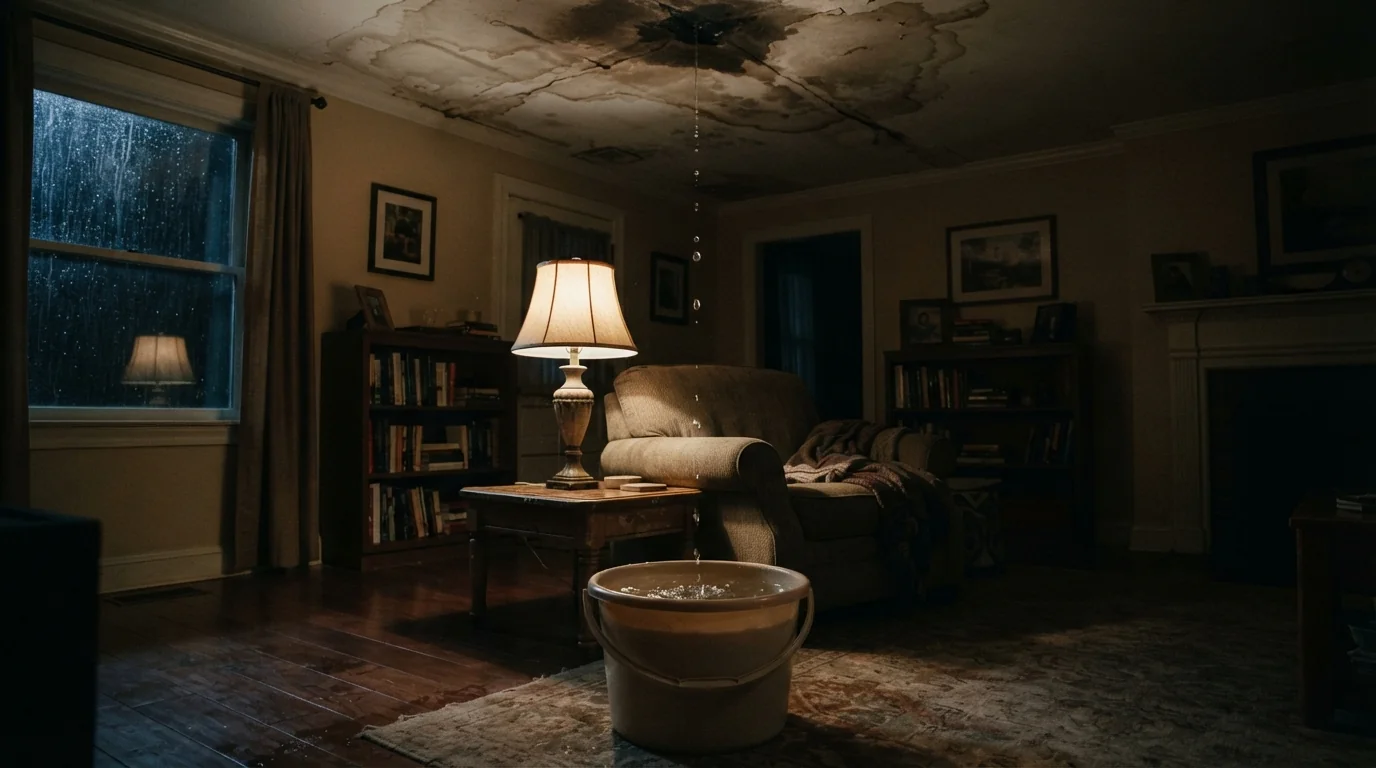
The leak you can see is rarely under the stain. Water runs along rafters and the underside of the deck before it drops, so the entry point can be six feet uphill. On the first visit we trace it from the attic, mark it, and stop it from outside with a patch or a tarp. Once the storm passes we open the area, replace wet underlayment, and reset or replace the covering. Setting a bucket and moving furniture is the right first move; going onto a wet roof is the wrong one.
Wind-lifted shingles or tiles
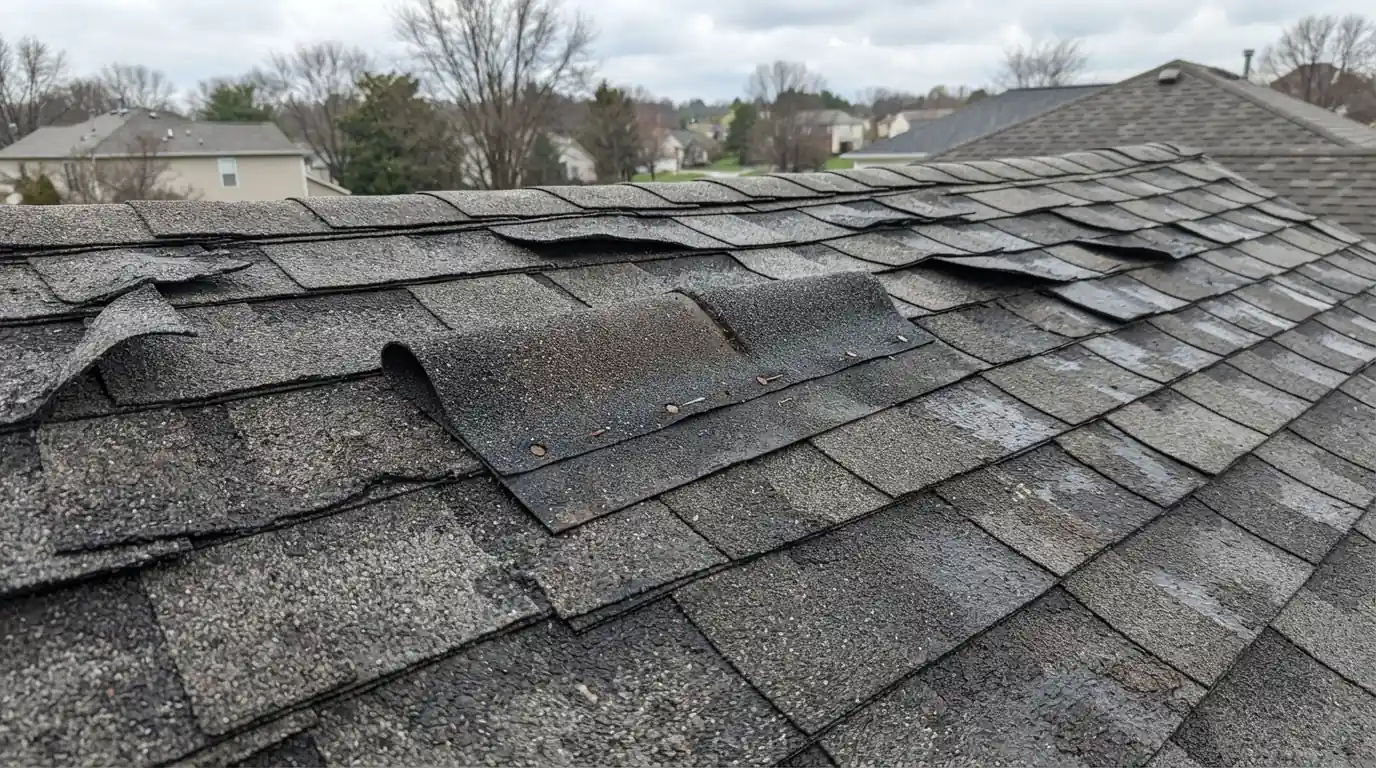
Gusts get under the exposed edge of a shingle or lift a tile out of its lugs, and the next rain runs straight onto the underlayment. Lifted shingles that have not creased are resealed and renailed; creased or torn ones are replaced. Displaced tiles are reset and broken ones swapped for matches from stock. We check the course above as well, because a lifted row usually loosened its neighbors. Caught before the underlayment starts to leak, the repair stays a small one.
Tree or debris impact
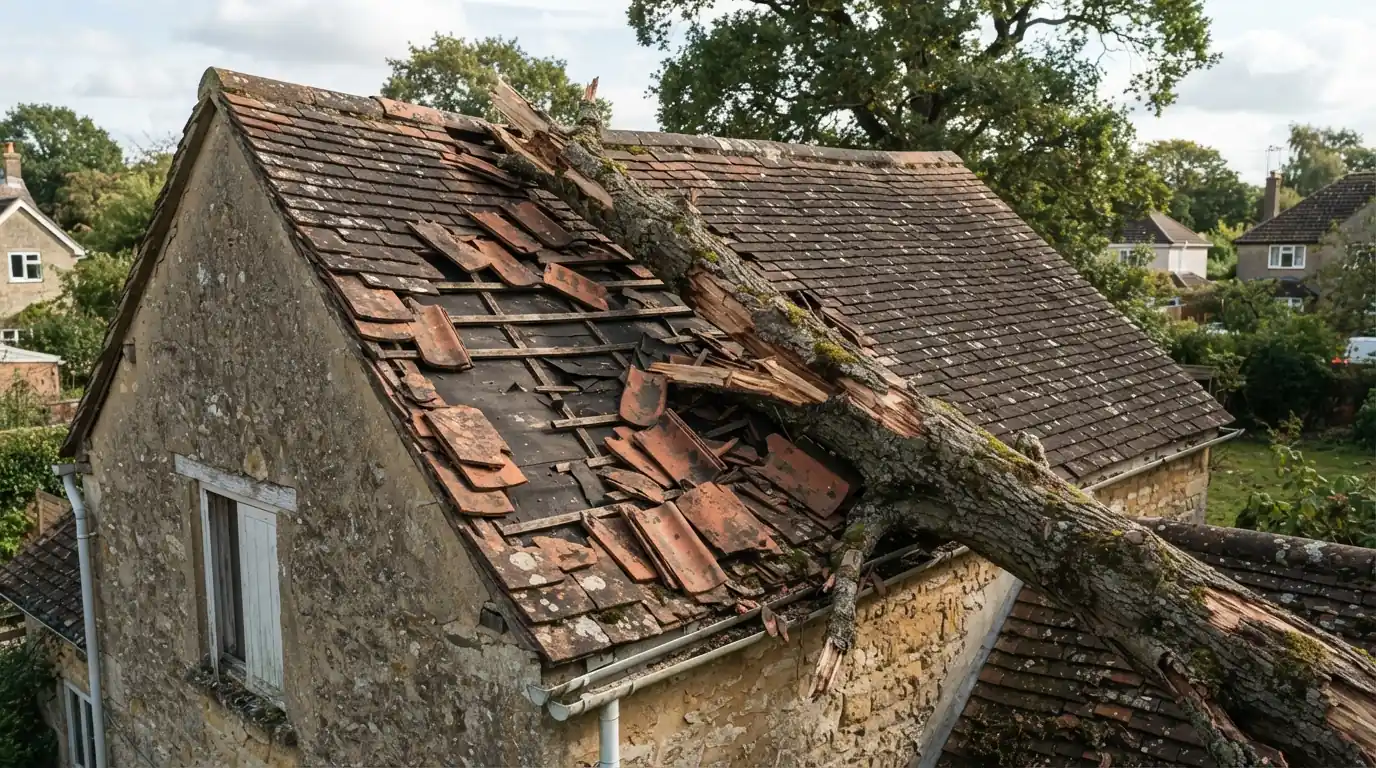
A limb through the roof needs the debris removed, the hole tarped and the framing checked before anything else. Punctured decking and cracked rafters are structural, so we shore what needs shoring and photograph everything for your claim. The permanent repair replaces the decking, underlayment and covering over the damaged area and blends it into the field. If the impact landed in a valley or on a hip, the repair grows so the water path stays continuous from ridge to eave.
What we see on San Jose roofs
Emergency calls in San Jose bunch into the wet season, when about 82 percent of the year's rain falls between November and March, arriving as atmospheric rivers stacked back to back rather than steady drizzle. That is why a temporary fix has to hold for weeks, not days: the next system can land before the deck has dried enough for the permanent repair, and a small opening in December is a soaked ceiling by February.
Leaking right now in San Jose? The phone is answered at any hour.
(669) 259-7490Cost
What moves the price of an emergency repair
Two visits are normal: the control visit, then the permanent repair priced once the roof is dry and open.
- Time of the call Overnight and holiday dispatch costs more than a first-light response.
- Tarp size and anchoring A battened tarp over a valley or hip costs more than a patch on one slope.
- Material to match Tile and torch-down need matching stock; shingle is usually on the truck.
- Hidden water Wet underlayment and soft decking add scope the first visit cannot see.
- Access and pitch Two stories, steep slopes and tile all slow the work and add safety setup.
- Insurance paperwork Claims need photos, a written cause and an itemized repair.
FAQ
Questions we get asked
If water is coming in and the roof can be reached safely, yes. If it is too wet or steep for the dark, we tarp at first light and say so on the call.
No. Wet roofs are how homeowners get hurt in storms. Catch the water, drain a bulging ceiling, and leave the roof to us.
Sudden storm or impact damage usually does; wear usually does not. We document the cause so your adjuster has what they need.
Battened to the framing, it holds through several storms. We anchor for weeks, not days, because the wet season rarely gives a long dry gap.
Yes. Tile is reset or replaced from stock; flat roofs get a temporary membrane patch until the seam can be cut out and welded.
Same category
Related roofing work
Roof Leak Repair
We find where the water actually gets in, then fix that, not the stain.
Learn moreEmergency Roof Tarping
A secured tarp that holds through the next storm until the repair is done.
Learn moreStorm Damage Roof Repair
Wind, water and tree damage repaired with photos and a report for your claim.
Learn moreShingle Roof Repair
Torn, missing and curling shingles, nail pops and ridge caps on composition roofs.
Learn moreWater coming in? Call now
Tell us what you see and where. Calls are answered around the clock, and you will know the plan before you hang up.