Inspections & Maintenance
Roof maintenance in San Jose before the rains
Most leaks we fix in January could have been a twenty-minute reseal in October. A yearly tune-up catches the small things while they are still small.

What we treat
- Concrete and clay tile
- Composition shingle
- Flat, torch-down and TPO
- Spray foam
- Standing seam metal
Quick answer. Roof maintenance in San Jose is an annual tune-up, best booked in September or October: resealing pipe boots, vents and flashing, clearing valleys and gutters, resetting loose tiles or shingles, and photographing anything that needs a real repair. A typical single-family roof takes two to three hours.
Updated September 2026
The job
What a yearly tune-up actually does for the roof
Roofs rarely fail all at once. They fail at a cracked boot, a slipped tile or a valley full of leaves, and each of those is cheap to fix before the rain finds it. A maintenance visit walks the whole roof looking for exactly those things.
You get a photo report at the end: what was done, what can wait, and what should be repaired before winter.
Jobs this page covers
Annual tune-up before the rains

The autumn visit is timed to finish before the first real storm. We walk every slope, check every penetration and flashing joint, and reseal what the summer sun has cracked. Loose shingles are re-adhered and nailed, slipped tiles reset, and debris cleared from valleys and behind chimneys where water backs up. Anything larger than a tune-up item is photographed and priced separately so you can decide before the weather does. Nothing beyond the tune-up list is done without your go-ahead.
Resealing pipe boots and vents
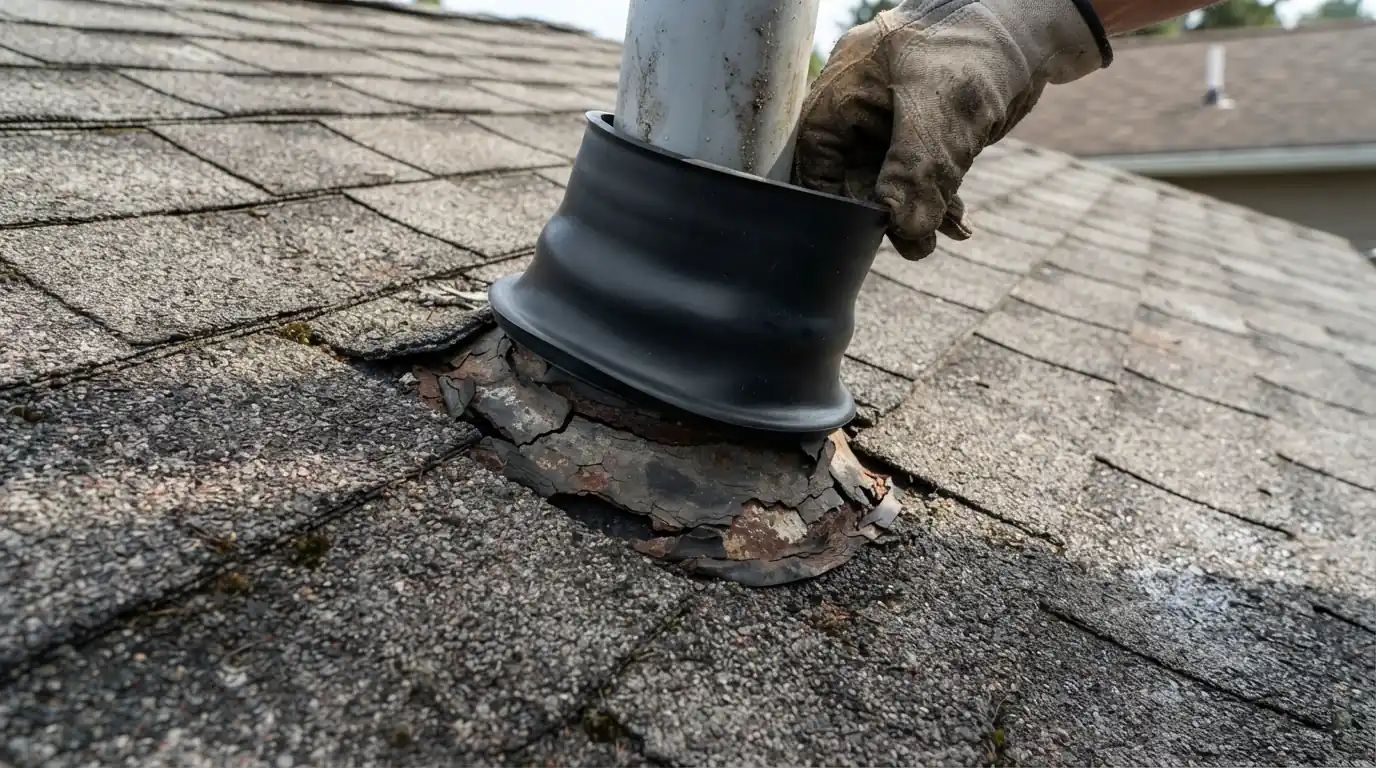
Rubber pipe boots crack in the sun long before the roof around them wears out, and the crack sits right where water runs down the pipe. We fit a replacement collar or a new boot where the base is cracked, and reseal the fasteners on exhaust vents, box vents and satellite mounts. These are the most common leak points we find, and the cheapest to fix while they are still dry. Where a boot has already let water in, we lift the shingles around it to check the deck.
Debris removal from valleys

Valleys and the uphill side of chimneys collect leaves, and the pile holds water against the roof long after a storm ends. On tile it dams water sideways under the edges; on shingle it rots the valley lining. We clear every valley and cricket by hand, check the valley metal or lining underneath, and clean the gutters the valleys drain into so the whole path runs free. Overhanging limbs that keep refilling a valley are flagged in the report so they can be cut back.
Minor tile and shingle resets
A slipped tile or a lifted shingle is a small job on a dry October afternoon and a leak by February. We reset slipped tiles and fasten them with hooks, swap cracked ones from matching stock, and re-adhere shingles that the wind has lifted. When the number of loose pieces suggests a bigger problem, like rotted battens or failing sealant strips, we say so in the report instead of resetting the same tiles every year. Every reset is photographed before and after so you can see the change.
Scope
What every tune-up covers
The same list every year, so nothing gets skipped.
- Walk of every slope and ridge
- Pipe boots, vents and mounts resealed
- Flashing at walls, chimneys and skylights checked
- Loose shingles re-adhered, slipped tiles reset
- Valleys and crickets cleared
- Gutters and downspouts checked
- Photo report of findings
What happens after you call
How a maintenance visit runs
- 1
Book in early fall
September and October fill first.
- 2
Walk every slope
Covering, flashing and penetrations checked.
- 3
Seal and reset
Boots, vents, loose tiles and shingles.
- 4
Clear the water path
Valleys, crickets and gutters.
- 5
Attic look
Stains and daylight from below.
- 6
Photo report
Done, can wait, and should fix before winter.
What we see on San Jose roofs
San Jose's roofs spend most of the year in hard sun, somewhere around 3,400 hours of it, and then take most of a year's rain between November and March. That sequence is why maintenance here belongs in early fall: the long dry season cracks sealants, boots and shingle edges, and the wet season finds every one of those cracks within weeks. A tune-up in October meets the roof at the point it is most worn and just before it is most tested.
Cost
What a maintenance visit costs depends on
The tune-up is priced by roof size and type; repairs found along the way are quoted separately.
- Roof size More slopes and penetrations take longer to check.
- Roof type Tile and multi-level roofs need more care to walk.
- Penetrations Each boot, vent and skylight is checked and sealed.
- Debris load Heavily treed lots take longer to clear.
- Gutters Adding a gutter clean-out to the visit.
- Repairs found Quoted on the report, never done without approval.
Do it yourself or call us
What you can keep up yourself
A few things from the ground and the attic are yours; the roof surface is ours.
| Task | Doing it yourself | Having us do it |
|---|---|---|
| Look for missing pieces after wind | From the yard with binoculars | Walked and reset |
| Check the attic after heavy rain | A flashlight on the underside of the deck | Traced to the source |
| Trim branches off the roof | Keep limbs six feet clear | We flag the ones that matter |
| Reseal boots and vents | Not safe on a pitched roof | Done every visit |
FAQ
Questions we get asked
Once a year for most San Jose homes, in September or October. Heavily treed lots may need a spring visit too.
Yes. Boots and sealants age faster than the covering, even on a roof a few years old.
Yes, walking them properly and resetting slipped tiles from matching stock.
No. Tune-up items are done; anything larger is photographed and quoted first.
Many warranties expect reasonable upkeep; the photo report is a useful record.
Same category
Related roofing work
Roof Inspection
A roof and attic walk with photos, before the rains or before a purchase.
Learn moreRoof Certification
Inspection, any required repairs, and the certification paperwork for a sale.
Learn moreRoof Cleaning
Debris, moss and algae cleared without damaging tile or shingle.
Learn moreAttic Ventilation
Ridge, soffit and ember-resistant vents sized for the attic.
Learn moreBook the fall tune-up
Tell us the roof type and roughly how old it is. We schedule the visit before the first storm and send the photo report after.