Replacement & Installation
Mobile home roofing in San Jose parks
A manufactured home roof is built lighter and flatter than a house roof, and it fails differently. The fix is usually a coating, a targeted repair or a roof-over, not a conventional re-roof.
What we treat
- Concrete and clay tile
- Composition shingle
- Flat, torch-down and TPO
- Spray foam
- Standing seam metal
Quick answer. Mobile home roofing in San Jose means repairing leaks at seams, vents and skylights, applying elastomeric coatings to sound metal or membrane roofs, and installing roof-over systems that add a pitched or insulated layer on top of the original roof. Coatings and repairs usually take a day; a roof-over takes two to four days.
Updated September 2026
The job
Why manufactured home roofs need their own approach
Most manufactured homes have either a thin metal roof or a low-slope membrane over light trusses. They were not designed for the weight of a standard tear-off and shingle roof, and the seams along the length of the home are where most leaks start.
So the work is matched to the frame: repair what is failing, coat what is sound, or add a lightweight roof-over when the original has reached the end.
Your options
Repair, coat or roof-over?
The roof's condition decides; we start with the lightest fix that will hold.
| Question | Spot repair | Elastomeric coating | Roof-over |
|---|---|---|---|
| Best for | One or two leaks on a sound roof | Worn but sound metal or membrane | Chronic leaks or failing original roof |
| Adds insulation | No | Reflects heat | Yes, in the new air space |
| Typical time | A few hours | About a day | Two to four days |
| Relative cost | Lowest | Moderate | Highest |
Jobs this page covers
Metal roof-overs for mobile homes
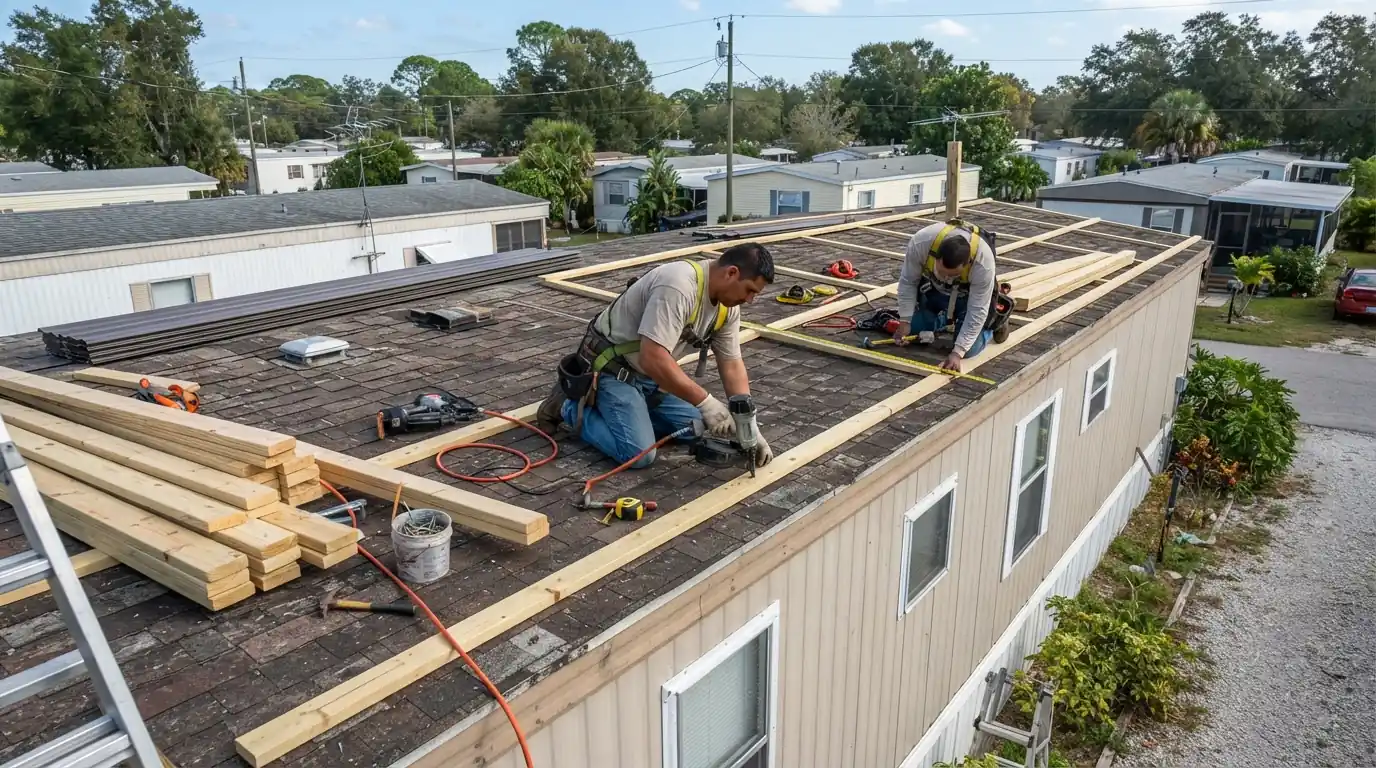
A roof-over installs a new roof on top of the old one without tearing it off. Furring or a lightweight truss system creates slope and an air gap, insulation can go in that space, and new metal panels are fastened on top with trim at the eaves and ends. It stops chronic seam leaks, adds insulation the original roof never had, and keeps the weight within what the home's frame can carry. We confirm the frame and anchoring before recommending one.
Elastomeric roof coatings
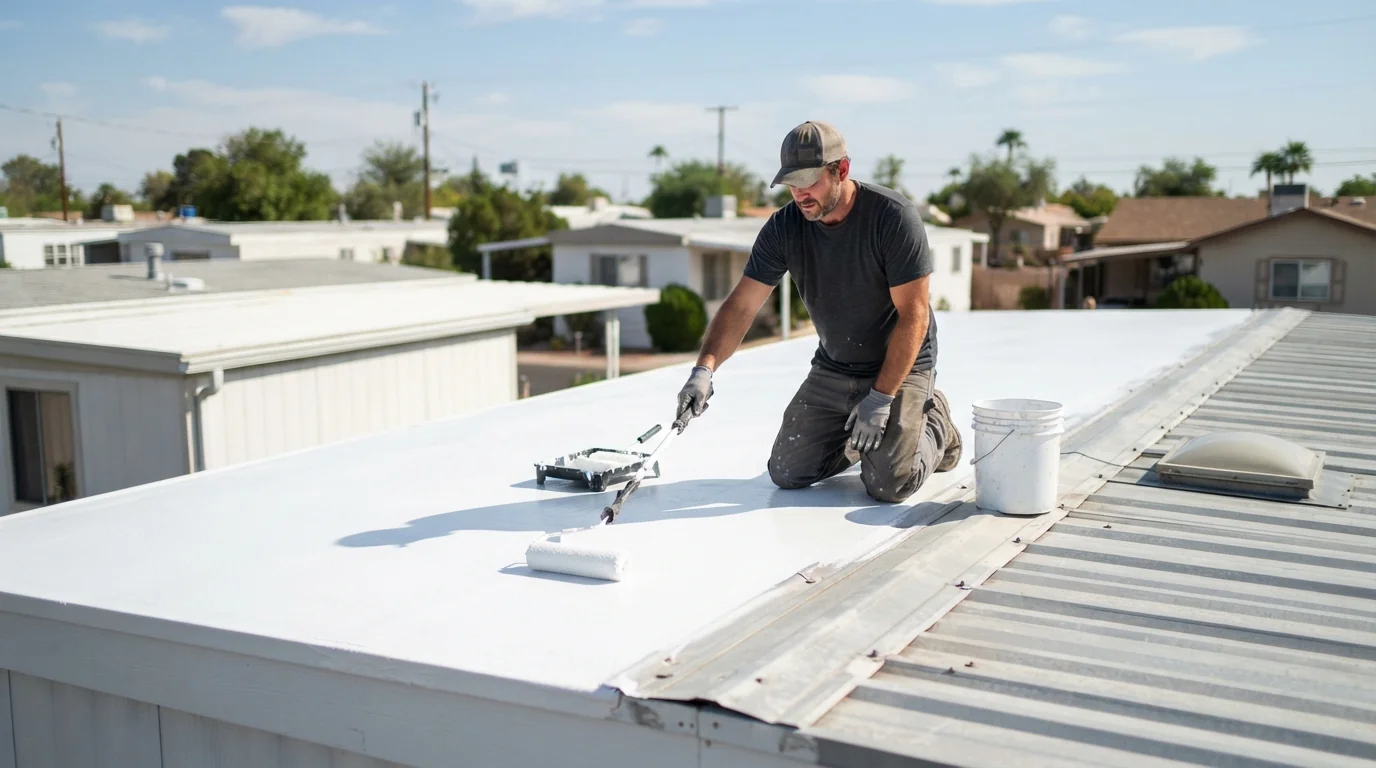
A sound metal or membrane roof with worn paint, surface rust or hairline cracks is usually a coating job. We clean the roof, treat rust, seal seams and fasteners with fabric and sealant, then apply an elastomeric coating in two coats. A white coating reflects much of the sun and keeps the home noticeably cooler inside. Coatings are not a fix for a roof that is already soft or holding water, and we say so before quoting one. Two coats go on in a single dry day when the weather allows.
Leak repairs at seams, vents and skylights
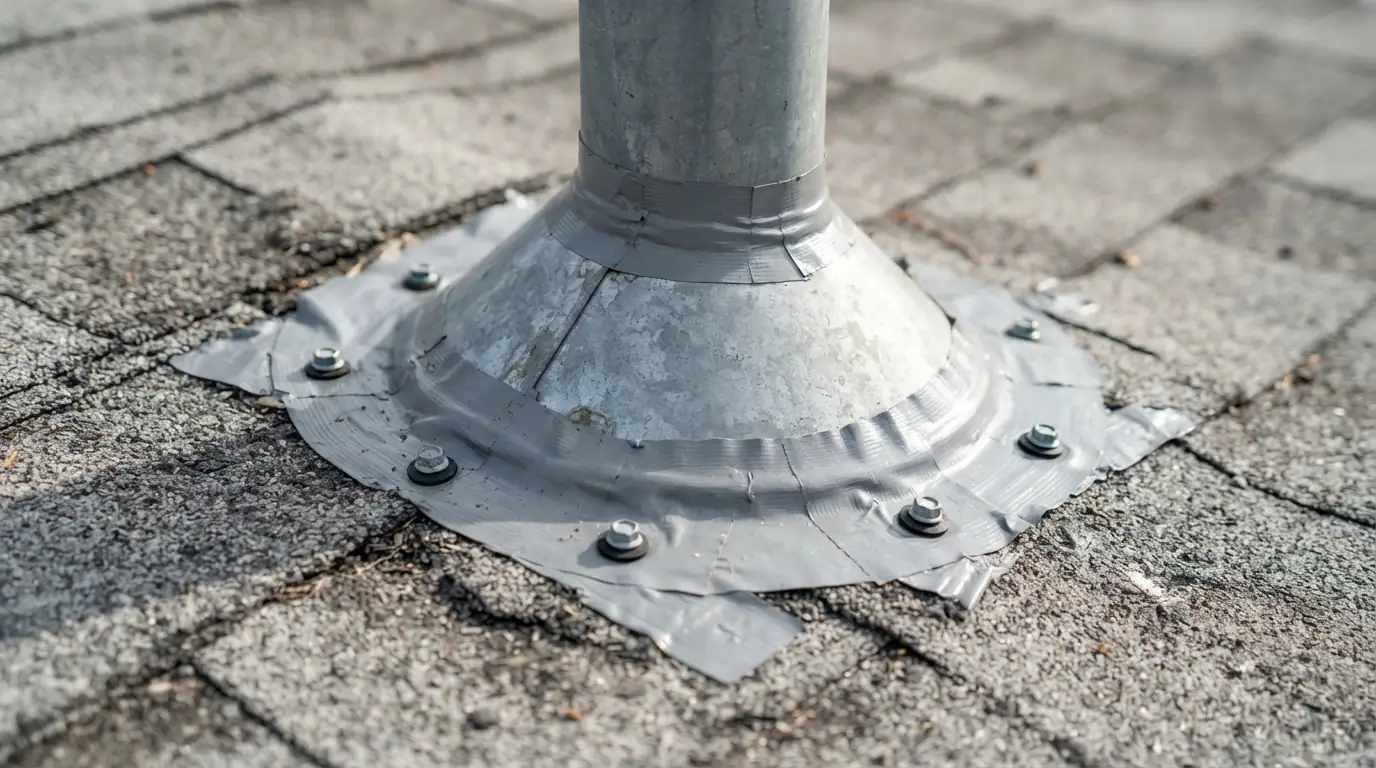
The long center seam, the vent stacks and the small skylights common on manufactured homes are where water gets in. We clean the area down to sound material, replace failed vent flashings and skylight domes, and seal the seam with a compatible tape or membrane rather than piling on roof cement, which cracks within a season. Wet ceiling panels and insulation found underneath are noted so they can be replaced once the leak is stopped. Gutters along the eaves are checked too, since overflow wets the wall below.
Who issues the permit for park homes
Work on a home inside a mobile home park can fall under different permit rules than a house on its own lot, depending on the scope and the park. Minor repairs and coatings usually need no permit; a roof-over that changes the structure may. We confirm which agency issues the permit, and whether the park management needs notice, before any work is scheduled, so the job does not stall halfway through. Park work hours, parking rules and where materials can be staged are settled with the manager at the same time.
Cost
What a mobile home roof job costs depends on
Repairs and coatings are priced by the roof's size and condition; roof-overs by the system chosen.
- Roof size Single-wide, double-wide or triple-wide.
- Repair or coating Coatings cost more than a spot repair but cover the whole roof.
- Roof-over system Metal panels, insulation and trim add up.
- Rust and damage Rusted panels and soft spots need work first.
- Vents and skylights Replaced flashings and domes add parts.
- Access in the park Tight spaces and parking rules affect setup.
What we see on San Jose roofs
San Jose has 58 mobile home parks, more than any other city in California, and more than 10,000 spaces across them. For many owners the home is the most affordable housing they will find in the valley, which is why we lead with the least expensive fix that will actually hold: a targeted repair or a coating before a roof-over, and a roof-over before anything heavier. Park rules on work hours and vehicle access are part of every schedule.
Scope
What a mobile home roof job includes
The scope lines we write for manufactured home roofs.
- Roof and ceiling inspection with photos
- Frame and anchoring check before any roof-over
- Rust treatment and seam reinforcement
- Vent flashings and skylight domes replaced as needed
- Coating or roof-over system to specification
- Permit and park notice confirmed
- Debris removal and final photos
What happens after you call
How a mobile home roof visit runs
- 1
Walk the roof
Seams, vents, skylights and any soft spots.
- 2
Check inside
Ceiling panels and insulation below the leaks.
- 3
Recommend the lightest fix
Repair, coating or roof-over, priced plainly.
- 4
Confirm the rules
Permit needs and park notice checked.
- 5
Do the work
Scheduled to fit park hours.
- 6
Clean up
Debris hauled out, photos shared.
FAQ
Questions we get asked
Only on homes built for it. Most manufactured homes do better with a coating or a lightweight roof-over.
It depends on the product and thickness; recoats are planned on the manufacturer's schedule.
Usually, because it adds an air space and room for insulation.
Most parks want notice and set work hours. We check before scheduling.
Yes. Old domes and flashings are replaced and the seam sealed.
Same category
Related roofing work
Roof Replacement
Composition shingle re-roofs with Class A and cool-roof options, permitted and inspected.
Learn moreTile Roof Replacement
Concrete and clay tile re-roofs, including lift-and-relay with new underlayment.
Learn moreFlat Roof Replacement
TPO, PVC and torch-down systems with tapered drainage for low-slope roofs.
Learn moreMetal Roof Installation
Standing seam and stone-coated steel, including over existing shingles.
Learn moreGet your mobile home roof checked
Tell us the park and what the roof is doing. We check the roof and the frame and recommend the lightest fix that will hold.