Emergency & Storm
Storm damage roof repair in San Jose
After a storm the roof needs three things in order: stop the water, record what happened, then fix it properly. Skipping the middle step is how claims stall.

What we treat
- Concrete and clay tile
- Composition shingle
- Flat, torch-down and TPO
- Spray foam
- Standing seam metal
Quick answer. Storm damage roof repair in San Jose starts with securing the roof, a tarp or temporary patch the same day, then a photographed, written record of the damage and its cause for your insurer, and finally the permanent repair once the claim and the weather allow. We meet adjusters on site when asked.
Updated September 2026
The job
What storm damage looks like on a San Jose roof
Most damage here comes from wind and water rather than hail: lifted and torn shingles, slipped or broken tile, flashing peeled back at walls, and limbs through the deck. Water then does the rest, soaking underlayment and insulation between storms.
We separate storm damage from wear in the report, because adjusters do, and a clear line between the two helps the claim move.
What happens after you call
From the storm to the finished repair
- 1
Secure
Tarp or patch to stop the water.
- 2
Document
Photos, written cause and itemized scope.
- 3
Meet the adjuster
On site if you want us there.
- 4
Schedule the repair
First dry window after approval.
- 5
Repair
Framing, decking and covering to match.
- 6
Final photos
For your records and the claim file.
Warning signs
Storm damage to look for from the ground
- Shingles or tile in the yard
Pieces came off the roof.
- Lifted or flapping edges
Seal strips have broken.
- Bent or peeled flashing
Walls and chimneys are open.
- Branches on the roof
Even small ones can puncture.
- New stains inside
Water has already found a way in.
- Granules pooled at downspouts
Surface damage from wind-driven debris.
Jobs this page covers
Wind damage repair
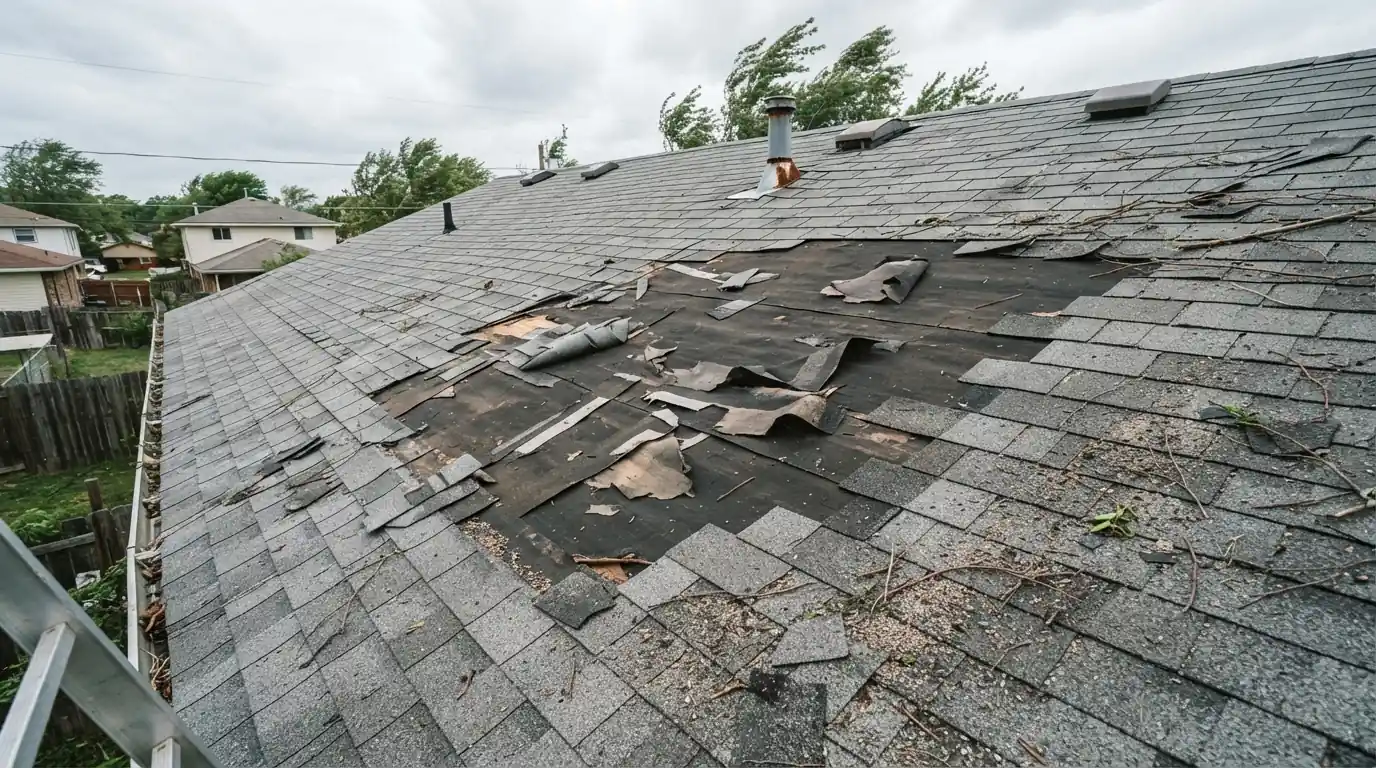
Wind lifts shingles at the edges and ridges first, breaking the seal strip and creasing the tab. Creased shingles have lost their hold and are replaced; lifted ones that are still flat are resealed. On tile, wind slips pieces out of their courses and breaks ridge caps. We repair the damaged area to match and check the rest of the roof, because a storm strong enough to lift one section usually loosened others. Matching shingle color on an older roof is sourced before the repair date.
Atmospheric-river water damage
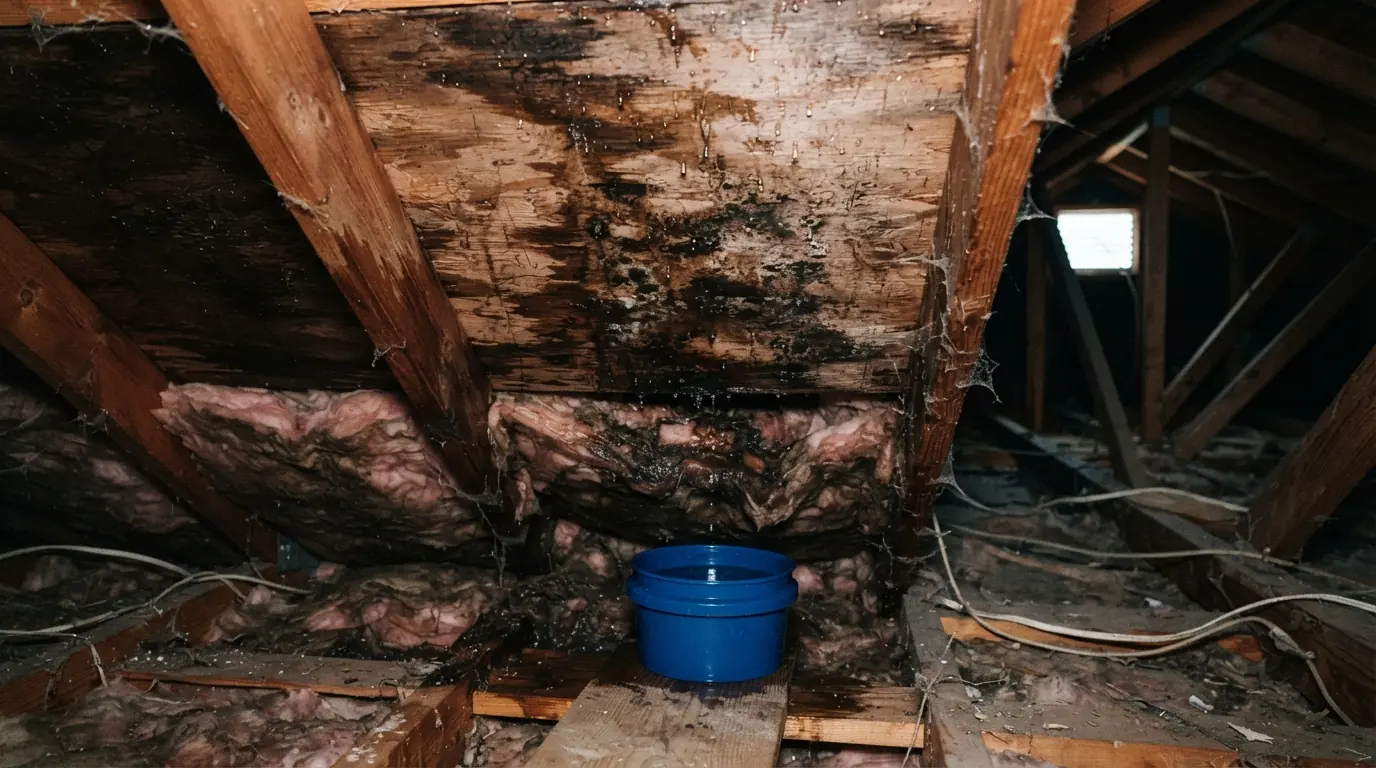
Long, heavy storms find weak points that ordinary rain never reaches, and days of it soak underlayment, sheathing and attic insulation. The roof repair fixes the entry point; the report also records the wet decking and insulation so they are part of the claim. Saturated insulation is removed and replaced, and decking that has swollen or softened is cut out before the roof is closed up. Moisture readings on the deck are part of the record, since wet wood is hard to see once it dries.
Fallen tree and branch damage
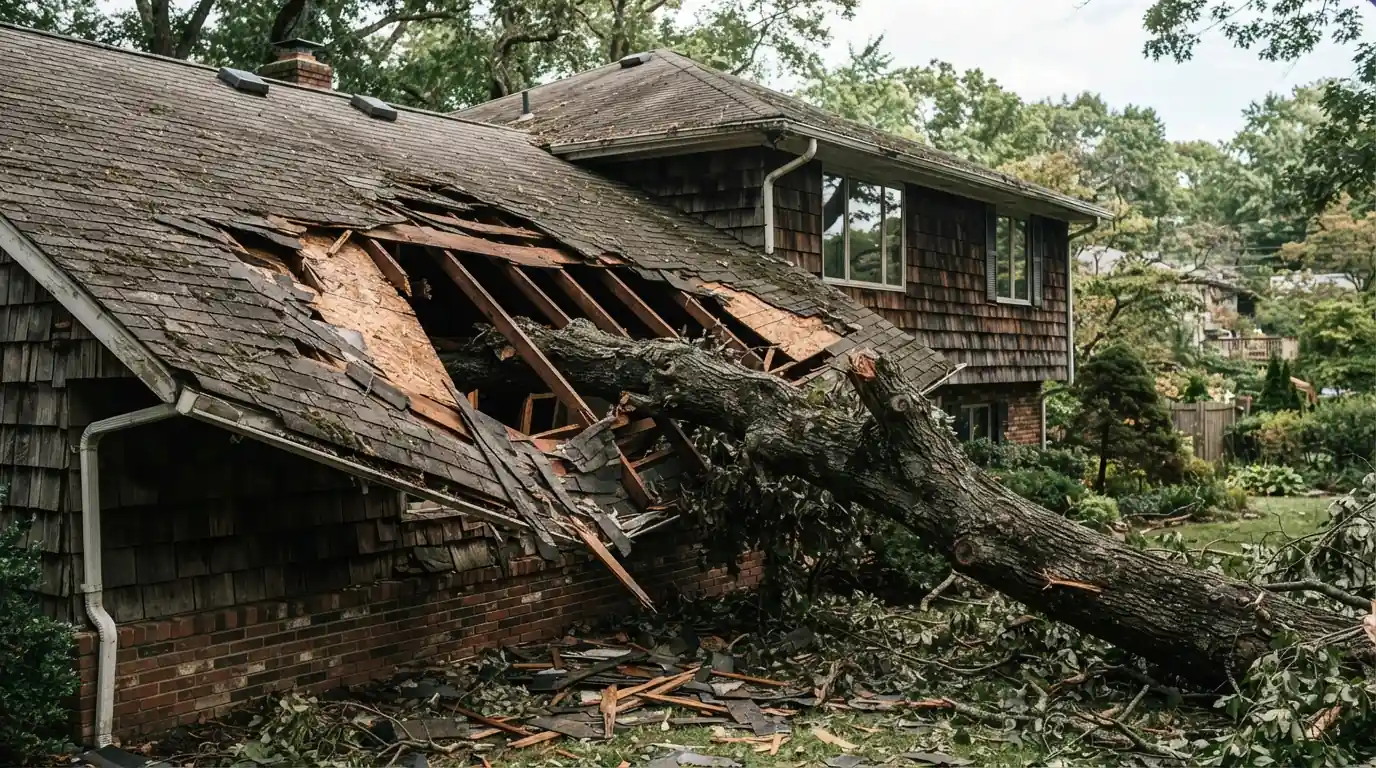
A limb through the roof is a structural repair as much as a roofing one. After the debris is removed and the opening covered, we check rafters and ceiling joists and photograph every cracked member. The permanent repair replaces framing, decking, underlayment and covering, and we coordinate with a tree service if more of the tree is at risk of coming down on the house. Ceiling damage below the impact is photographed too, even though a drywall contractor repairs it, so the whole loss sits in one record.
Insurance-claim documentation
The documentation includes dated photos of each damaged area, close-ups and wide shots for context, a written cause, and an itemized repair scope. We meet your adjuster on the roof when asked and walk them through what we found. We do not negotiate your claim or promise what it will pay; we give the adjuster an accurate record, which is what moves a claim along fastest. Copies go to you, and we keep the file in case the adjuster asks for more later.
What we see on San Jose roofs
San Jose sits in the rain shadow of the Santa Cruz Mountains and averages only about 15 inches of rain, but the storms that do arrive tend to be concentrated atmospheric rivers, and in strong El Nino winters like 1982-83 and 1997-98 they came back to back and stretched the wet season. Storm damage here is mostly wind and water rather than hail, and the damage report reflects that, starting with lifted edges, slipped tile and soaked decking.
Scope
What the storm damage report includes
The record an adjuster needs, in one package.
- Date and weather of the storm
- Wide and close photos of each damaged area
- Separation of storm damage from wear
- Interior and attic water damage
- Written cause for each item
- Itemized repair scope
- Photos of the temporary protection
Cost
What storm damage repair costs depend on
The permanent repair is scoped after the roof is dry; emergency securing is priced separately.
- Emergency securing Tarp or patch the same day, priced on its own.
- Area damaged Measured and itemized in the scope.
- Structural members Cracked rafters and joists add framing work.
- Wet materials Soaked insulation and decking are replaced.
- Material matching Tile and older shingle colors need sourcing.
- Tree removal Coordinated with a tree service where needed.
FAQ
Questions we get asked
Secure the roof first, then report the claim. Insurers expect you to prevent further damage.
Yes, on site, and we walk the roof with them.
No. We document and repair; the claim stays between you and your insurer.
We share the photos and our reasoning and revise the scope if something was missed on either side.
Yes, with matching tile and new underlayment where the storm got past the tile.
Same category
Related roofing work
Emergency Roof Repair
Active leaks, wind damage and storm calls handled the same day, any hour.
Learn moreRoof Leak Repair
We find where the water actually gets in, then fix that, not the stain.
Learn moreEmergency Roof Tarping
A secured tarp that holds through the next storm until the repair is done.
Learn moreShingle Roof Repair
Torn, missing and curling shingles, nail pops and ridge caps on composition roofs.
Learn moreStorm hit the roof? Call now
We answer any hour, secure the roof, and give you a clear record for the insurer before the permanent repair.