Roof Repair
Chimney removal and roof patching in San Jose
An old brick chimney that is no longer used is weight and risk on top of the house. Taking it down below the roofline and closing the roof properly removes both.
What we treat
- Concrete and clay tile
- Composition shingle
- Flat, torch-down and TPO
- Spray foam
- Standing seam metal
Quick answer. Chimney removal in San Jose takes an unreinforced brick chimney down below the roofline, or further when needed, then closes the opening with framing, decking and roofing that matches the rest of the roof, or builds a light framed chase with a metal flue if the fireplace will still be used. A permit is required, and the work usually takes two to four days.
Updated September 2026
The job
Why old brick chimneys come down
Many older San Jose houses have brick chimneys built without steel reinforcement. They are heavy, they crack and loosen with age, and in an earthquake the part above the roofline is the most likely to fall, onto the roof, a walkway or a neighbor's yard.
Many owners also stopped using the fireplace years ago. For them the chimney is only a leak point and a hazard, and taking it down is the simplest fix.
Your options
Remove, close up or rebuild?
Whether the fireplace will be used decides most of it.
| Question | Remove below roofline | Remove fully | Rebuild as framed chase |
|---|---|---|---|
| Fireplace afterward | Not usable | Removed | Usable with metal flue |
| Roof work | Patch and match | Patch and match | Flash in the new chase |
| Weight removed | Most of the risk | All of it | Most of it |
| Relative cost | Lowest | Highest | Moderate |
Jobs this page covers
Taking a brick chimney down below the roofline
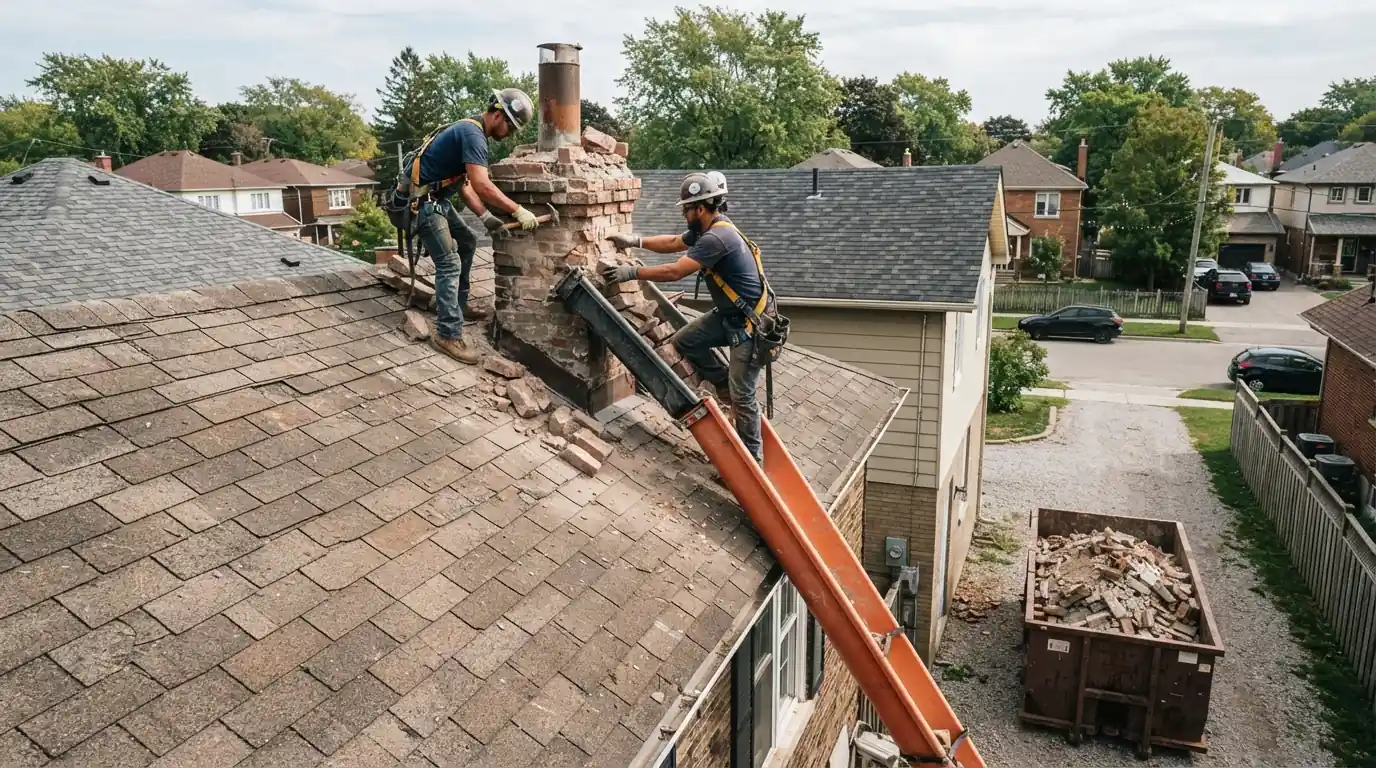
The chimney is taken down by hand, brick by brick, from the top, with a debris chute to a bin so nothing falls on the roof or the yard. Removal usually stops below the roofline, inside the attic, where the remaining brick is capped. If the chimney is cracked lower down or the owner wants the fireplace gone entirely, the scope goes further. Tarps protect the roof and landscaping throughout, and the opening is closed or dried in before the crew leaves each day.
Patching the roof where the chimney was
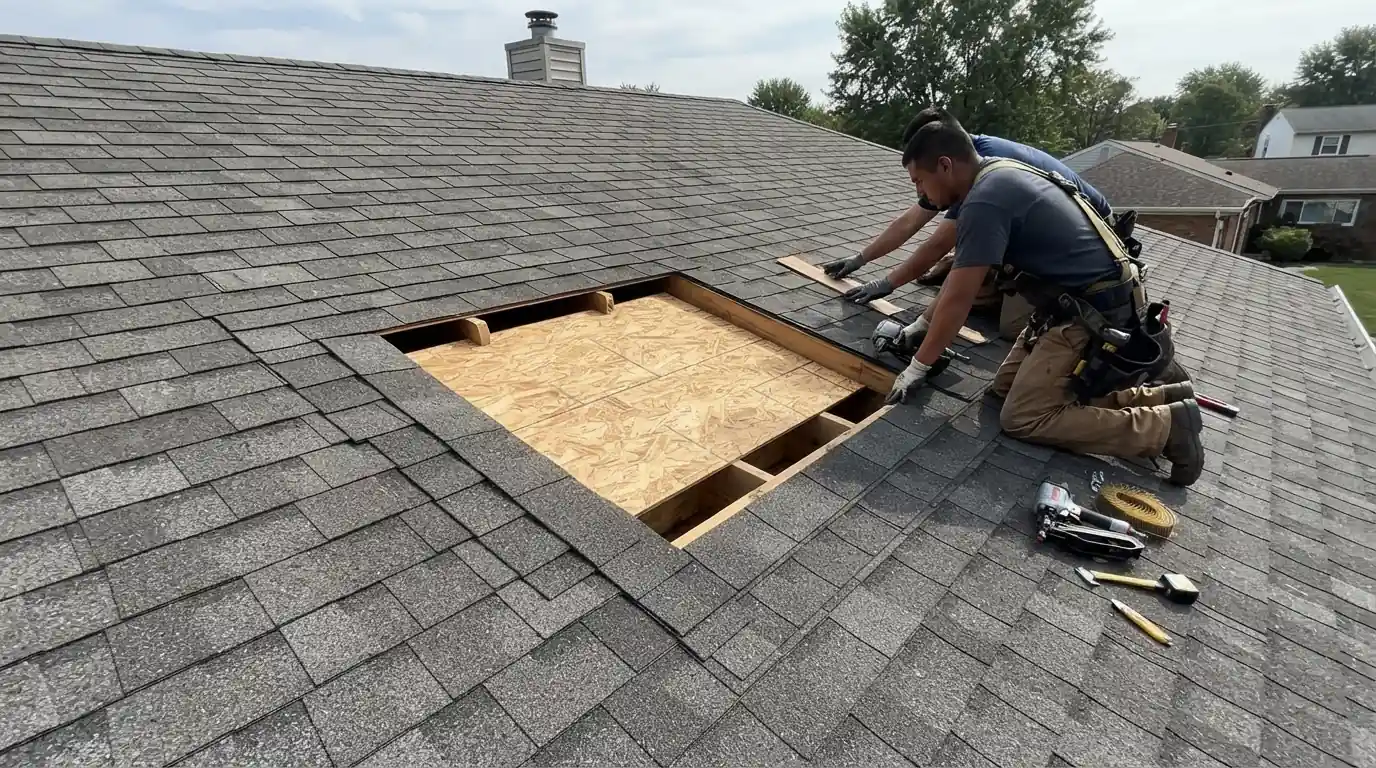
Once the chimney is below the roofline, the opening is framed to the existing rafters, sheathed with new decking and roofed to match. On shingle roofs the new courses are woven into the old so the patch disappears. On tile roofs, salvaged or matching tiles are set over new underlayment. The old chimney flashing and cricket come out with it, which removes one of the most common leak points on the roof for good. Attic insulation disturbed around the old chimney is put back before the job is closed up.
Rebuilding with a framed chase and metal flue
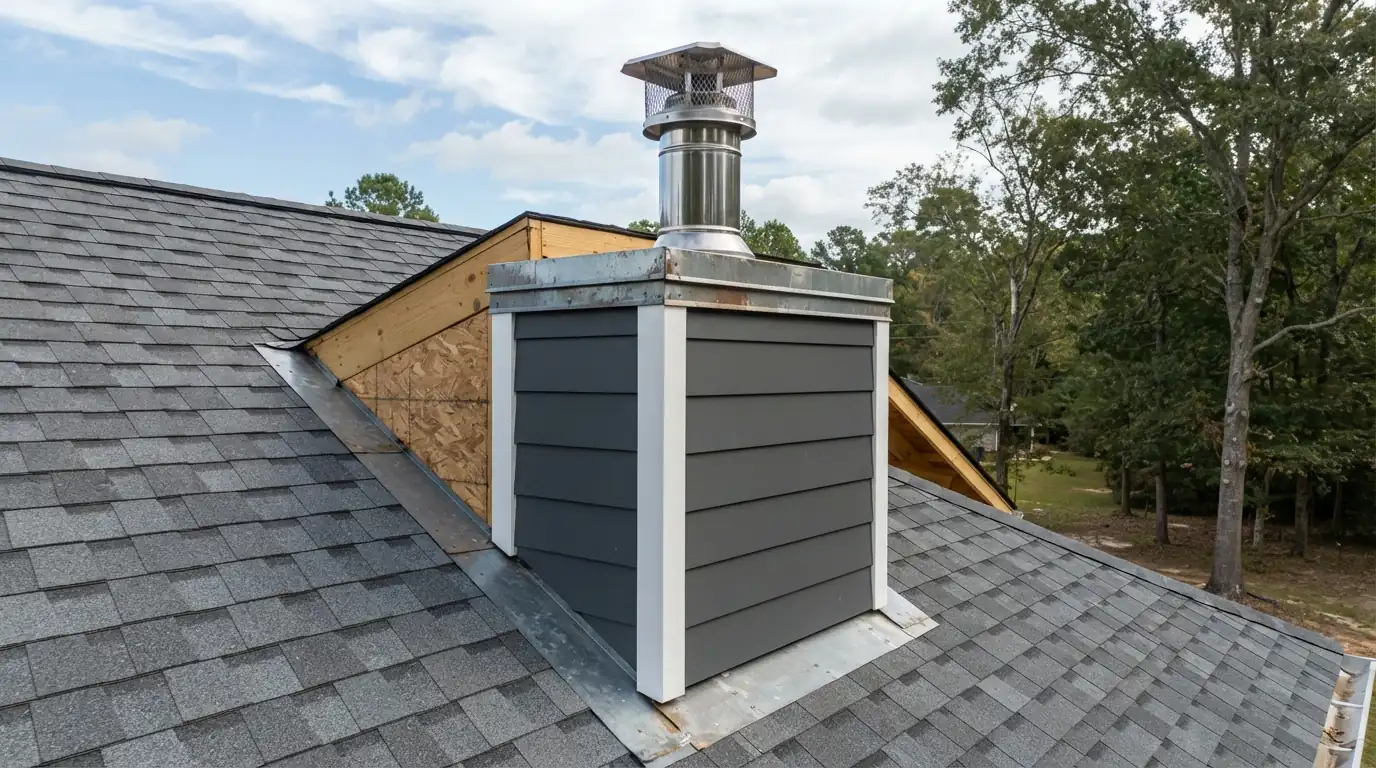
If the fireplace or a stove will still be used, the brick above the roof can be replaced with a light framed chase around a listed metal flue. It weighs a fraction of the brick, can match the house's siding, and is flashed into the roof like any wall. The fireplace insert and flue are specified to suit the appliance, and the chase gets a metal cap with a spark arrestor on top. Clearances between the flue and the framing follow the flue maker's listing, which the inspector checks at the final.
Chimney caps and spark arrestors
Chimneys that stay in use should have a cap with a spark arrestor screen. It keeps rain, birds and debris out, and stops embers from leaving the flue, which matters on the hills where fire hazard zones reach into the city. We fit caps sized to the flue on masonry and metal chimneys, and replace rusted or crushed screens during roof visits. Caps are stainless or galvanized steel, fastened to the flue or crown rather than just set on top. It is often the smallest job on the list and one of the most useful.
Cost
What chimney removal costs depends on
Removal is priced after we see the chimney from the roof and the attic.
- How far down it comes Below the roofline, to the attic floor, or further.
- Chimney size Brick volume sets the labor and haul-away.
- Roof type Tile patches cost more than shingle.
- Framed chase Framing, siding, metal flue and cap if rebuilt.
- Access Steep roofs and tight side yards need more setup.
- Permit Required, and filed as part of the job.
What we see on San Jose roofs
FEMA's advisory on earthquake-damaged chimneys is blunt: older unreinforced masonry chimneys rebuilt to their old condition stay vulnerable, bringing them up to modern seismic standards is generally considered infeasible, and the recommended fix is partial or complete removal with metal flues and light framing, always under a permit. The South Bay has seen why. The Earthquake Country Alliance illustrates its chimney guidance with a broken chimney that fell onto a roof in the Morgan Hill earthquake, the failure that removal below the roofline is meant to prevent.
What happens after you call
How a chimney removal runs
- 1
Inspect
From the roof and the attic, with photos.
- 2
Decide the scope
Remove and close up, or rebuild as a framed chase.
- 3
Permit
Filed before any brick comes down.
- 4
Take it down
By hand, from the top, with a debris chute.
- 5
Close the roof
Framing, decking and roofing matched in.
- 6
Final
Inspection, cleanup and a magnet sweep for nails.
Warning signs
Signs a chimney should come down
- Cracks in the brick or crown
The masonry is breaking down.
- Leaning or separating from the house
It is losing its connection to the structure.
- Loose or missing bricks
Mortar has failed above the roof.
- Leaks around the chimney
The flashing and brick are both letting water in.
- A fireplace no one uses
All risk and no benefit.
- Damage after a quake or storm
Have it checked before the next one.
FAQ
Questions we get asked
Yes. Chimney removal and rebuilding need a building permit.
Yes. Shingles are woven in and tile is matched or salvaged.
Only if the chimney is rebuilt, usually as a framed chase with a metal flue.
Usually two to four days including the roof patch.
Usually, since it removes a leak point and a falling hazard in an earthquake.
Same category
Related roofing work
Shingle Roof Repair
Torn, missing and curling shingles, nail pops and ridge caps on composition roofs.
Learn moreTile Roof Repair
Cracked and slipped tiles, failed underlayment and valley repairs on concrete and clay.
Learn moreFlat Roof Repair
Ponding, blisters, split seams and foam cracks on low-slope roofs.
Learn moreRoof Flashing Repair
Chimney, wall, skylight and vent flashing rebuilt so the joint stops leaking.
Learn moreGet the chimney looked at
We check it from the roof and the attic and price removal, patching or a framed rebuild side by side.