Commercial Roofing
Roof coating for San Jose flat, foam and metal roofs
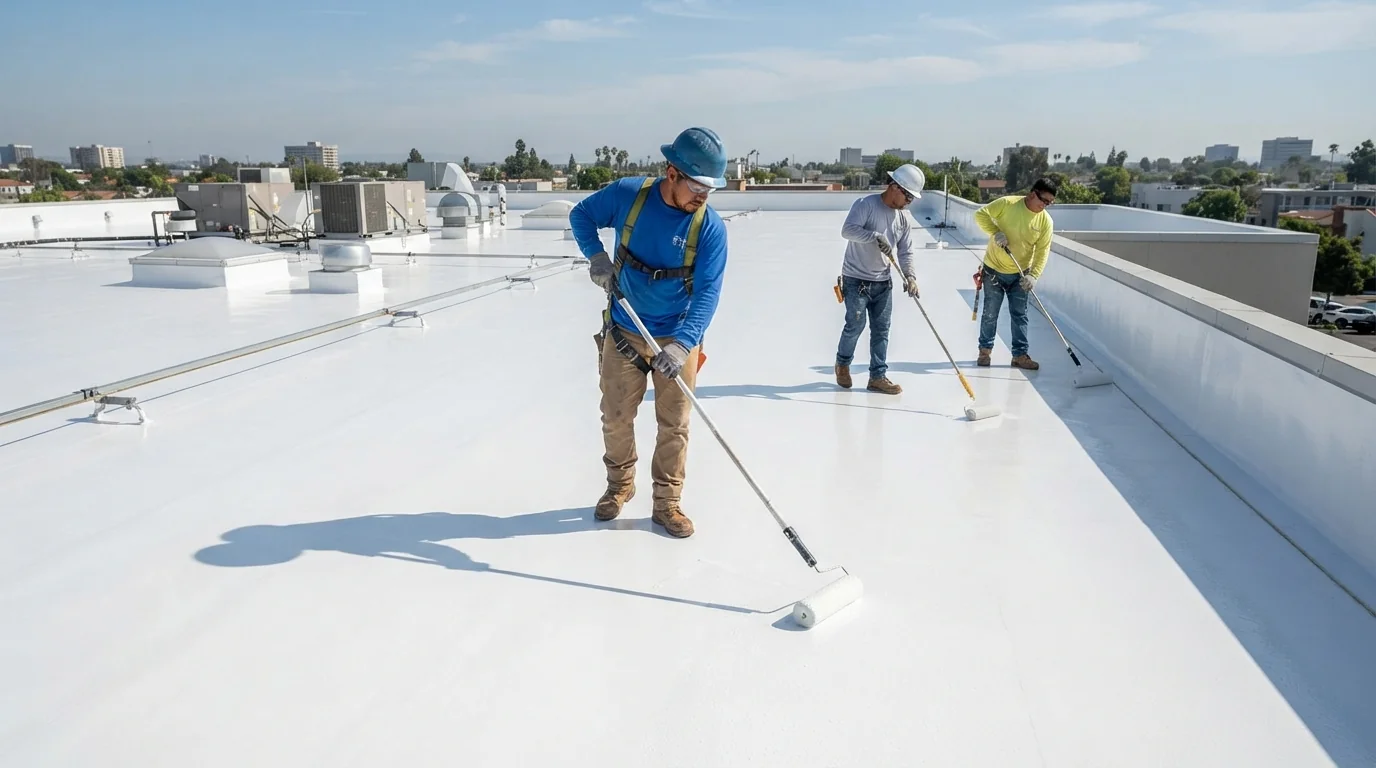
A coating is not a fix for a failed roof. On a sound one it resets the surface, reflects the sun and buys years, and on foam roofs it is the part that keeps the foam alive.

What we treat
- Concrete and clay tile
- Composition shingle
- Flat, torch-down and TPO
- Spray foam
- Standing seam metal
Quick answer. Roof coating in San Jose applies a fluid-applied silicone or acrylic membrane over a sound flat, foam or metal roof after cleaning, repairs and seam reinforcement. A cool-rated white coating reflects most of the sun and can extend a roof's life by years when the roof underneath is still dry. It is not a cure for wet insulation or a failing deck.
Updated September 2026
The job
When a coating makes sense and when it does not
The test is what is underneath. A roof that is dry, attached and mostly sound with a worn surface is a coating candidate. A roof with wet insulation, soft decking or widespread blisters is not, and a coating over it just traps the problem.
We start with a moisture check and core samples where needed. If the roof fails that test, you hear it before any coating is quoted.
Your options
Silicone, acrylic, or replace instead?
The roof underneath decides; the product follows.
| Question | Silicone | Acrylic | Replace the roof |
|---|---|---|---|
| Roof condition | Sound, may pond a little | Sound and drains well | Wet, blistered or failing |
| Best substrates | Single-ply, built-up | Foam, metal | Any |
| Ponding tolerance | Good | Poor | Designed out |
| Relative cost | Lower | Lowest | Highest |
Jobs this page covers
Silicone coating over single-ply
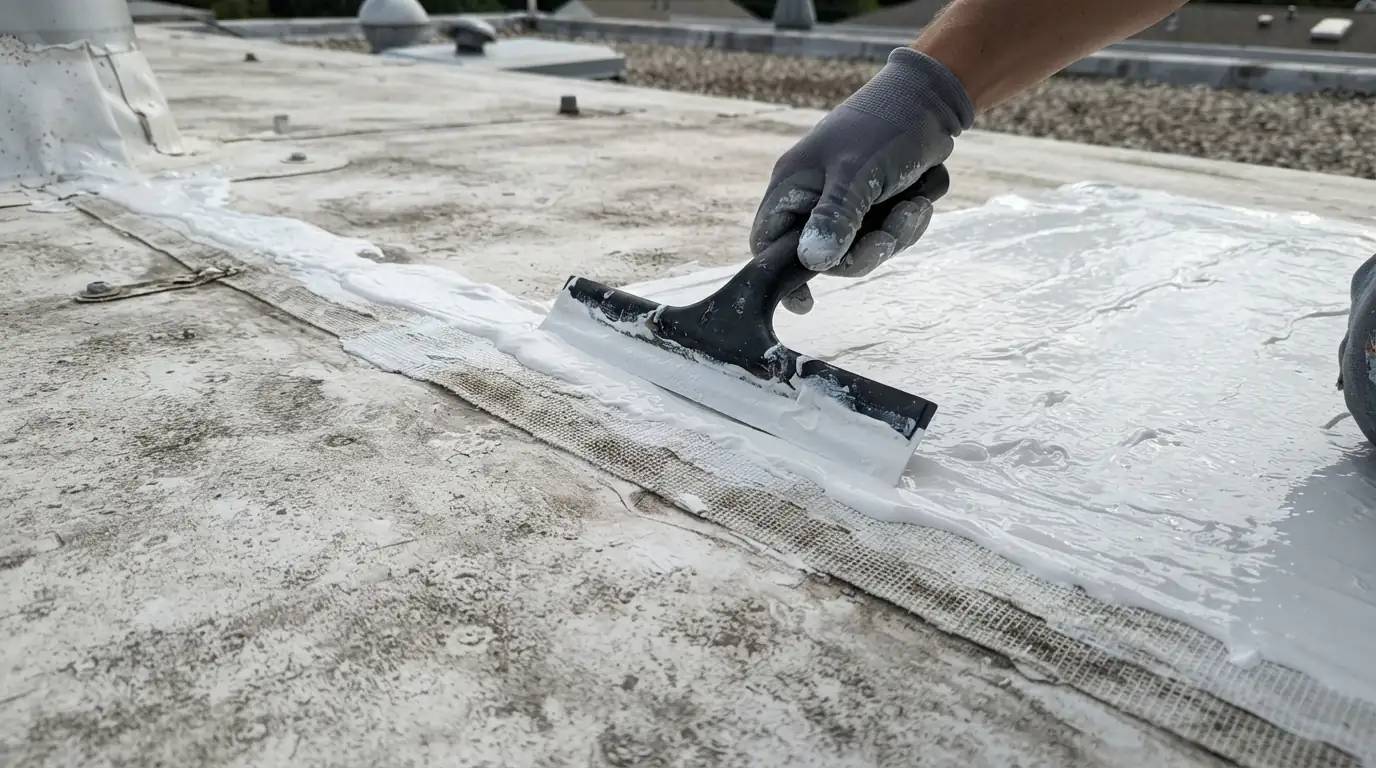
Silicone holds up to standing water better than other coatings, which makes it the usual choice on low-slope roofs with minor ponding. On aged TPO or PVC it goes over cleaned membrane with a primer where the manufacturer calls for one. Seams, fasteners and penetrations are reinforced with fabric or sealant first, then the coating is applied to the specified dry thickness, which we check with a gauge as we go. Silicone is hard to recoat with anything but more silicone, which is worth knowing before choosing it.
Acrylic coating for foam and metal
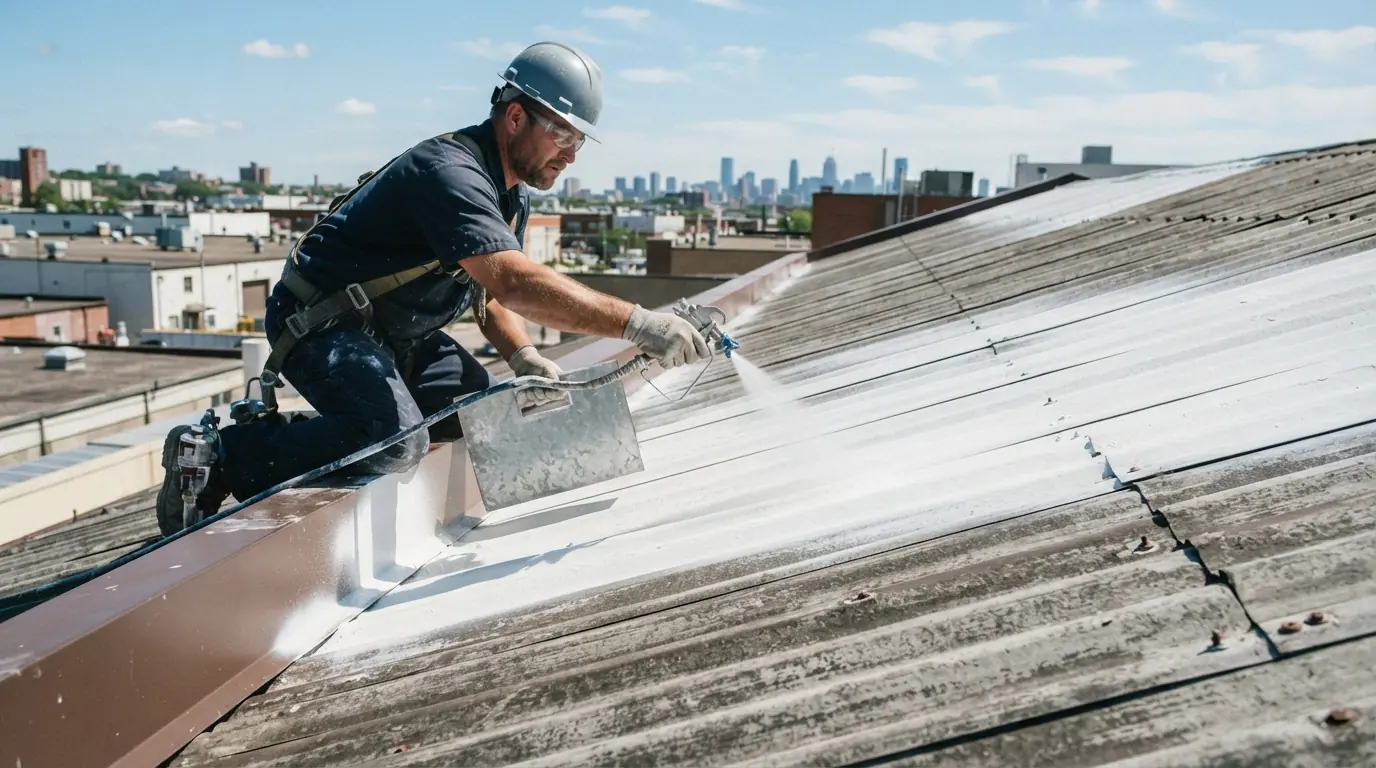
Acrylic coatings breathe, stay flexible and bond well to spray foam and metal. On foam roofs, the coating is the UV shield, so recoating on schedule is what makes foam last decades instead of years. On metal, rust spots are treated, fasteners resealed and laps primed before the acrylic goes on. Acrylics do not like standing water, so we only use them where the roof drains well. On metal, a coating also quiets rain noise and cuts heat through the roof, which matters on shops and garages.
Cost
What a coating project costs depends on
Coating is priced by area, product and how much prep and repair the roof needs first.
- Roof area Measured in square feet of coated surface.
- Product Silicone and acrylic differ in cost and in where they work.
- Repairs before coating Blisters, seams and wet spots fixed first.
- Seam reinforcement Fabric and sealant on every lap and fastener.
- Dry thickness More coats and thicker film cost more and last longer.
- Access and drains Equipment on the roof and drain protection.
What we see on San Jose roofs
Coatings are part of Title 24's cool-roof picture: on permitted work, rated reflective products are what satisfy the energy code, and only CRRC-listed coatings count. San Jose checks that documentation at a moderate level, while Cupertino, just west of the city, reviews it more strictly. For coating jobs near the city line we assemble the product listing and dry-film data up front, so the paperwork holds up in either jurisdiction.
Scope
What a coating scope includes
Prep is most of the job; every scope lists it line by line.
- Moisture survey and cores where needed
- Replacement of wet or damaged areas
- Cleaning and drying of the surface
- Primer where the product calls for it
- Fabric reinforcement at seams and penetrations
- Coating to the specified dry thickness
- Product listing and thickness record
What happens after you call
How a coating job runs
- 1
Moisture check
Scan and cores where needed; wet areas replaced.
- 2
Clean
Power washed and dried.
- 3
Repair
Blisters, splits and flashing fixed.
- 4
Reinforce
Seams, fasteners and penetrations detailed.
- 5
Coat
Applied to the specified thickness, gauged as we go.
- 6
Document
Product listing and thickness recorded for you.
Brands we install and service
FAQ
Questions we get asked
It seals a sound roof's surface. Leaks from wet insulation or failed decking need repair first.
It depends on the product and thickness; recoats are planned on the manufacturer's schedule.
We do not recommend it; coatings are for flat, foam and metal roofs.
Rated products are. We document the CRRC listing with the job.
Yes. Regular recoating is what keeps a foam roof going.
Same category
Related roofing work
Commercial Roof Repair
Membrane, built-up and drain repairs on commercial and multifamily roofs.
Learn moreCommercial Roof Replacement
TPO and PVC installs and recovers scheduled around tenants.
Learn moreCommercial Roof Maintenance
Scheduled inspections, drain service and written reports.
Learn moreHOA & Multifamily Roofing
Condo, townhome and apartment roofs, bid and phased for boards and managers.
Learn moreFind out whether your roof can be coated
We check what is underneath first, then quote the right coating or tell you plainly when replacement is the better spend.