Roof Repair
Dry rot repair in San Jose roofs and eaves
Dry rot is fungus eating wood that stayed wet too long. Cutting it out is the easy part. Finding why it stayed wet is what keeps it from coming back.

What we treat
- Concrete and clay tile
- Composition shingle
- Flat, torch-down and TPO
- Spray foam
- Standing seam metal
Quick answer. Dry rot repair in San Jose removes decay from roof sheathing, fascia, rafter tails and eave blocking back to sound wood, replaces or sisters what was lost, and fixes the leak, drip-edge gap or ventilation problem that kept the wood wet. Small areas are done in a day; rot found during a re-roof is replaced before the new underlayment goes on.
Updated September 2026
The job
What dry rot is and why it keeps spreading
Despite the name, dry rot needs moisture: a fungus that grows in wood that stays damp and leaves it brown, cracked and crumbly once it dries. It spreads along the grain from the wet spot, so the damage is usually larger than the visible soft area.
We probe outward from the obvious spot until the wood is firm, cut back past that point, and replace with new lumber primed or treated for its location.
Jobs this page covers
Rotted roof sheathing
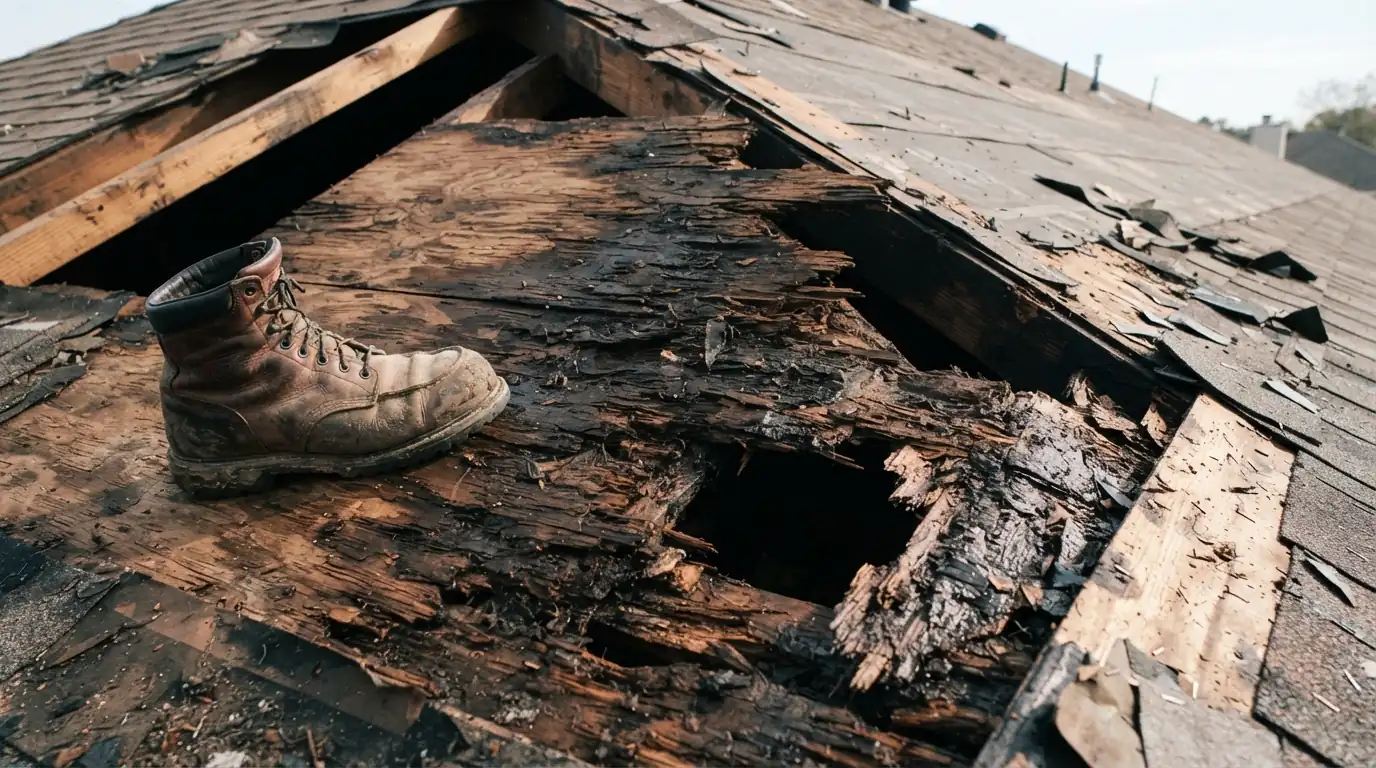
Rotted sheathing shows as a soft or spongy spot when you walk the roof, or as dark, crumbling wood from the attic. We cut the damaged sheet out between rafters, check the rafter tops under it, and install new plywood or OSB of the same thickness so the roof stays flat. Clips go between sheets where the span calls for them, and nail spacing follows what the code requires. The covering is then rebuilt over the new deck with fresh underlayment.
Fascia and rafter tail rot
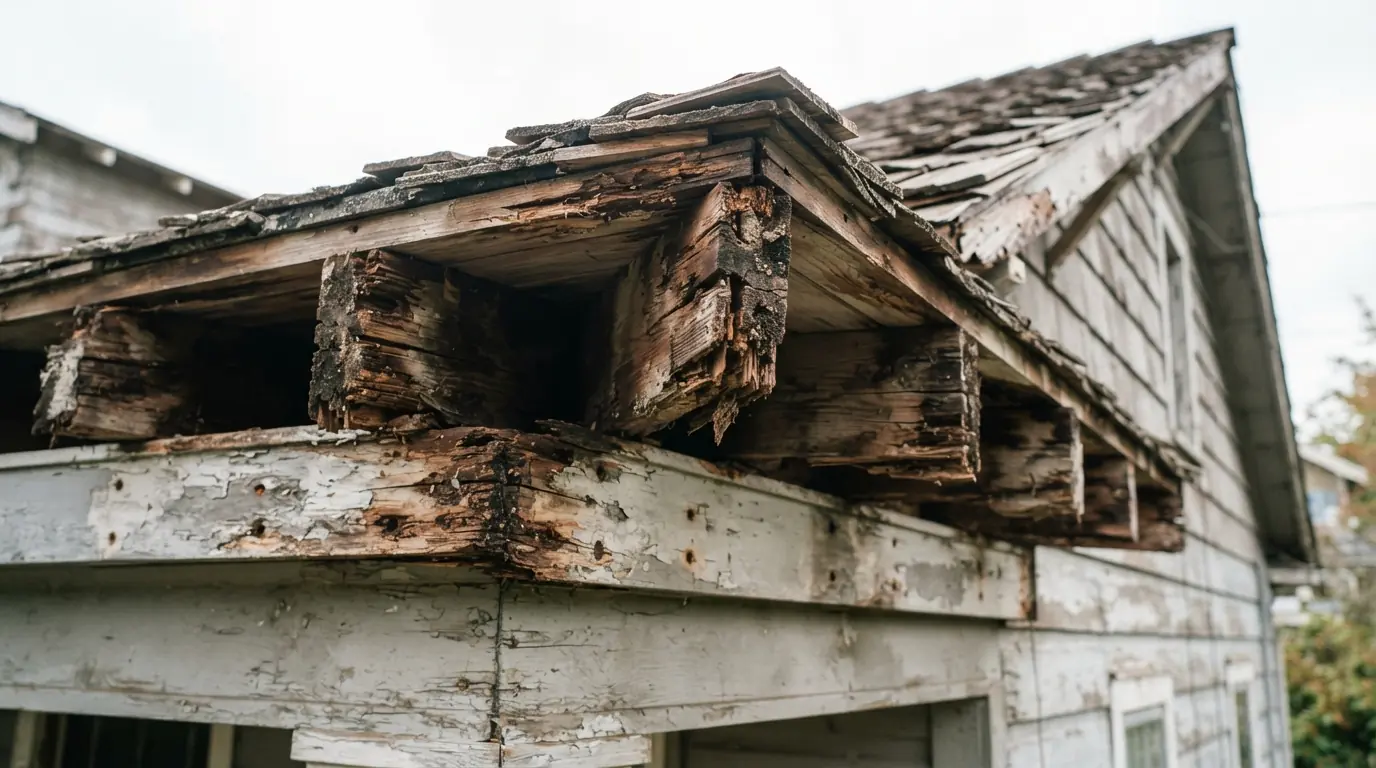
Rafter tails rot where they poke past the wall, under the fascia and behind the gutter. Minor end rot is cut back and a new tail sistered alongside with structural screws; badly rotted tails are cut back to sound wood inside the wall line and a new tail spliced on. Tails that carry a porch or patio roof are checked for bearing before any splice. Fascia is replaced at the same time, since it almost always rotted with the tails, and the gutters go back up with proper fall.
Eave and starter-board rot
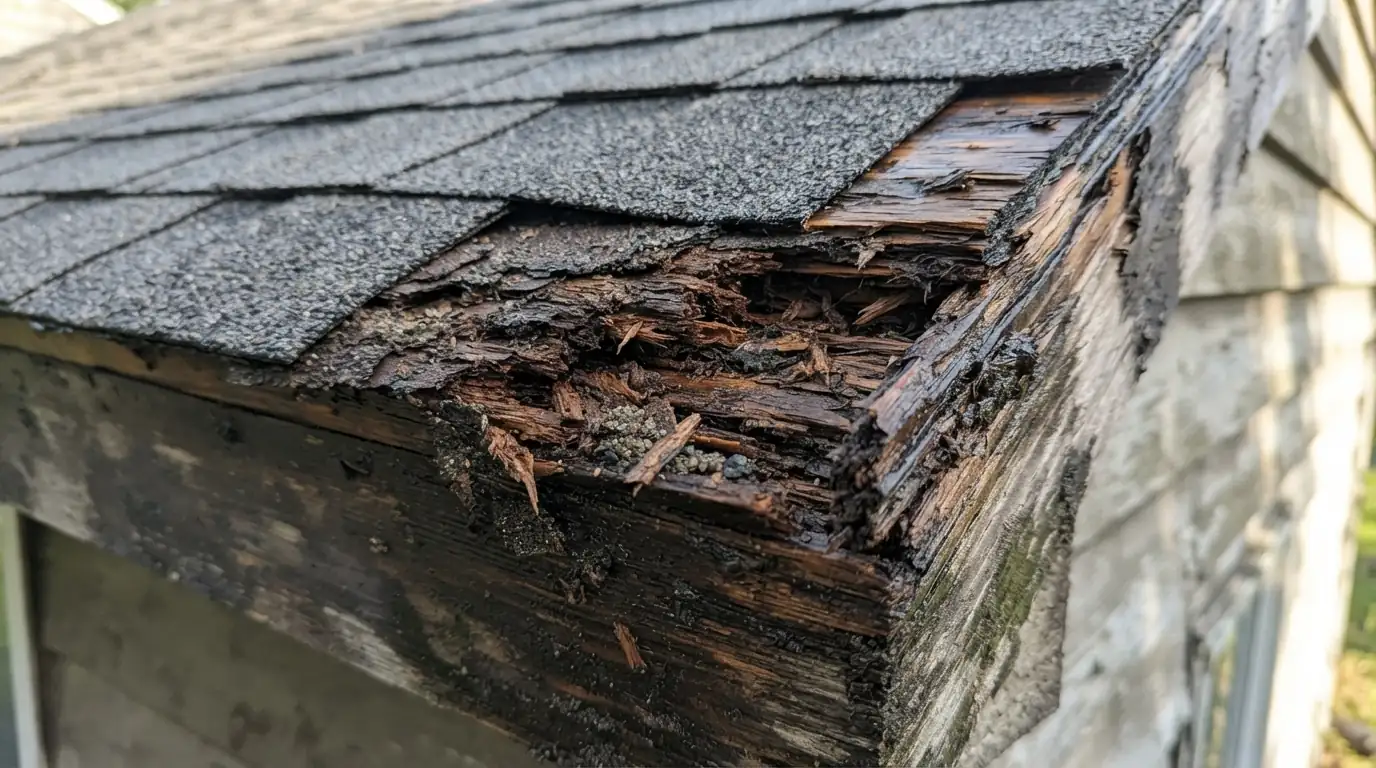
The first course of the roof and the board beneath it take every drop that runs off the roof. Without a drip edge, or with one tucked behind the gutter, water wicks back into the starter board and the ends of the sheathing. We replace the rotted boards, install a drip edge that throws water into the gutter, and seal the corners that tend to fail first. On tile roofs the first course is lifted to reach the starter board, then reset with new bird stops.
Rot found during a re-roof
Every tear-off turns up some rot. Our re-roof scopes carry a per-sheet price for replacement decking so the number is known before the work starts, and we photograph each sheet we pull. Rot around a skylight, chimney or valley tells us where the old roof was leaking, so the flashing in that spot gets extra attention on the new one. Rafters under rotted sheets are checked from above while the deck is open, the one time they can be seen without cutting into a ceiling, and anything soft is sistered then.
Cost
What dry rot repair costs depend on
Rot is priced after probing, because the real extent is rarely what shows on the surface.
- Extent The soft area is usually smaller than the rot behind it.
- Sheathing sheets Priced per sheet replaced.
- Structural members Rafter tails and rafters need sistering or splicing.
- Access Rot under tile or solar panels means lifting first.
- Covering repair Shingle, tile or membrane over the new wood is rebuilt.
- Cause of the moisture Drip edge, flashing or venting fixes are added in.
What we see on San Jose roofs
Much of San Jose's housing was built from the 1950s through the 1980s, with a median build year of 1976, so plenty of roofs here are on their second or third covering, and older overlays hide rot that nobody has seen in decades. The back-to-back atmospheric-river winters of the last two seasons made it worse, keeping eaves and valleys wet with no dry spell between storms, which is exactly the condition that lets rot fungus spread.
Soft spot on the roof? Get it probed before it spreads.
(669) 259-7490What happens after you call
How a dry rot repair runs
- 1
Probe
We push into the wood outward from the soft spot until it is firm.
- 2
Open up
Covering removed over the affected area.
- 3
Cut back
Past the last soft wood into sound lumber.
- 4
Replace
Sheathing, tails or blocking, sized to match.
- 5
Fix the cause
Drip edge, flashing or vent corrected.
- 6
Close up
Underlayment and covering rebuilt, photos shared.
Warning signs
Signs of dry rot in a roof
- Spongy feel underfoot
A roof section that gives when stepped on.
- Sagging roof line
A dip between rafters seen from the street.
- Crumbling wood at the eaves
Brown, cracked wood that breaks off by hand.
- Stains in the attic
Dark sheathing around nails and seams.
- Peeling paint on fascia
Moisture is pushing out from behind.
- Musty attic smell
Fungus and damp wood give it away.
FAQ
Questions we get asked
It weakens framing over time. Small areas are cosmetic; widespread rot in rafters is structural and needs prompt repair.
Soft wood has lost its strength. We replace it; treatment is only for protecting sound wood nearby.
Not usually. Local rot is repaired and the covering patched to match.
Only by probing. We give a range after looking and a firm price once it is opened.
Usually not, since it results from long-term moisture. Sudden leak damage may be covered.
Same category
Related roofing work
Shingle Roof Repair
Torn, missing and curling shingles, nail pops and ridge caps on composition roofs.
Learn moreTile Roof Repair
Cracked and slipped tiles, failed underlayment and valley repairs on concrete and clay.
Learn moreFlat Roof Repair
Ponding, blisters, split seams and foam cracks on low-slope roofs.
Learn moreRoof Flashing Repair
Chimney, wall, skylight and vent flashing rebuilt so the joint stops leaking.
Learn moreGet the rot found and fixed
Tell us where the wood feels soft or the paint is peeling. We probe, cut back to sound wood, and fix what caused it.