Replacement & Installation
Spray foam roofing for San Jose Eichlers and low-slope homes
Foam is the roof most mid-century flat-roofed homes here were meant to have: one continuous layer, light, insulating, and shaped to drain. It lasts as long as its coating does, so the coating schedule is part of the job.
What we treat
- Concrete and clay tile
- Composition shingle
- Flat, torch-down and TPO
- Spray foam
- Standing seam metal
Quick answer. Spray foam roofing in San Jose sprays closed-cell polyurethane foam directly onto a prepared low-slope roof, shapes it to drain toward the scuppers, and seals it with an elastomeric coating that protects the foam from the sun. A foam roof lasts as long as its coating is maintained; recoats are planned on a set schedule.
Updated September 2026
The job
How a foam roof works, and why the coating matters
Closed-cell foam goes on as a liquid, expands into a continuous layer with no seams, and bonds to the deck. It adds insulation to houses that were built with almost none in the roof, and it can be sprayed thicker where water needs to be pushed toward a drain.
Foam itself does not handle sunlight. The coating on top is what keeps it alive, and a foam roof that is recoated on schedule can last for decades.
Your options
Foam, single-ply or built-up for a mid-century flat roof?
All three work on low-slope roofs; foam solves drainage and insulation together.
| Question | Spray foam | TPO single-ply | Built-up |
|---|---|---|---|
| Seams | None | Welded seams | Layered plies |
| Adds insulation | Yes | Only with added boards | Little |
| Fixes ponding | Shaped into the foam | Needs tapered boards | Needs tapered boards |
| Upkeep | Recoat on schedule | Seam checks | Periodic resurfacing |
Jobs this page covers
New foam roof over Eichler and low-slope homes
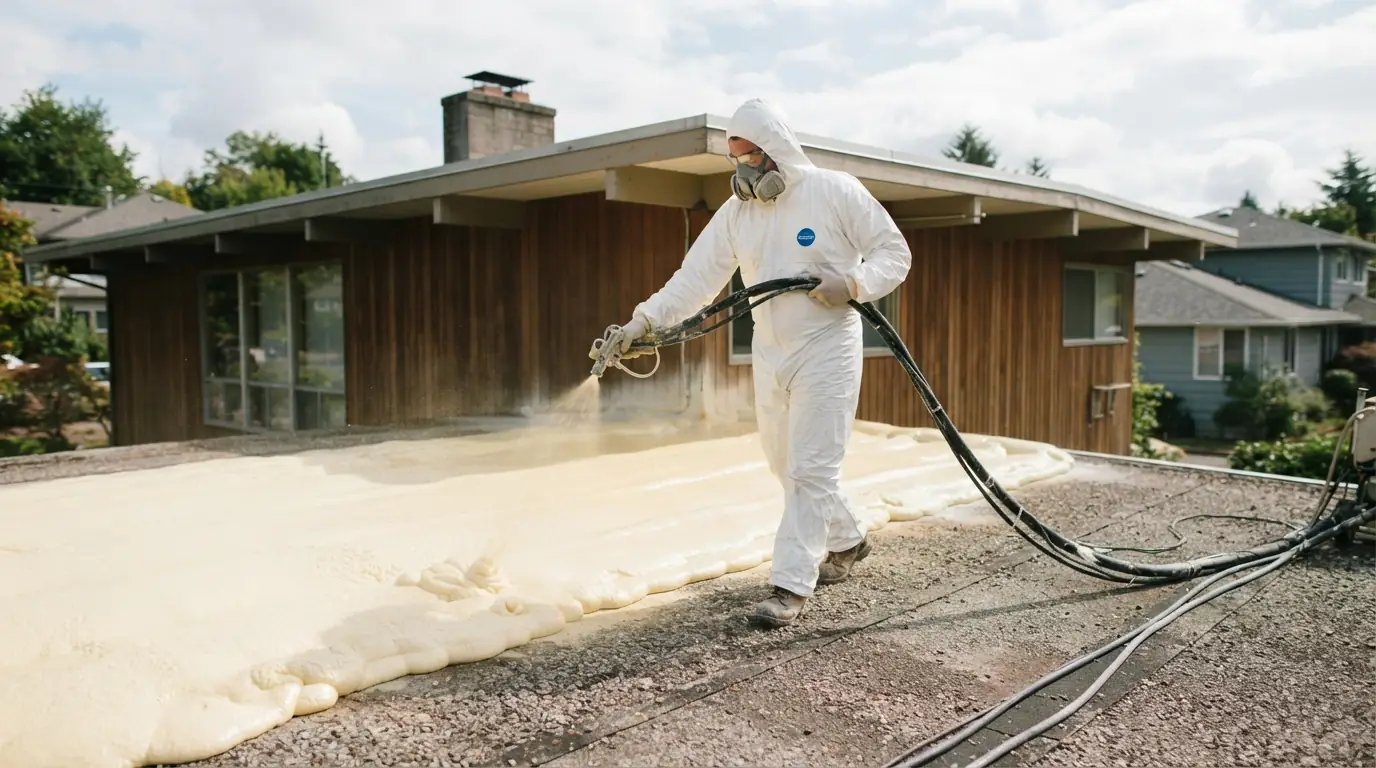
A new foam roof starts with a clean, dry, sound deck. Old gravel and loose material come off, wet areas are cut out, and edges and skylights are masked. Foam is sprayed in passes to the specified thickness, thicker where drainage needs building up, and finished to a smooth orange-peel texture that sheds water. The base and top coats of elastomeric coating follow, often with granules broadcast into the top coat for foot traffic. The roof stays low, which keeps the house's profile the way it was designed.
Foam recoat and renewal
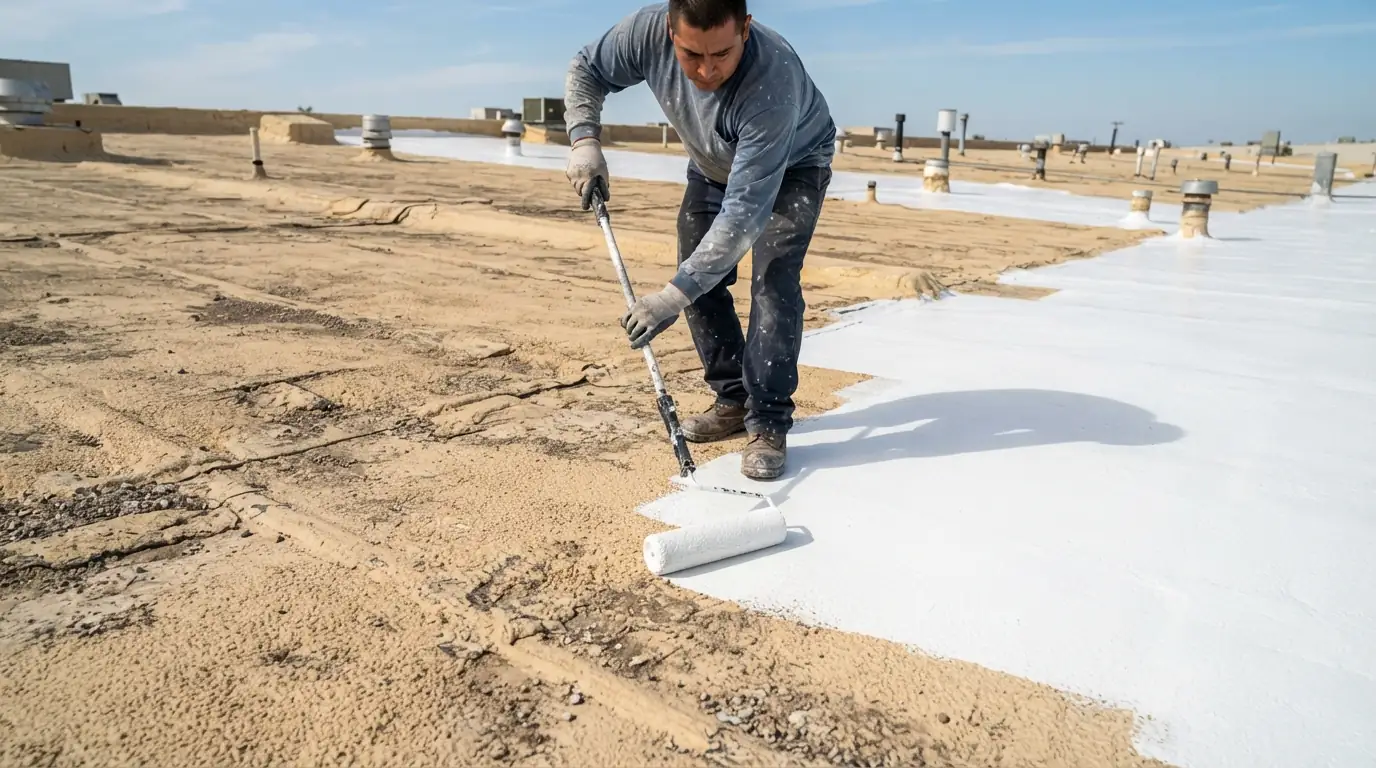
A recoat is the maintenance that keeps foam going. When the coating has chalked or thinned and the foam starts to show, we power wash the roof, cut out and refill any damaged or water-logged foam, seal bird pecks and cracks, and apply new coating to the specified thickness. Caught in time, a recoat costs a fraction of a new roof. Left too long, the sun degrades the exposed foam and the repair grows. We record coating thickness at several points so the next recoat can be planned from real numbers.
Foam over built-up roofs
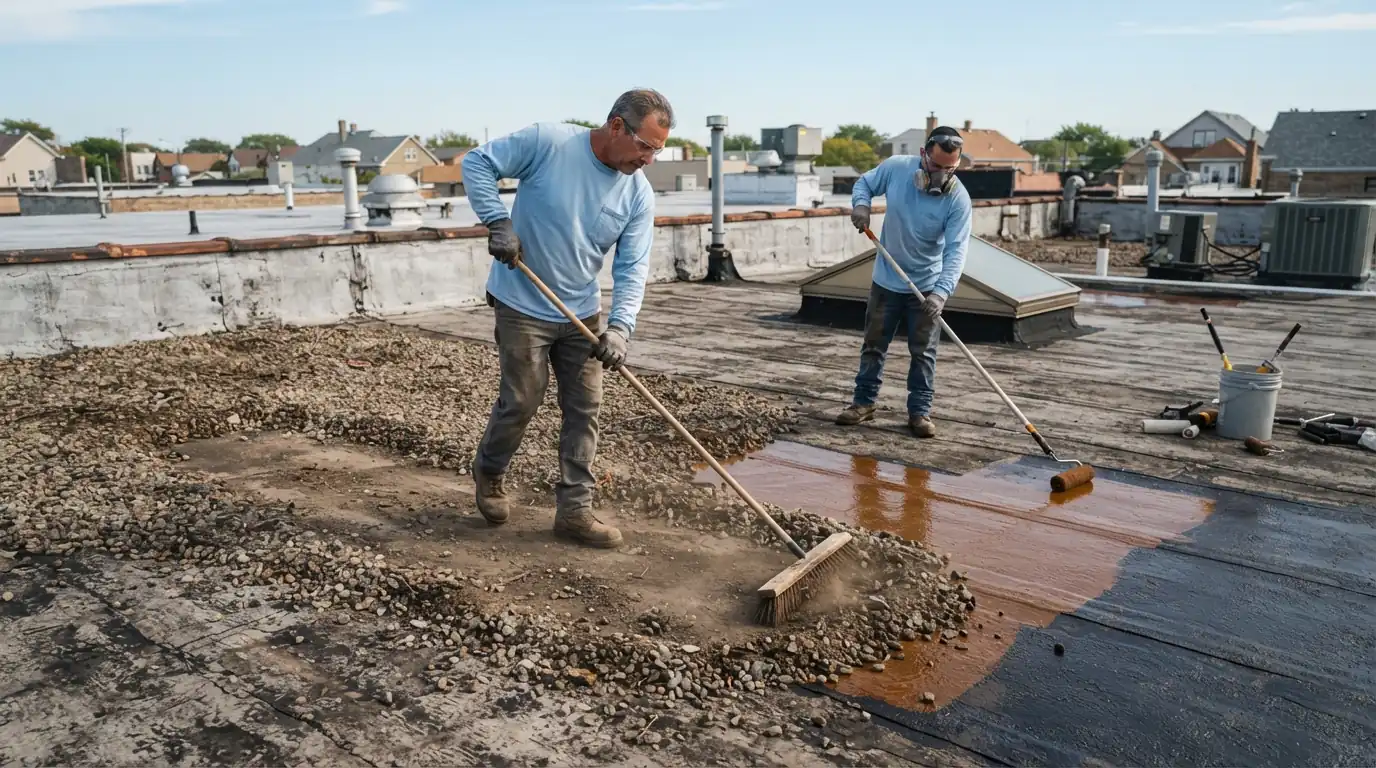
Many older built-up and tar-and-gravel roofs can be foamed over instead of torn off, which saves tear-off cost and keeps the house closed. The roof has to be dry and well attached. We core it to check for trapped moisture, remove loose gravel and wet sections, and prime before spraying. Where the old roof holds water throughout, it comes off, because foam over wet material will blister and fail. Foaming over also adds insulation above the old roof without touching the ceiling below.
Drainage crickets in foam
Foam can be sprayed thicker in some places than others, which lets us build slope into a roof that has none. Crickets between scuppers and behind parapets push water off instead of letting it sit. That is one of the main reasons foam suits the flat mid-century roofs here: the drainage problem gets fixed as part of the roof, without adding framing or raising the roofline. We map where water stands after rain before spraying, then build the crickets to move it toward the nearest scupper.
Cost
What a foam roof costs depends on
Foam is priced by area and thickness, plus the prep the existing roof needs.
- Roof area Measured in square feet of sprayed surface.
- Foam thickness Thicker foam adds insulation and slope.
- Coating system Acrylic or silicone, and the dry thickness specified.
- Existing roof Tear-off versus spraying over a dry built-up roof.
- Wet material Moisture found by coring is removed first.
- Details Skylights, parapets and scuppers take hand work.
What we see on San Jose roofs
Foam is common on San Jose's Eichler tracts, from Fairglen to the early Rose Glen tract near San Jose City College. Most of those roofs are foam or built-up systems with a service life of ten to twenty years depending on how well they are kept, and Fairglen's neighborhood design guidance favors foam because it preserves the low profile. On these houses the question is usually recoat or renew, not what material to use.
Scope
What a foam roof scope includes
Every foam job lists these items and their measured values.
- Moisture survey and core samples
- Removal of gravel and wet material
- Primer where the substrate needs it
- Foam thickness specified by area
- Crickets shaped between drains
- Base and top coat dry thickness
- Written recoat interval
What happens after you call
How a foam roof job runs
- 1
Moisture check
Cores and a scan of the existing roof.
- 2
Prep
Gravel and wet areas removed, surface cleaned and primed.
- 3
Mask
Walls, windows and skylights protected from overspray.
- 4
Spray
Foam in passes, shaped to drain.
- 5
Coat
Base and top coat to specified thickness.
- 6
Schedule recoat
You get the recoat interval in writing.
Brands we install and service
FAQ
Questions we get asked
As long as the coating is maintained. Recoated on schedule, foam roofs commonly last decades.
If it is dry and well attached, often yes. Coring tells us.
The house is masked and the roof area closed off; the foam cures quickly on the roof surface.
Yes, with care; granules in the top coat help where there is regular foot traffic.
Yes. It adds roof insulation that most flat mid-century homes were built without.
Same category
Related roofing work
Roof Replacement
Composition shingle re-roofs with Class A and cool-roof options, permitted and inspected.
Learn moreTile Roof Replacement
Concrete and clay tile re-roofs, including lift-and-relay with new underlayment.
Learn moreFlat Roof Replacement
TPO, PVC and torch-down systems with tapered drainage for low-slope roofs.
Learn moreMetal Roof Installation
Standing seam and stone-coated steel, including over existing shingles.
Learn moreGet your low-slope roof checked for foam
Tell us about the roof and the last time it was coated. We core it, check it, and price a recoat or a new foam roof.