Inspections & Maintenance
Attic ventilation for San Jose roofs
An attic that cannot breathe cooks the roof from underneath in summer and traps moisture in winter. Balanced intake and exhaust fixes both, and in a fire zone the vents also have to keep embers out.

What we treat
- Concrete and clay tile
- Composition shingle
- Flat, torch-down and TPO
- Spray foam
- Standing seam metal
Quick answer. Attic ventilation in San Jose balances cool intake air at the eaves with hot exhaust at the ridge, usually through continuous soffit vents and a ridge vent, sized to the attic's floor area. In fire hazard zones, vents are specified ember and flame resistant. Most retrofits take a day and are easiest during a re-roof.
Updated September 2026
The job
Why the attic matters to the roof
Shingle manufacturers tie their warranties to proper ventilation for a reason: a hot attic ages asphalt from underneath, and trapped moist air condenses on the deck in winter. The fix is balance, roughly equal intake low and exhaust high, so air flows under the whole deck.
More vents is not always better. Mixing a ridge vent with gable vents or powered fans can short-circuit the airflow.
Your options
Ridge vent, box vents or an attic fan?
Most San Jose roofs do best with a ridge vent and continuous soffit intake.
| Question | Ridge vent | Box vents | Solar fan |
|---|---|---|---|
| Airflow | Even along the peak | Spotty | Strong on sunny days |
| Moving parts | None | None | Motor |
| Looks | Nearly invisible | Visible boxes | Visible unit |
| Best for | Most gable and hip roofs | Short ridges | Hard-to-vent attics |
Jobs this page covers
Ridge and soffit vent installation
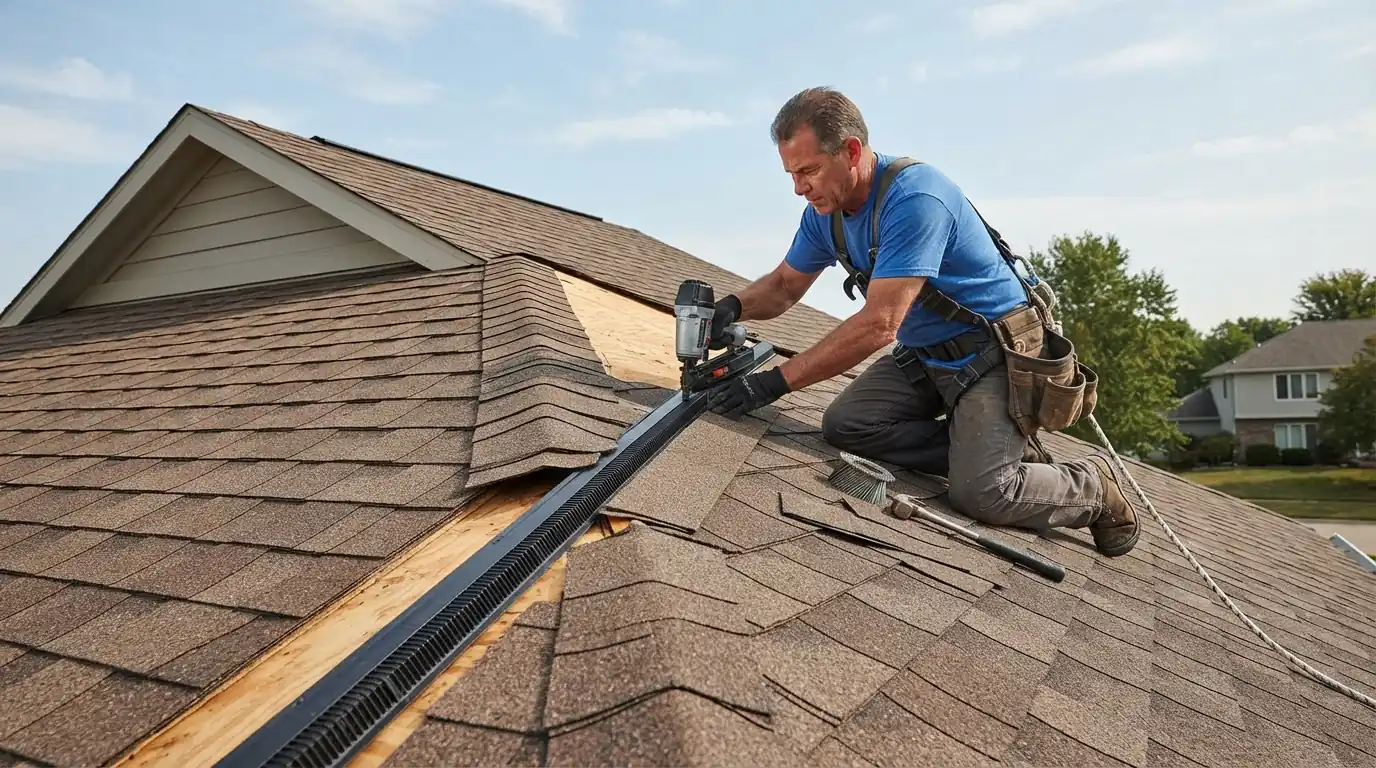
A ridge vent runs along the peak over a slot cut through the sheathing, capped with shingles so it nearly disappears. It only works with intake below, so we open or add soffit vents, clear insulation away from them with baffles, and size both to the attic. On houses without eaves we use edge intake vents at the fascia line. The result is steady airflow without moving parts. Hip roofs with short ridges may need extra exhaust near the peak to reach the right total.
Ember-resistant vents for fire zones
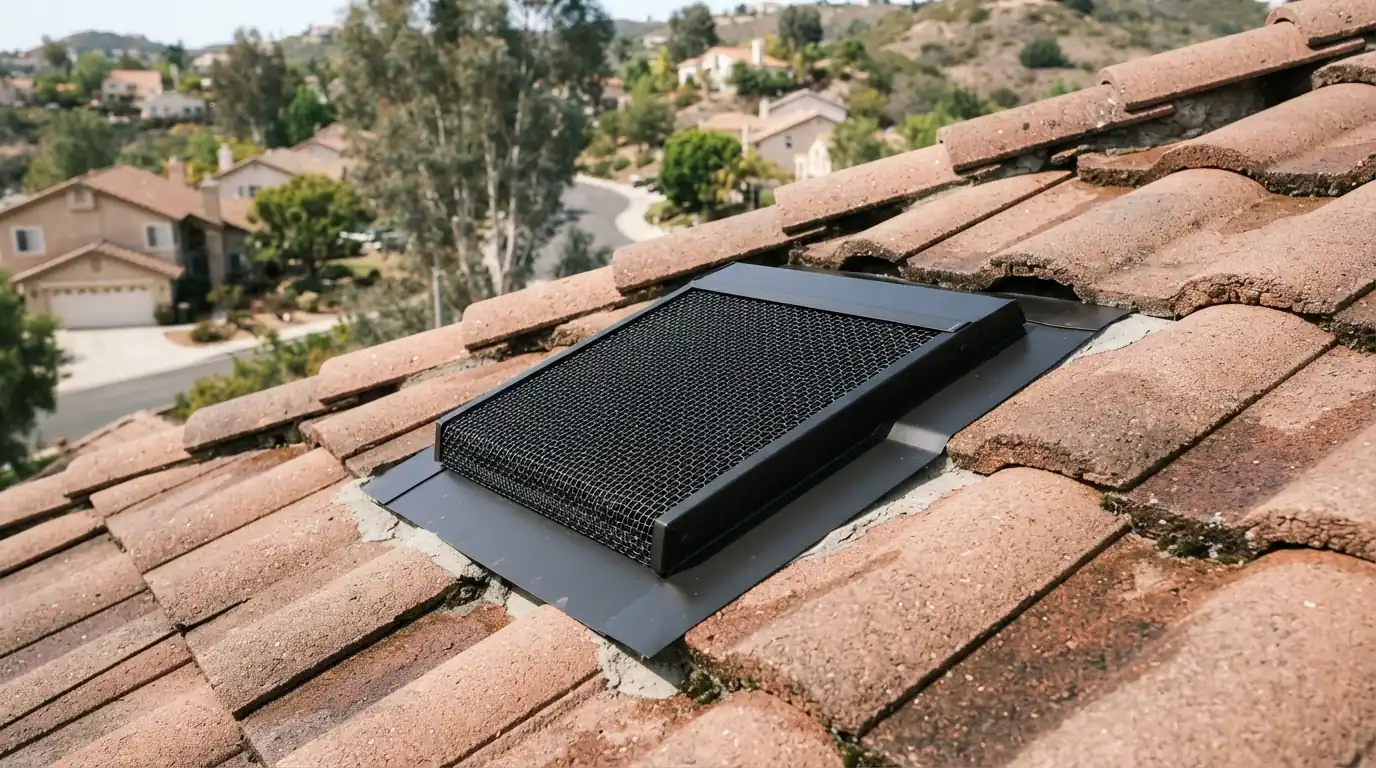
Wind-blown embers are how most houses in wildfire areas catch, and open vents are a common entry point. Ember- and flame-resistant vents use fine mesh and baffles that stop sparks while still passing air. On a re-roof inside a mapped hazard zone the vents are part of the required assembly; on an existing roof we swap them in as a standalone job without touching the covering around them. Soffit and gable vents get the same treatment, since embers enter low as well as high.
Solar and powered attic fans
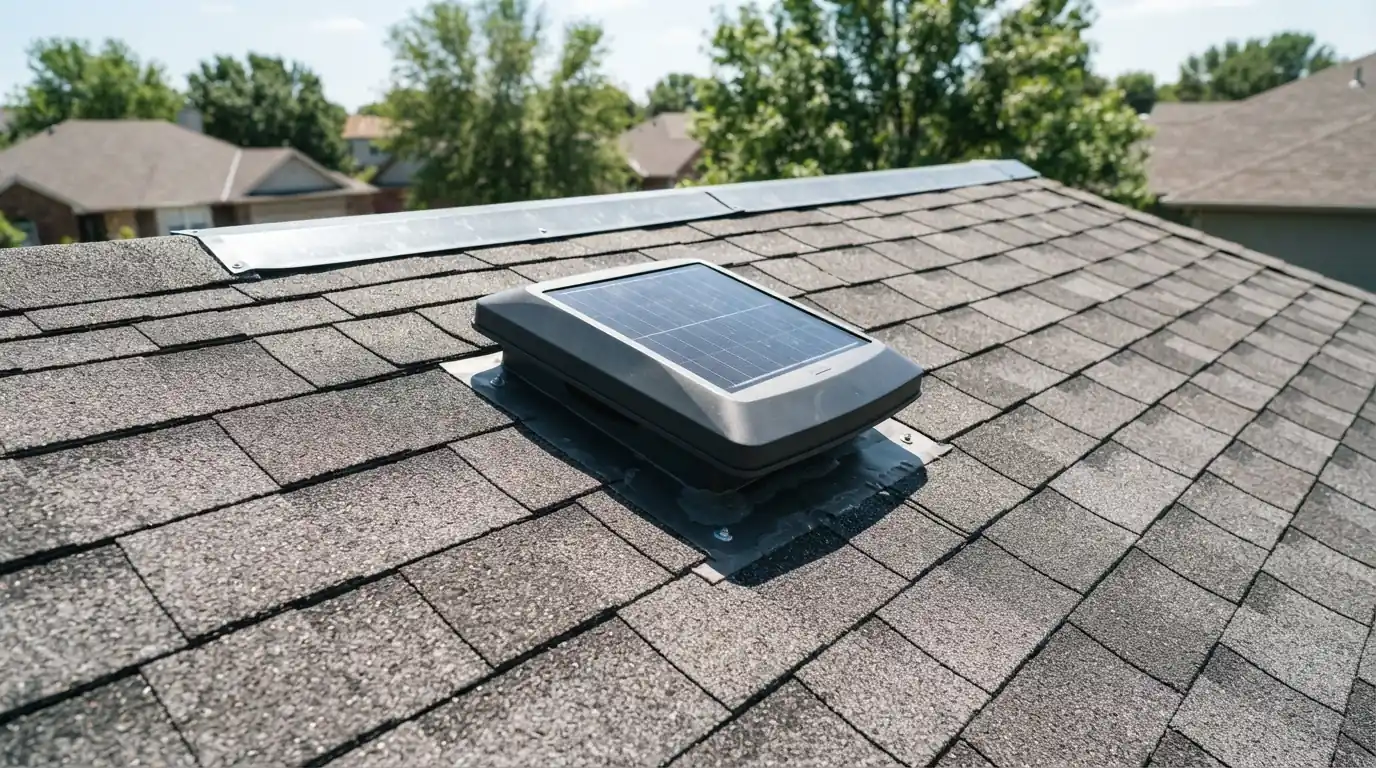
Powered fans move a lot of air on hot afternoons, but they can pull conditioned air from the house or draw from a nearby vent instead of the eaves. We only recommend one when passive venting cannot be balanced, and then with enough intake that it does not depressurize the attic. Solar units avoid running a circuit and shut down at night when they are not needed. We also look for a clogged soffit first, since a fan is often bought to fix a problem open intake would solve.
Bathroom exhaust roof vents
Bathroom fans that dump into the attic instead of outside are one of the most common causes of winter condensation and deck stains. We run the duct to a dedicated roof or wall cap with a damper, insulate the duct through the cold attic, and seal the cap into the roof covering. It is a small job that stops a lot of mystery moisture, and the stained sheathing around the old outlet usually tells us exactly where it was. The job takes a few hours.
Cost
What a ventilation job costs depends on
Venting is priced by the length of ridge and eave and the vent type chosen.
- Ridge length Measured in linear feet of slot and cap.
- Intake work Opening soffits and adding baffles.
- Vent type Ember-resistant vents cost more than standard.
- Roof covering Tile ridges take more work than shingle.
- Fans Solar or powered units add equipment cost.
- Timing During a re-roof is the cheapest time.
What we see on San Jose roofs
San Jose adopted CAL FIRE's updated hazard map in June 2025, and the city's very-high zone roughly doubled to about 7,200 acres, the largest jump of any Bay Area city. Most of it sits along the Almaden Valley on the southwest side and the East Foothills near Alum Rock, both with a history of serious fires. On roofs there, the vent choice is as important as the roofing, because open attic vents are how embers get inside.
Scope
What a ventilation upgrade includes
The scope we write for a balanced attic.
- Attic floor area measured
- Intake and exhaust sized to match
- Soffit vents opened and baffled
- Ridge vent or exhaust caps installed
- Conflicting vents closed off
- Bath fans ducted outside
- Ember-resistant vents in hazard zones
What happens after you call
How a ventilation upgrade runs
- 1
Attic check
Measure floor area, look for stains and blocked soffits.
- 2
Calculate
Size intake and exhaust to the attic.
- 3
Open intake
Soffit vents cleared, baffles added.
- 4
Install exhaust
Ridge vent or caps set and flashed.
- 5
Remove conflicts
Close vents that short-circuit the flow.
- 6
Check airflow
Confirm air moves from eave to ridge.
Brands we install and service
FAQ
Questions we get asked
Heat that lingers upstairs into the evening, stains on the underside of the deck, and shingles aging early are the common signs.
On a re-roof inside a mapped fire hazard zone, yes. Elsewhere they are optional but worth considering in the hills.
Not when installed with the right baffle and cap. Most ridge vent leaks come from cheap or wrong-profile products.
Only when passive venting cannot be balanced. Otherwise it can pull air from the house.
Yes, though it is easier and cheaper during a re-roof.
Same category
Related roofing work
Roof Inspection
A roof and attic walk with photos, before the rains or before a purchase.
Learn moreRoof Certification
Inspection, any required repairs, and the certification paperwork for a sale.
Learn moreRoof Maintenance
An annual tune-up: sealants, boots, debris and minor resets before winter.
Learn moreRoof Cleaning
Debris, moss and algae cleared without damaging tile or shingle.
Learn moreGet the attic breathing properly
We measure the attic, check the vents you have, and quote a balanced setup, with ember-resistant options where they are needed.