Replacement & Installation
Solar panel removal and reinstall for San Jose re-roofs
A new roof under old mounts is a leak waiting to happen. The panels have to come off, the roof has to go on properly underneath, and every stanchion has to be flashed into the new covering.

What we treat
- Concrete and clay tile
- Composition shingle
- Flat, torch-down and TPO
- Spray foam
- Standing seam metal
Quick answer. Solar panel removal and reinstall in San Jose means detaching the array and racking, storing the panels safely on site, re-roofing or repairing the roof beneath, installing new flashed mounts into the new covering, and resetting and reconnecting the panels. The array is usually offline for three to seven days on a typical re-roof.
Updated September 2026
The job
Why the panels have to come off
Mounts are bolted through the roof into the rafters, and each one relies on flashing that is part of the covering around it. Re-roofing around mounts leaves the old flashing tied into a new roof, which is exactly where leaks start.
We coordinate the electrical side with your solar company or a solar electrician, so the system is shut down safely and recommissioned by someone who can sign for it.
Jobs this page covers
Detach and reset around a re-roof
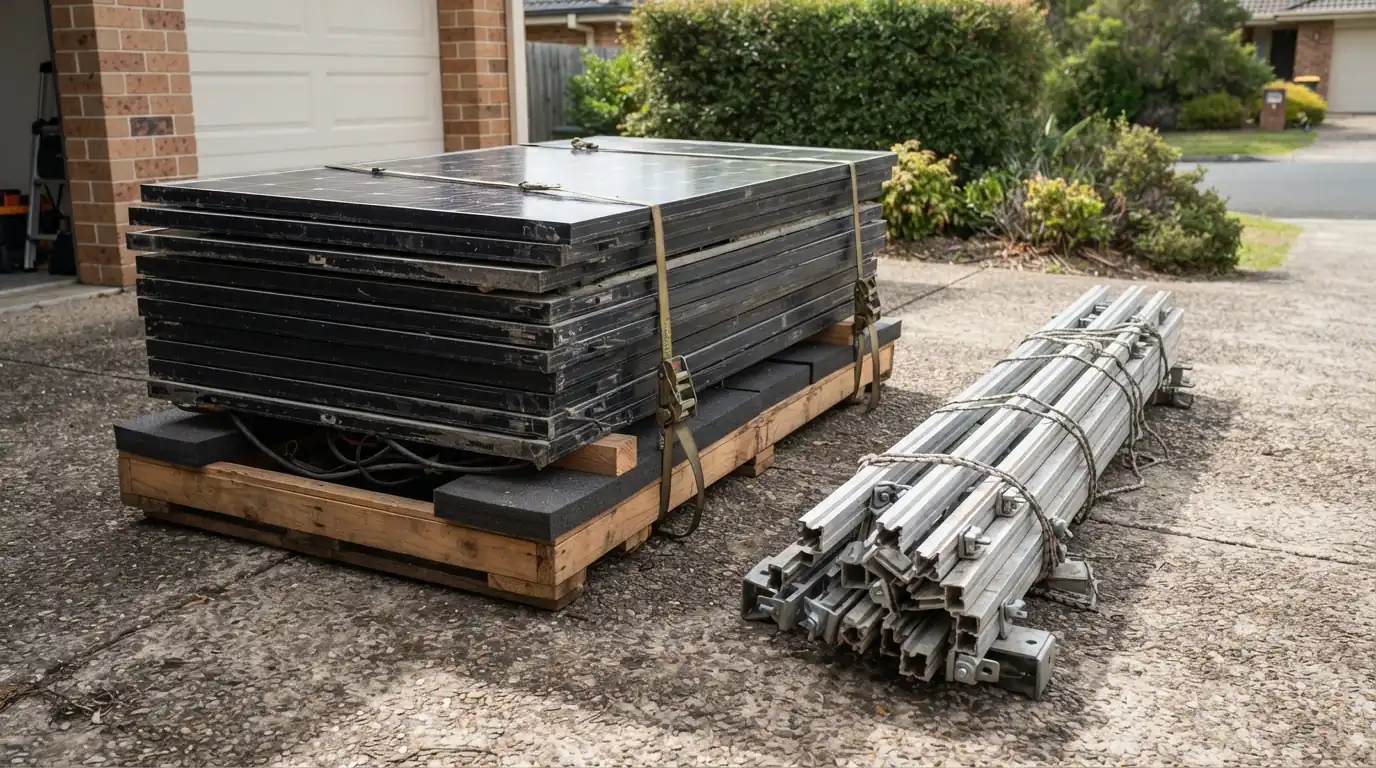
After the system is shut down and disconnected, panels are unclipped, labeled by position and stacked on padding where they will not be walked on or scratched. The racking comes off rail by rail. With the roof clear, the re-roof proceeds like any other: tear-off, deck check, underlayment and covering. The array goes back in its original layout so the wiring runs match; microinverters and optimizers stay with their panels so nothing gets mixed up. Then the system is reconnected and tested before we call it done.
Flashing and stanchion resealing
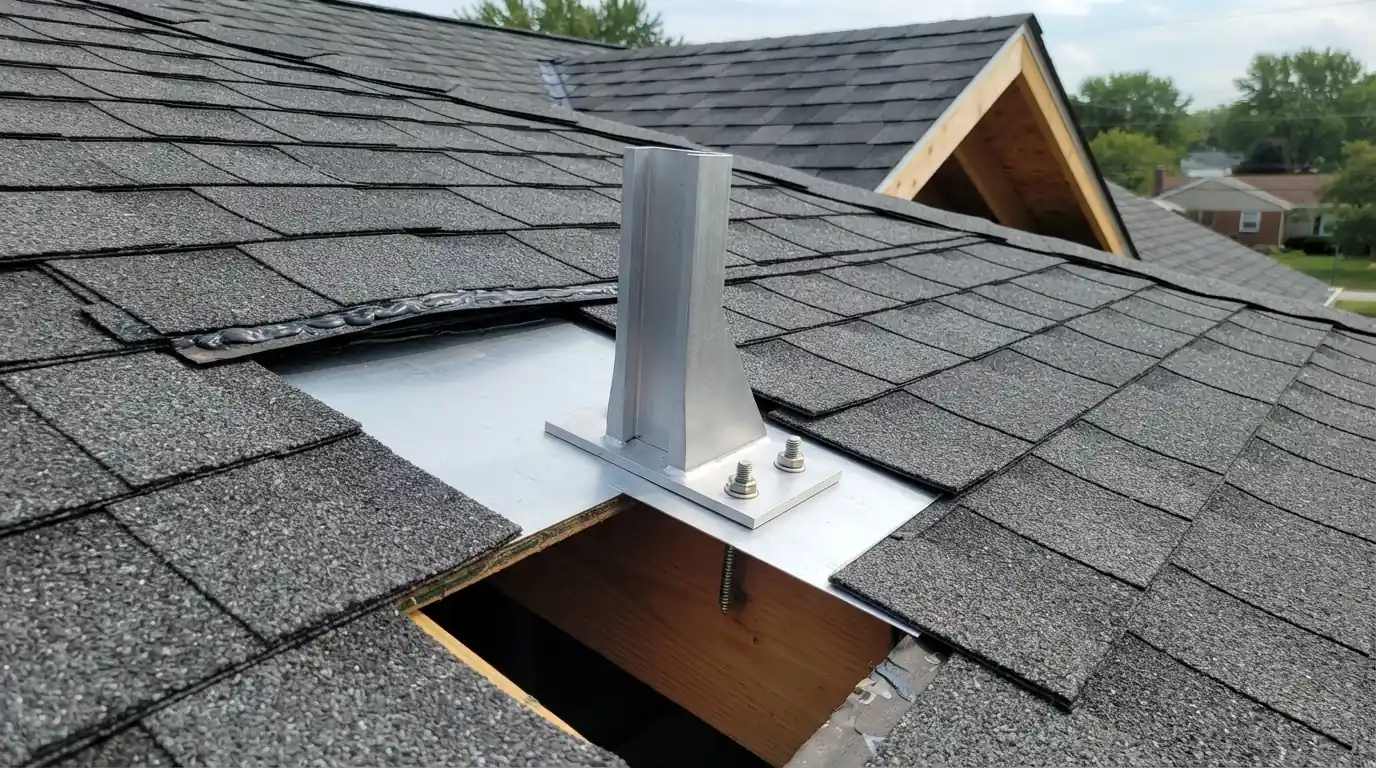
Every mount is reinstalled with new flashing woven into the new shingles or tile, not sealed on top of them. We locate the rafters again rather than reusing old holes, because old holes in new decking leak. On tile roofs, mounts get tile replacement flashings or cut tiles with integrated boots. The attic side is checked for each lag so nothing misses the framing and splits a rafter. Mount count and spacing follow the racking maker's layout, and a mount that cannot land on a rafter gets blocking added between rafters from the attic.
Coordinating with the solar company
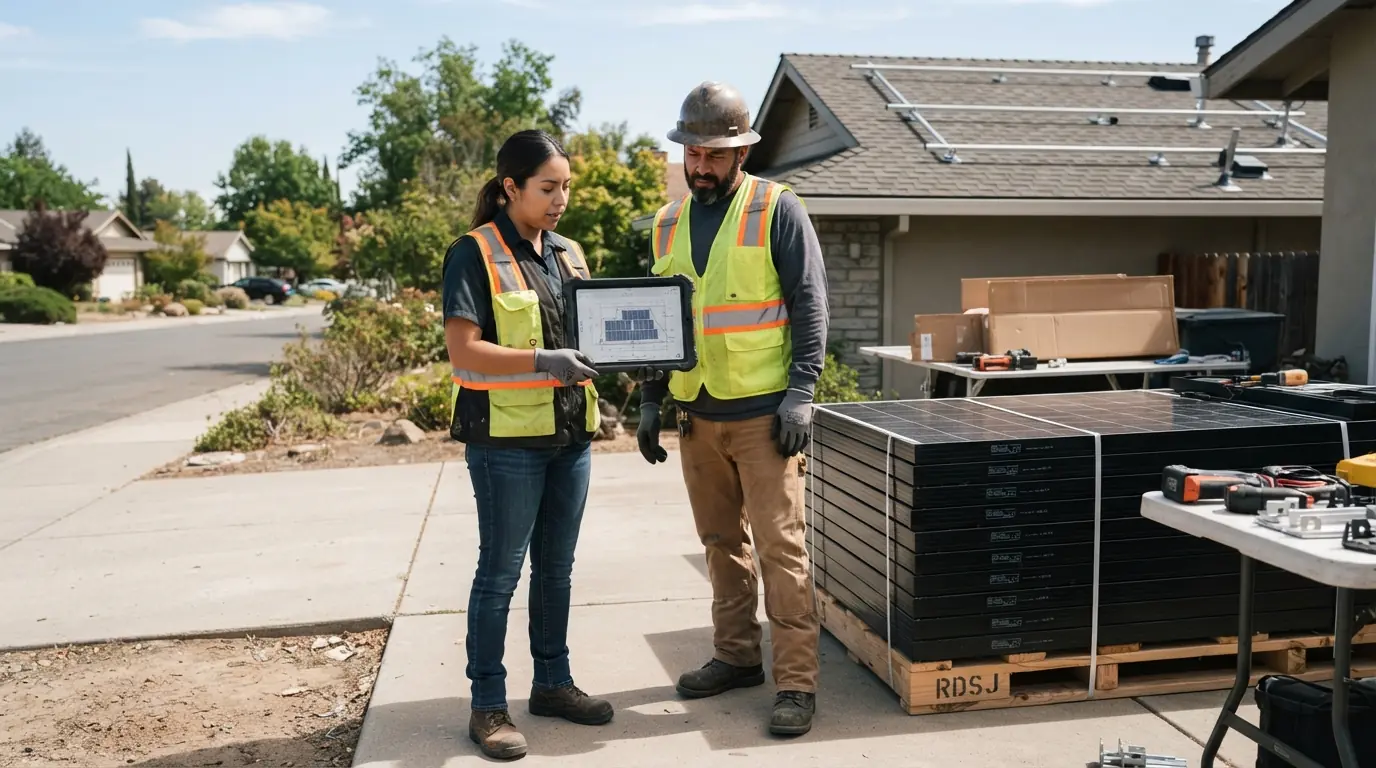
Many systems carry an installer's warranty that expects a qualified person to handle the electrical side, and some monitoring apps flag the outage. We schedule around your solar company where it is still in business, or bring in a solar electrician where it is not. You get one timeline for the whole job, and one point of contact on our side from shutdown to restart. If the array needs its own repairs, like a failed optimizer, the electrician can handle them while the panels are down, which saves a second shutdown later.
Cost
What removal and reinstall costs depend on
The array is priced by panel count and mount type; the roofing is priced separately.
- Panel count Priced per panel for removal, storage and reset.
- Mount type Tile mounts and ballast systems take more labor.
- Electrical Shutdown and recommissioning by a qualified electrician.
- Racking condition Corroded rails or clamps are replaced.
- Roof scope Full re-roof or just the slopes under the array.
- Critter guards Mesh skirts reinstalled or added.
What we see on San Jose roofs
In San Jose, re-roofing under an array almost always crosses the 25 percent threshold that requires a reroof permit, even when only the slopes under the panels are being done, and that permit goes through SJPermits with the roofing material and fire class on file. We file it before the panels come off, so the inspection happens with the roof open and the array can go back on without waiting on the city.
Scope
What the job includes
Every removal and reinstall scope lists these lines.
- Photos of the layout before removal
- Safe shutdown and disconnection
- Panels labeled and stored on padding
- Racking removed and inspected
- New flashed mounts on located rafters
- Panels reset in the original layout
- System restart and output check
What happens after you call
How the job runs
- 1
Plan
Layout photographed, electrical side scheduled.
- 2
Shut down
System disconnected by a qualified tech.
- 3
Remove and store
Panels labeled and stacked on padding.
- 4
Re-roof
Tear-off, deck check, new covering.
- 5
New mounts
Located on rafters and flashed into the covering.
- 6
Reset and restart
Panels back in place, system tested.
Timeline
How long the panels are offline
On a typical single-family re-roof the array is off for three to seven days: a day to remove, the re-roof itself, and a day to reset and restart. Scheduling the electrical side in advance is what keeps the gap short, so we book it before the tear-off date.
FAQ
Questions we get asked
Not properly. Mounts need new flashing tied into the new roof; that means the panels come off.
Not when a qualified person handles the electrical side. We coordinate with your installer or a solar electrician.
On site, on padding, away from foot traffic.
Yes, if you want them. Mesh skirts keep birds and rodents out from under the array.
Usually, since re-roofing under an array passes the 25 percent threshold. We file it.
Same category
Related roofing work
Roof Replacement
Composition shingle re-roofs with Class A and cool-roof options, permitted and inspected.
Learn moreTile Roof Replacement
Concrete and clay tile re-roofs, including lift-and-relay with new underlayment.
Learn moreFlat Roof Replacement
TPO, PVC and torch-down systems with tapered drainage for low-slope roofs.
Learn moreMetal Roof Installation
Standing seam and stone-coated steel, including over existing shingles.
Learn morePlan the re-roof around your panels
Tell us the number of panels and your roof type. We plan the removal, the roof and the reset as one job.