Roofing guide
Your roof is leaking: what to do in the first hour
A roof leak in the middle of a storm feels urgent, and it is. The first hour is about safety and damage control, not fixing the roof. Here is the order to do things in.
By Norman Eastwood, Roofing Guides Editor. Updated September 2026.

Quick answer. When a roof leaks in San Jose, first keep people away from wet electrical fixtures, then catch the water, move belongings, and drain a bulging ceiling with a small hole into a bucket. Photograph everything, stay off the roof, and call a roofer who answers around the clock to arrange a tarp or temporary patch.
Step one: make it safe
Water and electricity are the real danger. If water is dripping through a light fixture, a ceiling fan or near outlets, switch off that circuit at the panel before doing anything else. Do not stand in water to reach a switch. If you cannot tell which breaker it is and water is spreading, shut off the main and call an electrician after the roofer.
A ceiling that sags or bulges is holding water and can come down in one piece. Keep people and pets out from under it. Anything heavy, like a chandelier, in a wet ceiling should be left alone until the ceiling is drained.
Step two: catch the water and protect what you own
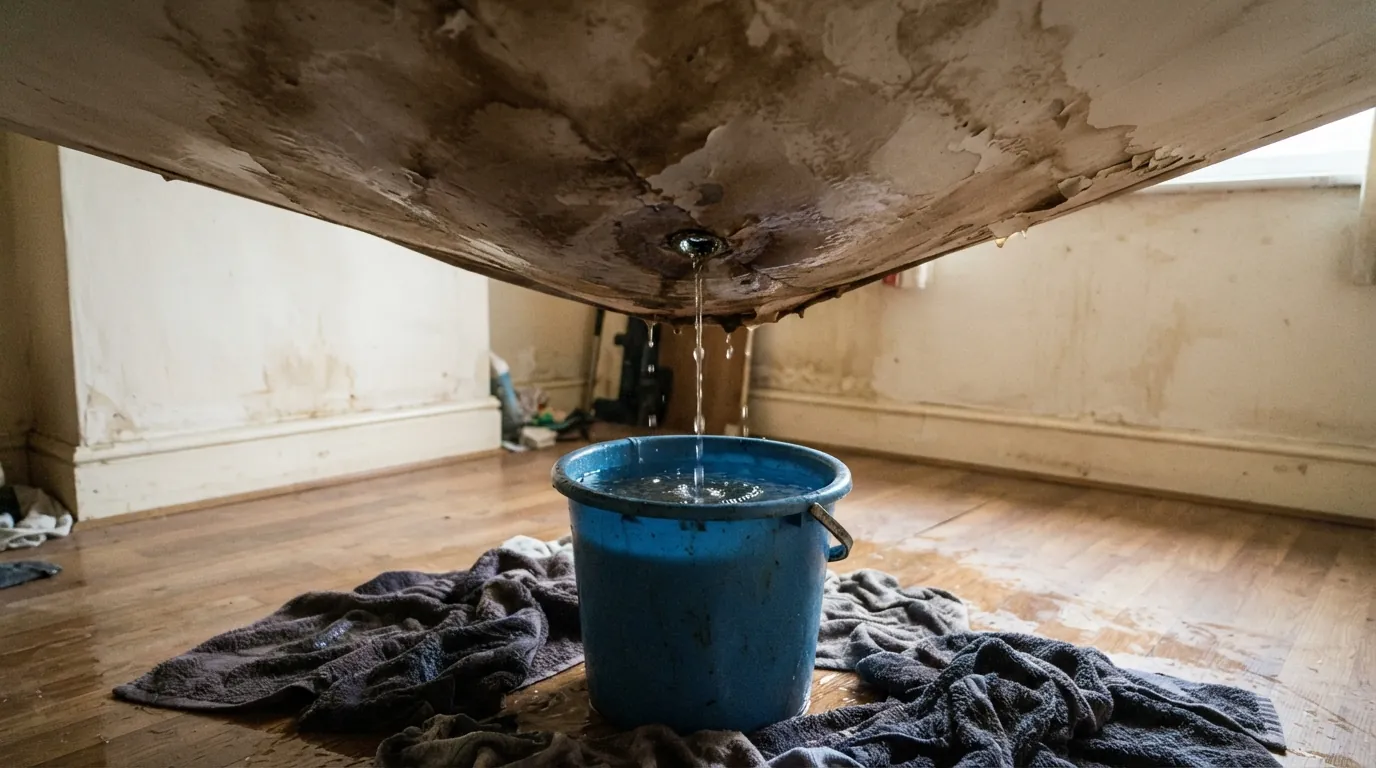
Put buckets, pots or a trash can under every drip, with a towel inside to stop splashing. Move furniture, rugs and electronics out of the area, and roll up rugs rather than dragging them. Cover what cannot be moved with plastic sheeting or trash bags.
For a bulging ceiling, poke a small hole at the lowest point of the bulge with a screwdriver, with a bucket directly below. It feels wrong, but it lets the water out in a controlled stream instead of bringing the drywall down. One small hole is far easier to patch than a collapsed ceiling.
Step three: find where it is coming from, from inside
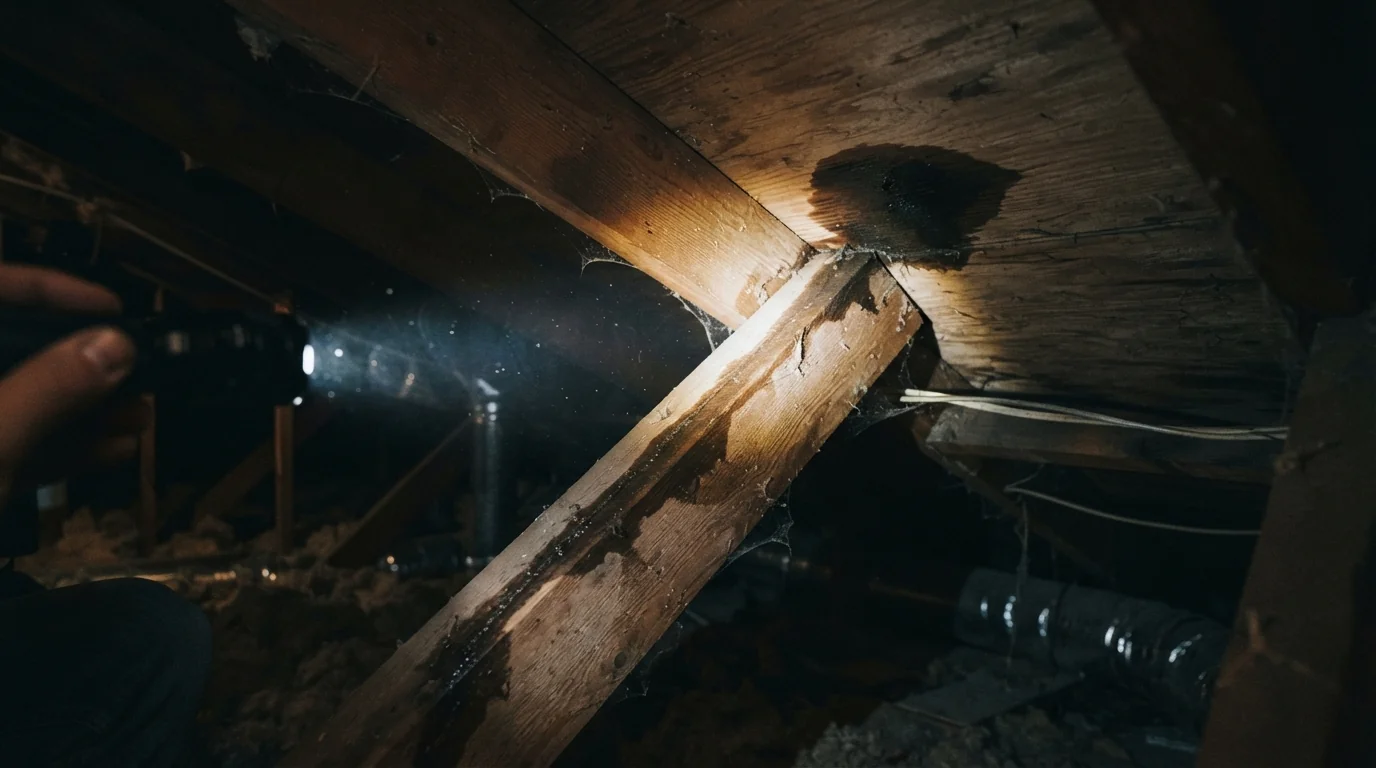
If you have attic access and it is safe to go up, take a flashlight and look above the leak. Water usually enters higher up the roof and runs along a rafter or the underside of the deck before it drops, so the stain is rarely right below the entry point. Wet insulation and a dark trail on the wood show the path. Do not walk on the ceiling joists between boards; step only on framing or flooring.
Photograph what you find, from the stain on the ceiling to the wet spot in the attic. Those photos help the roofer start in the right place and are the first thing an insurance adjuster will ask for.
Water coming through the ceiling now? Call us any hour.
(669) 259-7490What not to do
Do not climb onto the roof in the rain or in the dark. Wet shingles and tile are slick, and falls from roofs are how most storm-related injuries happen at home. Do not pile caulk or roof cement on the roof in the rain; it does not stick to wet surfaces and makes the proper repair harder. Do not hold a tarp down with bricks or blocks; the first gust turns them into projectiles and lifts the tarp anyway.
Do not wait to see if it stops. Leaks almost always come back in the next storm, and in San Jose, where most of the year's rain falls between November and March in back-to-back systems, the next storm is often days away.
Step four: call a roofer, and what to tell them
Tell the roofer when the leak started, whether it is dripping right now, where in the house it shows, what the roof is made of if you know, and whether the house is one story or two. Mention any recent wind, a fallen branch or work on the roof. That is enough for a same-call plan: a roofer tonight if water is pouring in and the roof can be reached safely, or an emergency tarp at first light.
The first visit stops the water. The permanent leak repair waits for the roof to dry, usually days later, when the damaged area can be opened and rebuilt properly.

Step five: protect your insurance claim
Most policies expect you to prevent further damage, and emergency tarping or patching usually counts as that. Keep every receipt. Photograph the damage before and after anything is moved or covered, and write down when the leak started and what the weather was. Report the claim promptly, and ask the roofer for a written cause and photos. If the damage came from a storm, our storm damage reports separate storm damage from wear, which is the question the adjuster will ask first.
FAQ
Roof leak questions
Make it safe and stop further damage first, which usually means a roofer. Report the claim promptly after.
Only if the attic has flooring or you can step on framing, and no electrical wiring is wet.
Water runs along rafters and the deck before it drops, often several feet from where it entered.
Not in the rain or on a steep or tile roof. Leave it to a roofer with fall protection.
The dripping will, but the opening will not. It will leak again next storm.
We answer 24 hours a day and give you a plan on the call, with a crew at first light if night work is unsafe.
Usually not. Most leaks come from one flashing, boot, valley or cracked tile and are repairable.