Roofing guide
How to get a San Jose roof ready before the rains
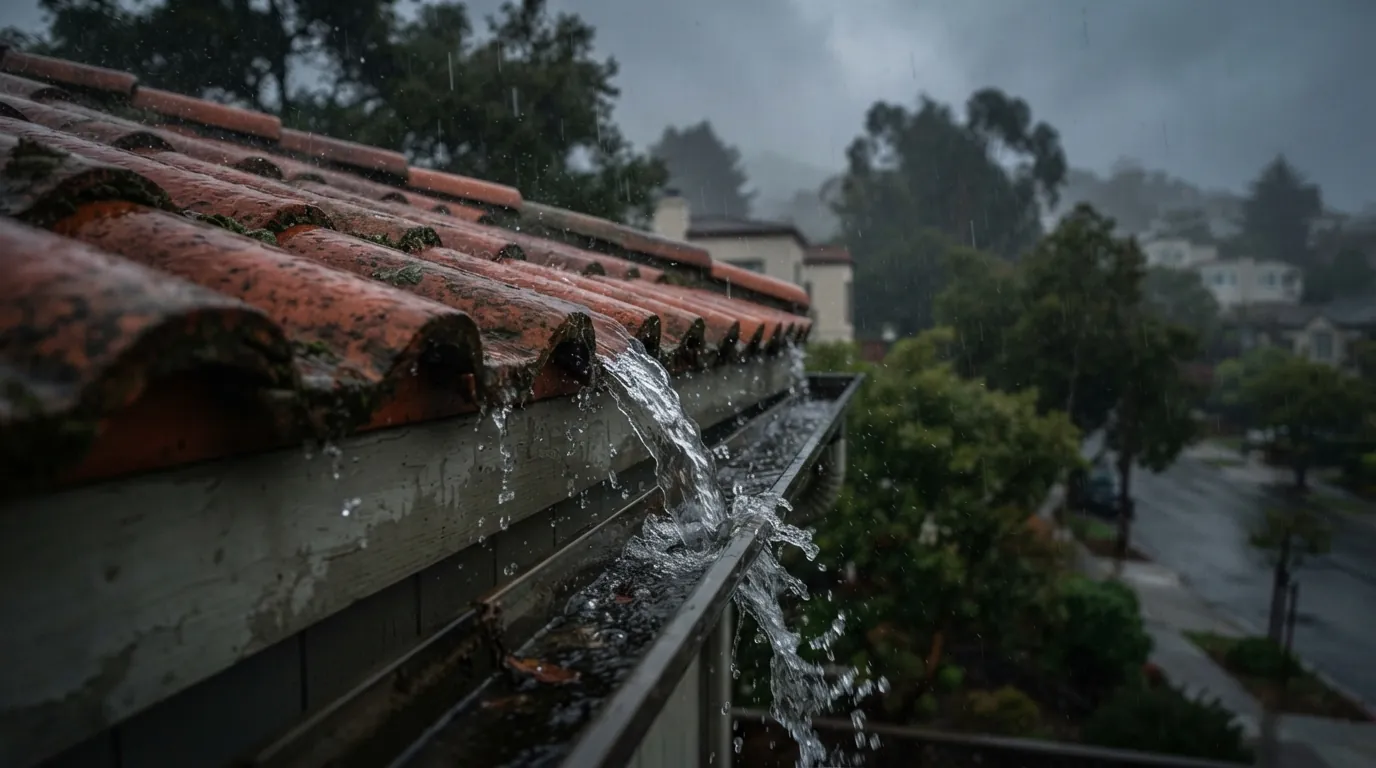
San Jose gets little rain, but most of it arrives in a few months, often as storms stacked back to back. A roof that is ready in October is far cheaper than one fixed in January.
By Norman Eastwood, Roofing Guides Editor. Updated September 2026.
Quick answer. To get a San Jose roof ready for the rainy season, clean gutters and downspouts in October, check the roof from the ground for missing or slipped pieces, look in the attic for old stains, and have a roofer reseal pipe boots, vents and flashing that the summer sun has cracked before the first November storm.
Why fall is the time
About 82 percent of San Jose's yearly rain falls between November and March, and summer months normally see only about a fifth of an inch. The city averages roughly 15 inches a year, sitting in the rain shadow of the Santa Cruz Mountains, but that rain tends to arrive as atmospheric rivers, heavy storms that come in groups. The last two winters brought back-to-back storms with no dry time between them, and in strong El Nino years the wet season runs longer still.
The long dry summer is the other half. Some 3,400 hours of sun a year dry out sealants, crack rubber pipe boots and loosen shingle edges, so the roof is at its weakest just before it is tested.

What to check from the ground
Walk around the house with binoculars on a clear day. Look for missing or lifted shingles, tiles out of line, flashing peeled back at walls and chimneys, and dark streaks below gutters that show water running behind them. Look at the gutters themselves for sagging runs and at downspouts for loose elbows. Check that downspouts discharge away from the foundation.
Do not climb onto the roof to look. Pitched and tile roofs are easy to fall from and easy to damage.
Gutters and downspouts first
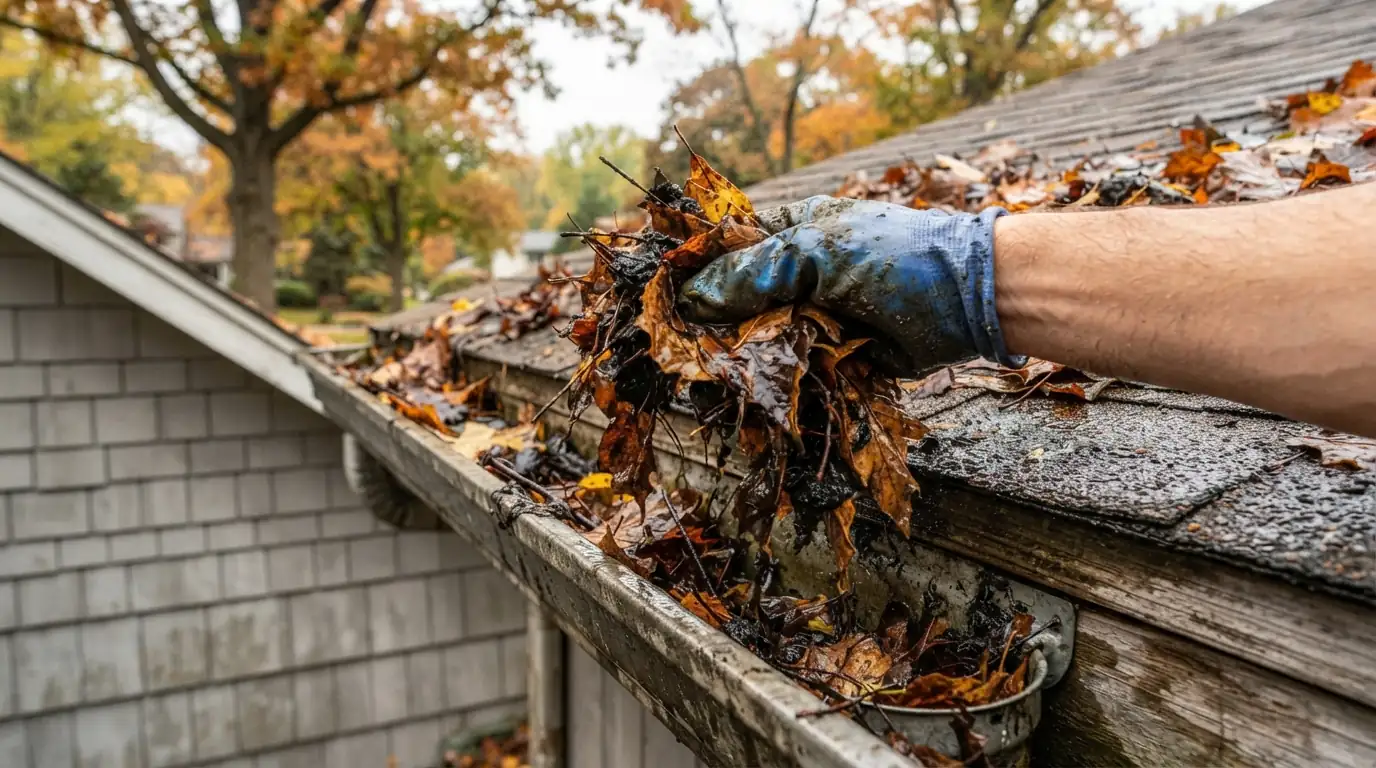
Clogged gutters are the most common cause of avoidable winter water damage we see. Leaves and grit from the roof pack the troughs and the downspout elbows, and the first heavy storm sends water over the front edge and behind the fascia. A clean-out in October, after most leaves drop, is the single most useful thing on this list. Our gutter cleaning visits flush every downspout and note anything that needs repair.
Book the fall visit before the first storm. We answer 24/7.
(669) 259-7490A look in the attic
If you have attic access, take a flashlight up on a dry day. Look at the underside of the roof deck for dark stains, especially around vents, chimneys and skylights, and at the insulation for flattened or discolored patches. Old stains that are dry and firm may be from leaks already fixed; soft or dark wood means something is still getting in. Photograph what you find so the roofer can start there.
What a roofer checks on a fall visit
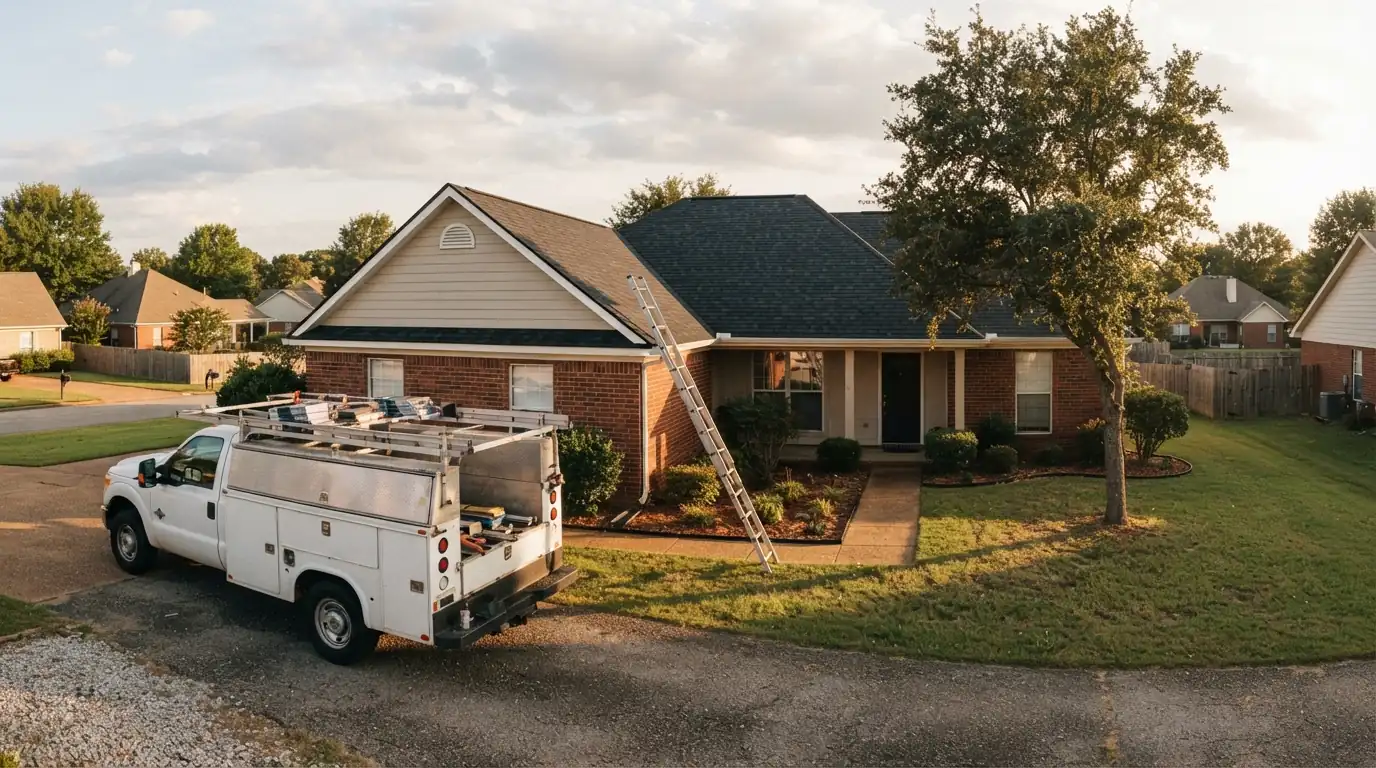
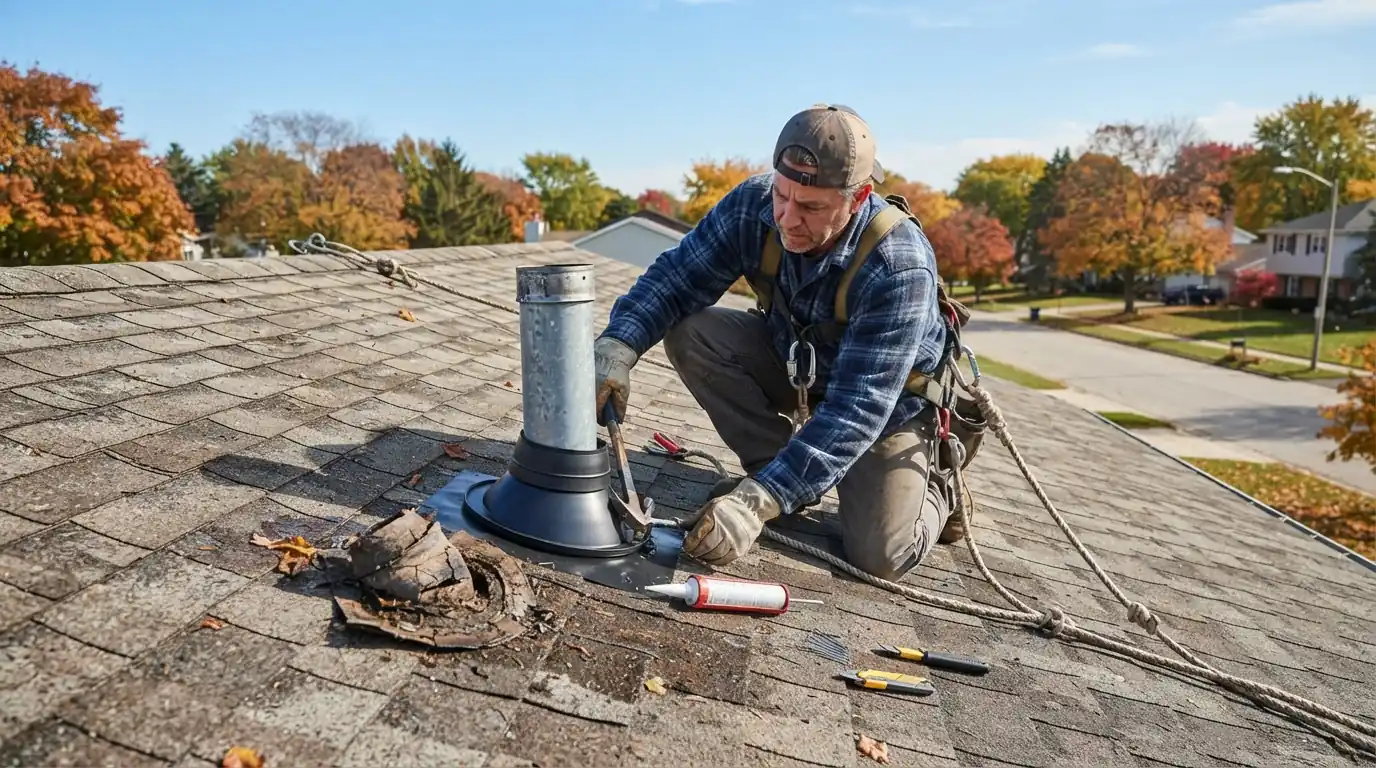
A fall roof maintenance visit walks every slope and checks the details that fail first: pipe boots, vent and skylight flashing, chimney and wall flashing, valleys and the edges. Cracked boots are replaced, loose shingles re-adhered, slipped tiles reset and debris cleared from valleys and behind chimneys. Anything larger is photographed and priced, so you can decide before the weather decides for you.
For older roofs, or if you are unsure about the roof's overall condition, a full roof inspection with a photo report gives you the whole picture.
A simple fall checklist
Use this as a quick run-through each October.
| Task | Who | When |
|---|---|---|
| Clean gutters and flush downspouts | You or us | October |
| Look for missing or slipped pieces | You, from the ground | October |
| Check the attic for stains | You | A dry day in fall |
| Reseal boots, vents and flashing | Roofer | Before November |
| Trim branches off the roof | You or a tree service | Late summer |
FAQ
Rainy-season roof questions
September or October, before the November rains.
Once a year for most homes, twice under heavy trees.
Not safely on a pitched roof; it is a quick job for a roofer.
Photograph it and have it traced before the rains; old stains may still be active.
Only as an emergency measure. A proper repair is cheaper than a winter of tarps.
Yes. Boots and sealants age faster than the roof covering.
Call us; we answer around the clock and can tarp or patch the same day.