Gutters, Skylights & Exteriors
Fascia and soffit repair for San Jose homes
Fascia rots from the top down, where the roof edge and the gutter meet. Fix the board without fixing the water path and it rots again. We do both.

What we treat
- Concrete and clay tile
- Composition shingle
- Flat, torch-down and TPO
- Spray foam
- Standing seam metal
Quick answer. Fascia and soffit repair in San Jose replaces rotted trim boards along the roof edge, rebuilds the eave closures behind them, and then fixes what let water in, usually a missing drip edge or a gutter pitched the wrong way. New wood is primed on all sides before it goes up, and most single-elevation repairs are done in a day.
Updated September 2026
The job
Why the board at the edge of the roof keeps rotting
Fascia sits where water leaves the roof. When the drip edge is missing, short, or tucked behind the gutter instead of into it, water wicks behind the gutter onto raw wood. The paint looks fine from the ground until a screwdriver sinks into the back side.
The repair runs in order: gutters off, rot cut back to sound wood, rafter tails checked, new board primed on every face, then drip edge and gutter reset so the water lands in the trough.
Your options
Wood, PVC or composite trim?
All three work; exposure and budget decide.
| Question | Primed wood | PVC trim | Fiber cement |
|---|---|---|---|
| Rot resistance | Good if kept painted | Does not rot | Does not rot |
| Paint | Needs repainting | Optional | Needs paint |
| Look on older homes | Matches original | Smooth, slightly different | Close to wood |
| Relative cost | Lowest | Higher | Middle |
Jobs this page covers
Rotted fascia board replacement
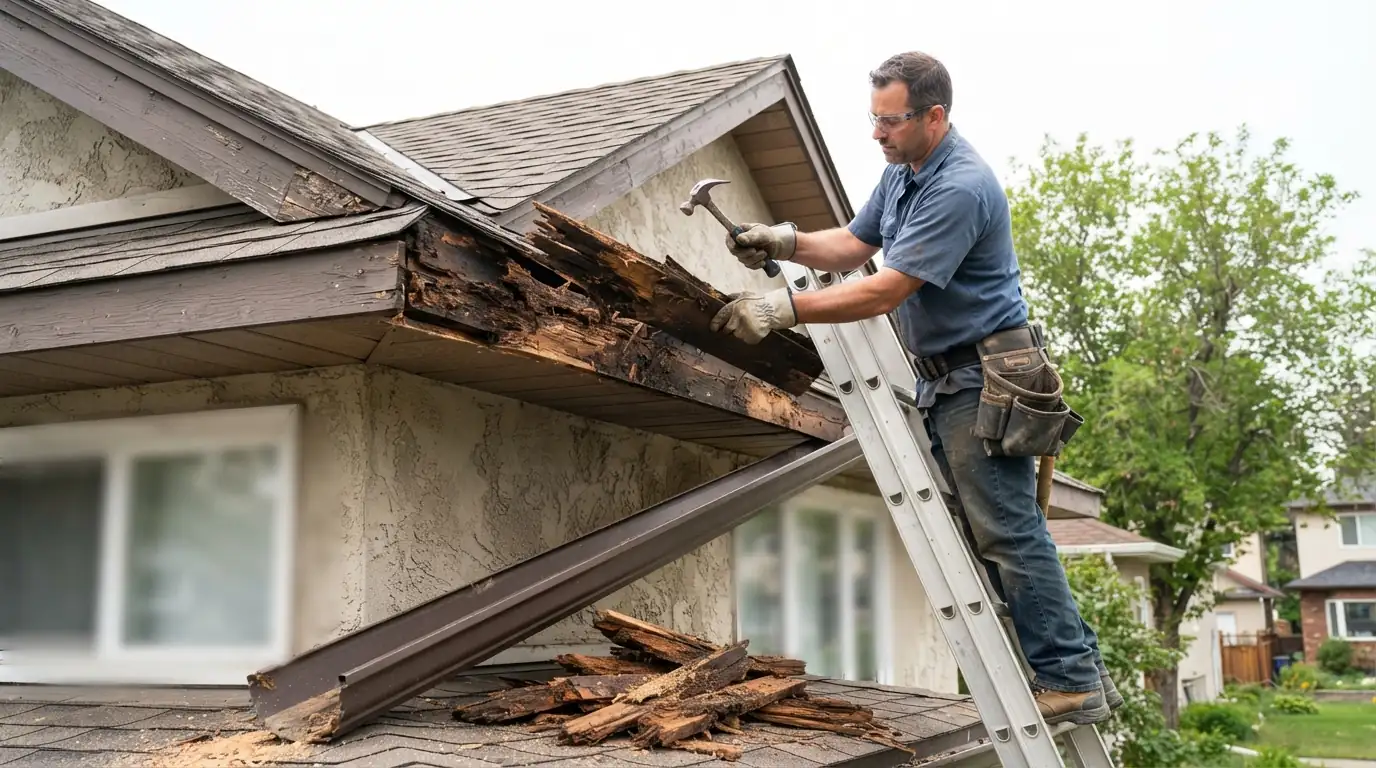
We cut the rotted length out back to solid wood, scarf the joint so it sheds water, and fit a new board primed on the back, ends and face before it goes up. Filling rot with putty buys a season at most, because the wood behind the filler keeps soaking. Where the whole run is soft, the full length is replaced. Rafter tails exposed by the cut are probed too. Corners are mitered and sealed, since they are where most fascia failures start.
Soffit panel repair
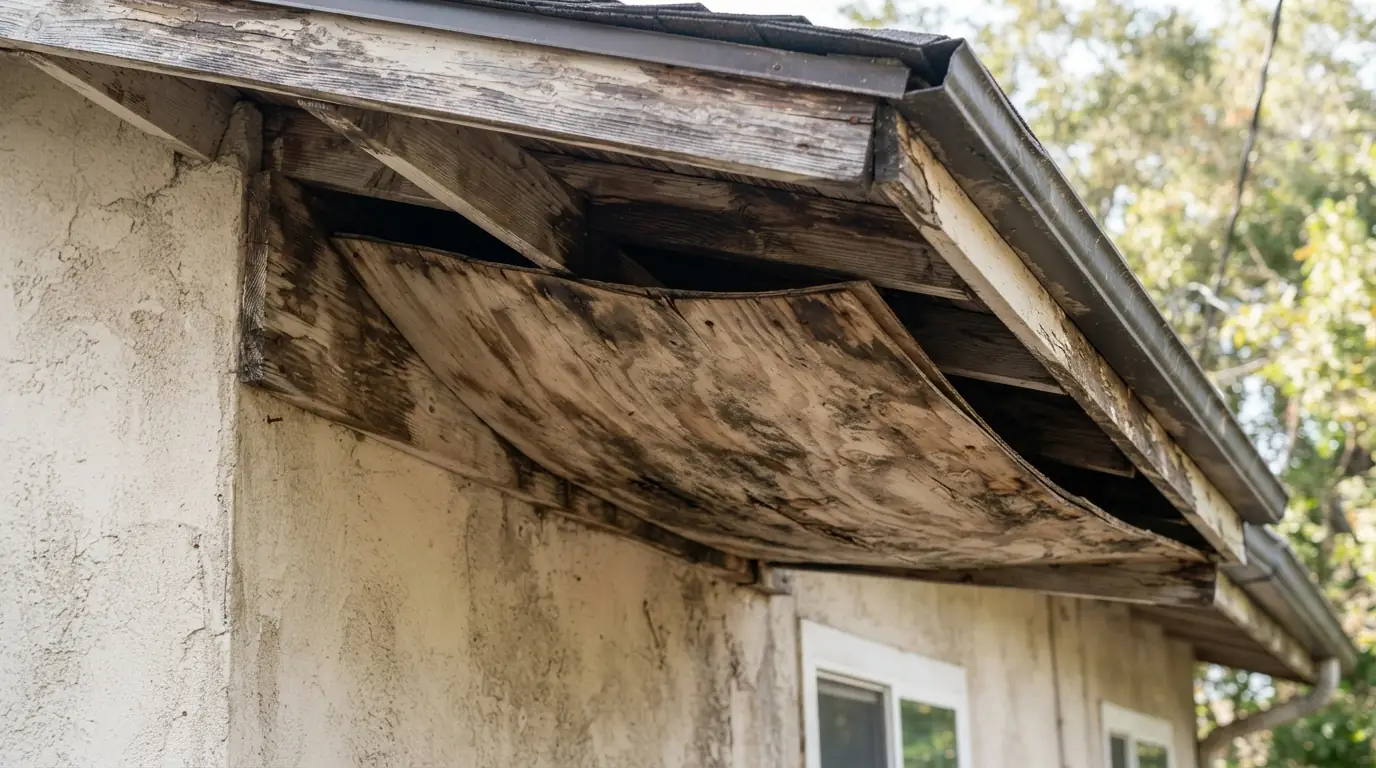
Soffit sags or stains when water gets past the fascia and runs along the underside of the eave. Plywood and hardboard panels delaminate first. We replace the damaged panels, check the nailers behind them, and keep the soffit vents open so the attic can still pull air in at the eaves. Vented panels are matched to the existing vent layout so the airflow does not change. Stained panels with firm backing are sealed and painted rather than replaced, which keeps the cost down.
Eave closure and bird blocking
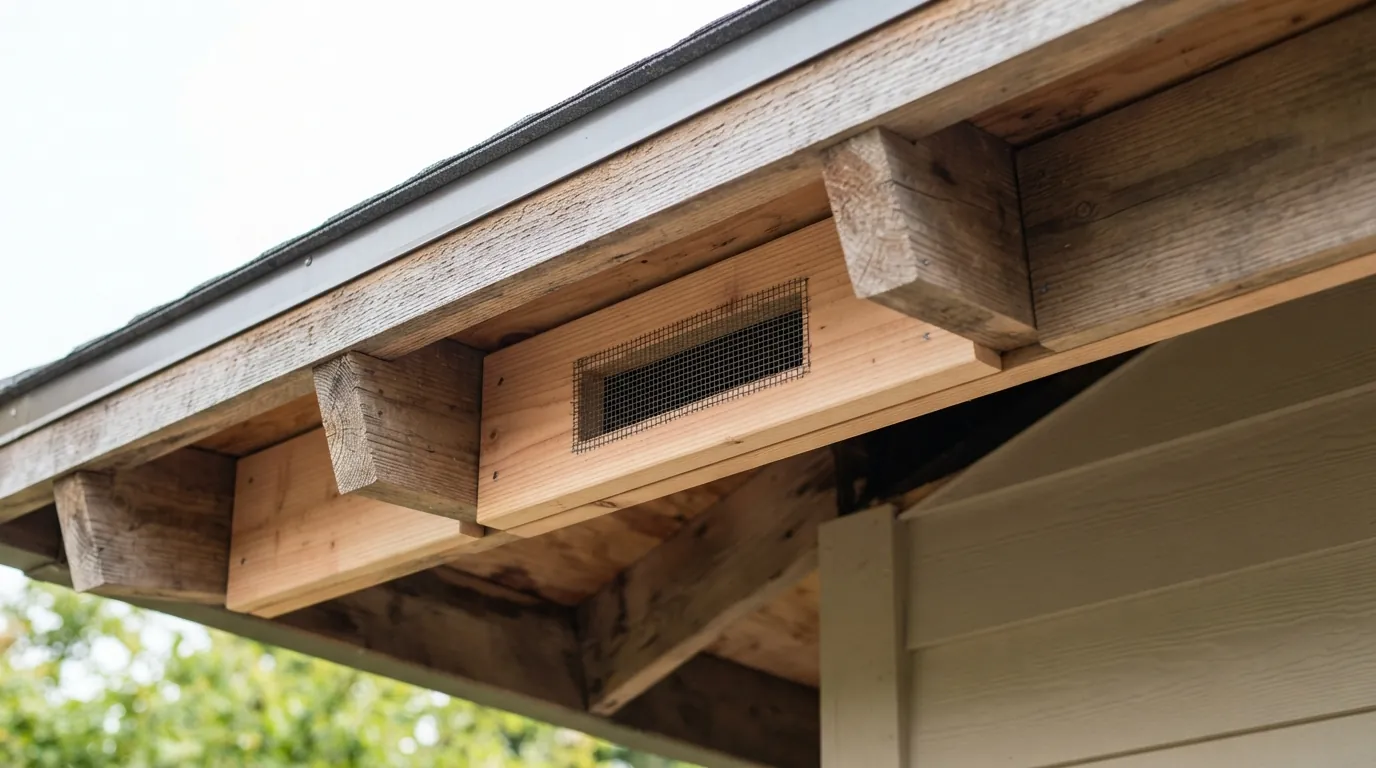
On open-eave houses the blocking between rafter tails keeps birds and wind-driven rain out while letting air in. Rotted or chewed blocks are replaced with new wood and screened vents sized to the openings. On houses in fire hazard zones we use ember-resistant vent screening, which keeps sparks out of the attic without choking the airflow the roof needs. On boxed eaves the same job means cutting new vent openings in the soffit and fitting screened louvers that match the existing ones in size and finish.
Painting and priming new wood
New trim is primed on all six sides before installation, which is the step most quick repairs skip, and finish-painted after it is up so the color matches the rest of the house as closely as we can get it. We match to a paint chip from a protected spot rather than from the sun-faded face. Primer on the cut ends matters most, since that is where water soaks in first. If the whole house is due for paint, we prime and leave the finish coat for your painter.
Cost
What the cost of trim repair depends on
Trim is priced by the linear foot of board replaced, plus what has to come off to reach it.
- Length of rot Short scarfed sections cost less than full runs.
- Rafter tails Rotted tails behind the fascia need sistering or replacement.
- Gutter removal Gutters come down and go back up on every fascia job.
- Material PVC and composite trim cost more than primed wood.
- Height Second-story eaves need taller ladders or staging.
- Painting Finish paint is extra when matched on site.
What we see on San Jose roofs
Fascia rot in San Jose is a wet-season problem that shows up in the dry season. Most of the year's rain lands between November and March, and in El Nino winters the storms run back to back and extend that season, so a board behind an overflowing gutter can stay damp for months. By the time the paint blisters in summer, the back of the board has usually been soft since spring.
What happens after you call
How a fascia and soffit repair runs
- 1
Probe the trim
We check every board along the affected run, not just the obvious one.
- 2
Take down gutters
Hangers and gutters are removed and set aside.
- 3
Cut out rot
Back to sound wood, rafter tails checked.
- 4
Install new trim
Primed all sides, scarfed and sealed at joints.
- 5
Fix the water path
Drip edge added or corrected, gutters rehung with fall.
- 6
Finish
Painted to match, debris cleared.
Warning signs
Signs the fascia or soffit is rotting
- Paint peeling at the roof edge
Moisture behind the board pushes paint off.
- Gutter pulling away
Hangers lose grip in soft wood.
- Dark streaks under the gutter
Water is running behind it, not into it.
- Sagging soffit panels
Water has soaked the underside of the eave.
- Bird or rodent activity at the eaves
Openings have rotted through.
- Soft wood when pressed
A screwdriver sinks in easily.
FAQ
Questions we get asked
Filler hides rot for a season. We cut it out and replace the wood.
Usually the drip edge was missing or the gutter was hung behind it. We fix the water path, not just the board.
Yes, with new hangers and the right fall toward the downspouts.
We match from a chip taken in a protected spot and finish-paint the new trim.
Often. Rotted trim found during a tear-off is replaced before the new drip edge goes on.
Same category
Related roofing work
Gutter Installation
Seamless aluminum gutters and downspouts sized for atmospheric-river runoff.
Learn moreGutter Repair
Sagging runs, leaking seams and overflowing corners fixed.
Learn moreGutter Cleaning
Fall clean-outs and downspout flushing before the first big storm.
Learn moreSkylight Installation
New skylights, replacements during a re-roof, and sun tunnels.
Learn moreGet the rotted trim replaced
Tell us where the paint is peeling or the gutter is sagging. We replace the wood and fix what let the water in.