Commercial Roofing
Commercial roof replacement in San Jose
Replacing a commercial roof is a construction project on top of a working building. We plan it around the tenants, the equipment on the roof and the code requirements, and put all of it in writing first.
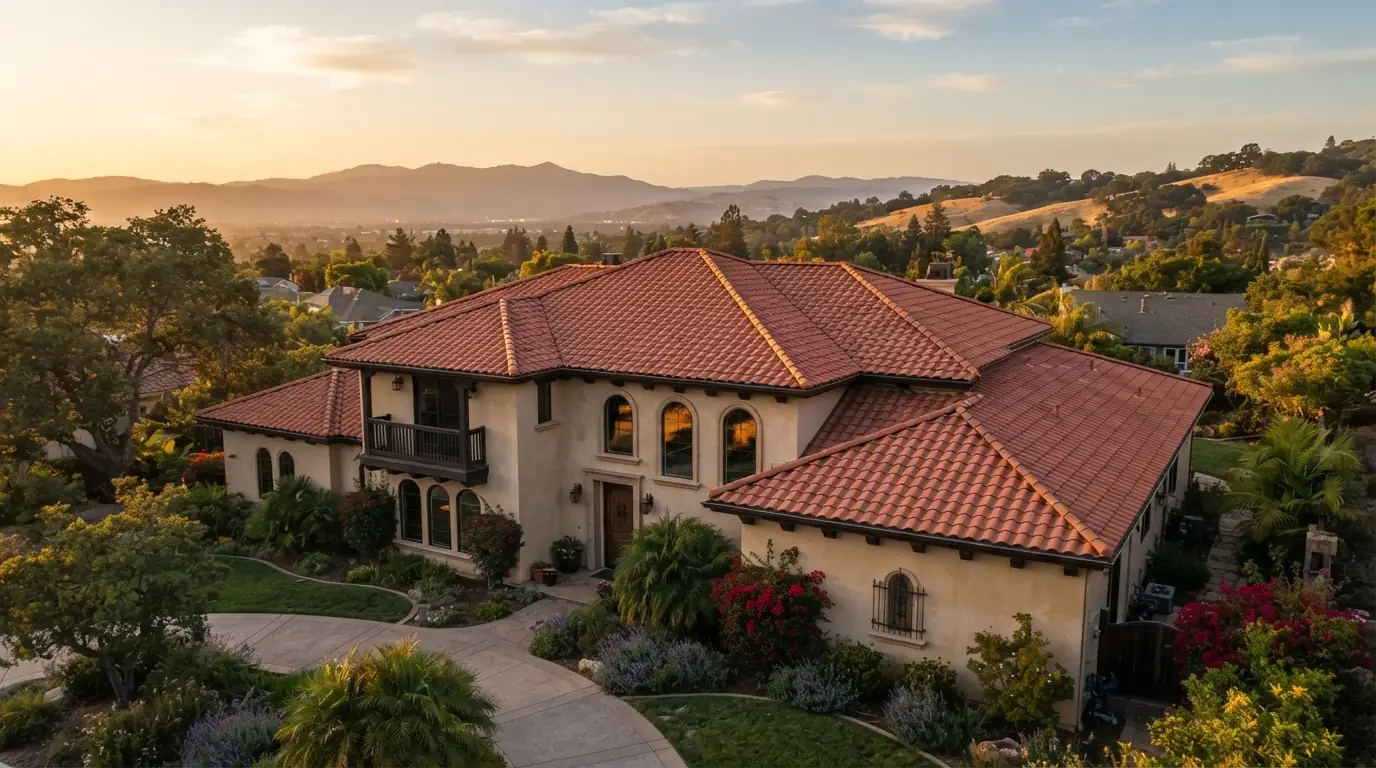
What we treat
- Concrete and clay tile
- Composition shingle
- Flat, torch-down and TPO
- Spray foam
- Standing seam metal
Quick answer. Commercial roof replacement in San Jose removes or recovers the existing low-slope roof, adds insulation and tapered drainage, and installs a new TPO or PVC single-ply membrane with new flashing at every curb, drain and parapet, permitted with Title 24 cool-roof documentation. Work is phased so the building stays in use.
Updated September 2026
The job
Tear-off, recover, or neither yet
The first question is whether the existing roof can stay under the new one. A recover saves tear-off and disruption, but only over a dry, single-layer roof with a sound deck and capacity for the added weight.
Sometimes the answer is that the roof has a few more years with repairs and a coating. We say so when the readings show it.
Your options
Tear off, recover or coat?
The existing roof's condition decides which is honest.
| Question | Full tear-off | Recover | Restoration coating |
|---|---|---|---|
| Existing roof | Wet, multiple layers or failing | Dry, single layer | Dry, sound surface wearing thin |
| Disruption | Highest | Moderate | Lowest |
| New warranty | Full system | Full system | Coating warranty |
| Relative cost | Highest | Middle | Lowest |
Jobs this page covers
TPO and PVC installation
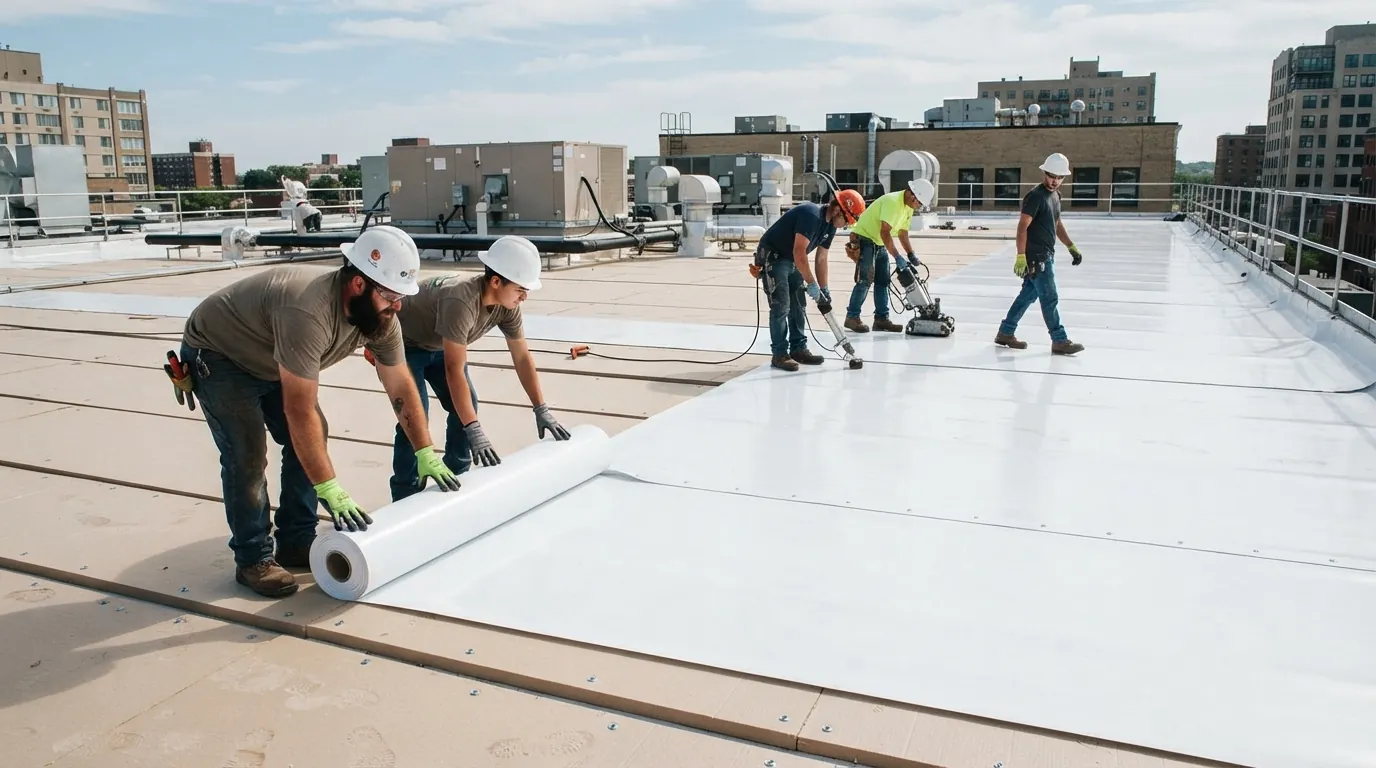
Single-ply membranes are installed over new insulation, mechanically fastened or fully adhered depending on the deck and wind exposure, with every seam hot-air welded and probed. PVC goes on restaurants and buildings with grease or chemical exhaust; TPO is the usual choice elsewhere. Curbs, drains, parapets and penetrations get new flashing from the same manufacturer so the system can carry a single warranty. Walk pads go down along service paths to the units, and finished seams are probed by hand along their full length.
Recover over an existing roof
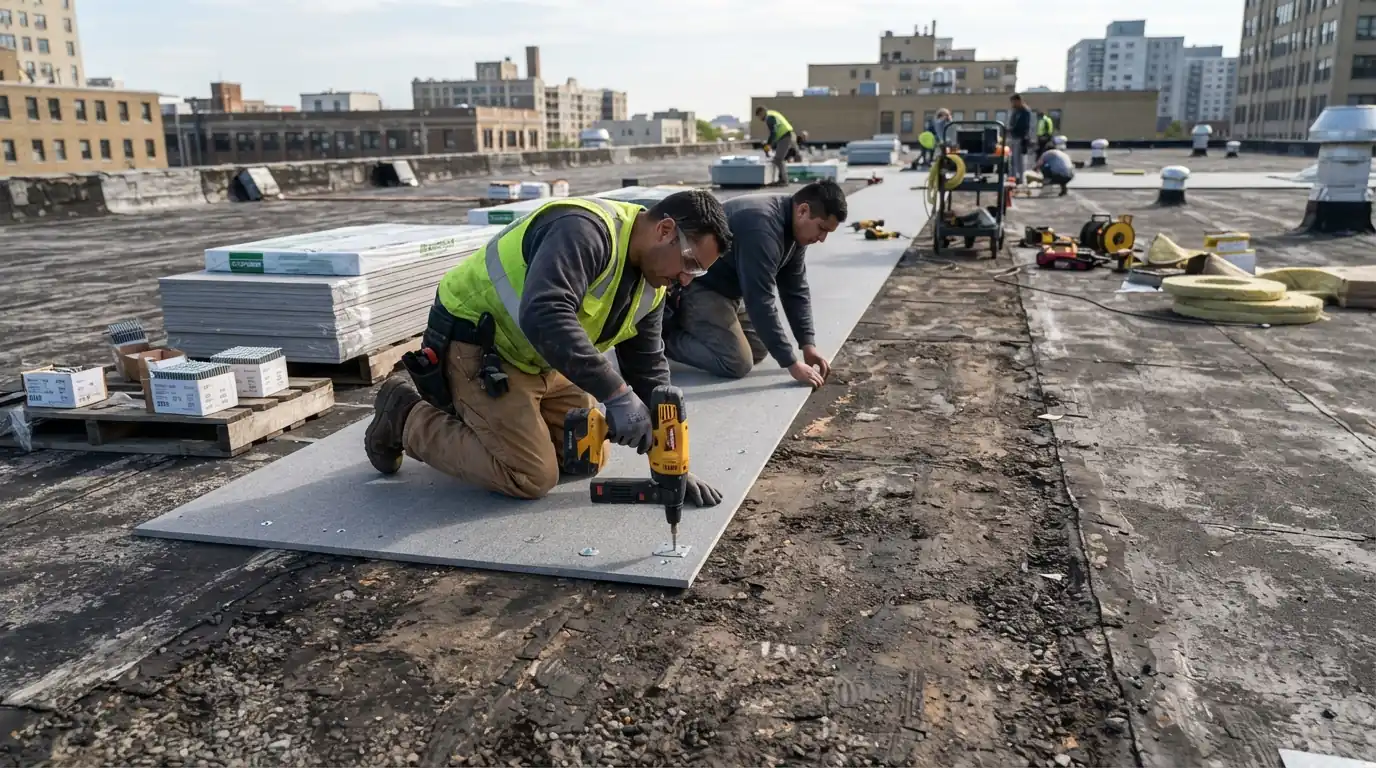
A recover installs a cover board and new membrane over the existing roof after moisture testing shows it is dry. Wet sections found by coring are cut out and replaced first. Building codes allow only one recover over an existing roof, so a building that already has two roofs gets a full tear-off. We also check the structure for the added weight before committing to a recover. On a flat deck, tapered insulation under the cover board adds drainage at the same time.
Tenant-occupied scheduling
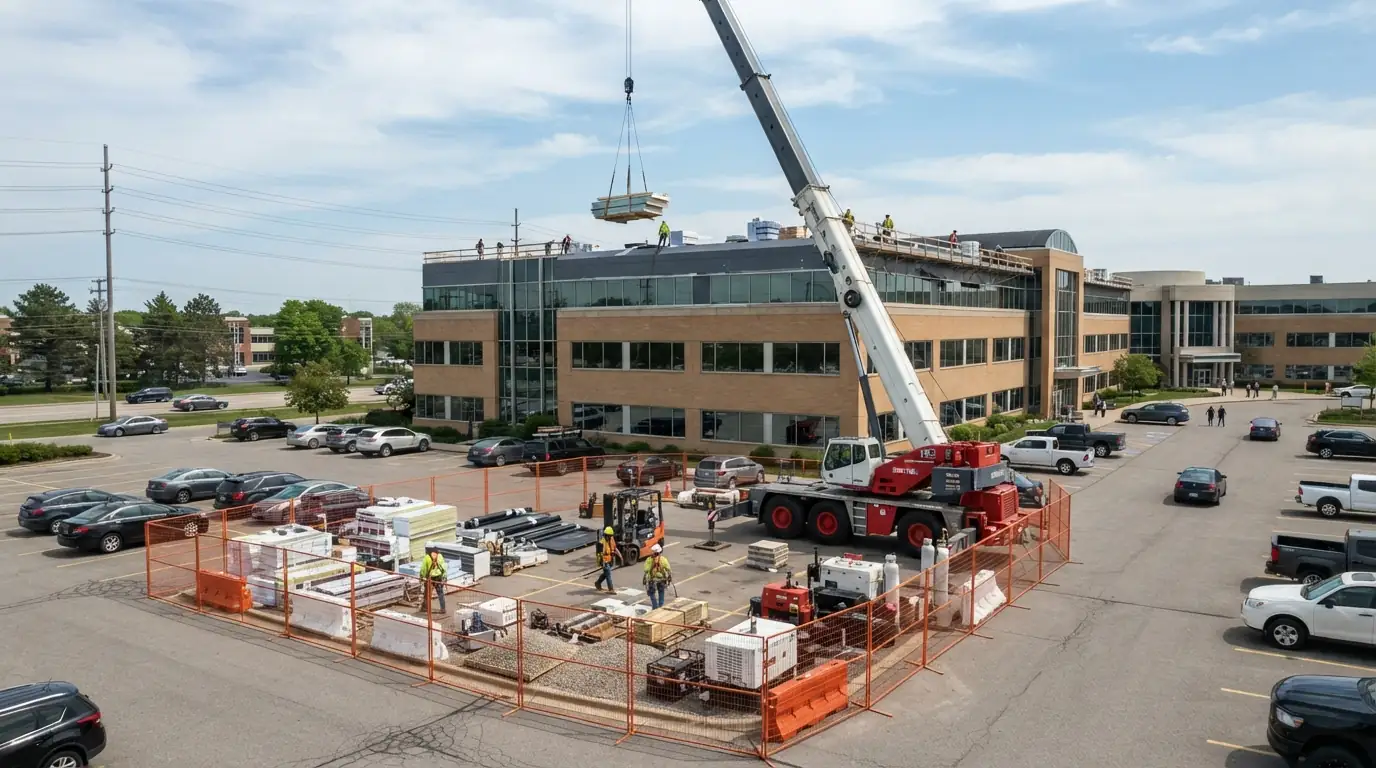
Roof work over occupied space is phased so only a section is open at a time and it is dried in every night. Material deliveries and crane lifts are booked before opening hours, noisy tear-off can be shifted to evenings, and tenants get notice of which areas are affected when. Rooftop equipment is coordinated with your HVAC contractor so units are disconnected and reset on schedule. One point of contact on our side handles notices and the daily schedule with the property manager.
Cost
What a commercial replacement costs depends on
Pricing follows a roof survey, core samples and the drainage design.
- Tear-off or recover Tear-off adds labor and disposal; recover adds cover board.
- Insulation and taper Energy code values and drainage slope.
- Membrane TPO or PVC, thickness and attachment method.
- Rooftop equipment Curbs rebuilt and units coordinated.
- Phasing Night work and occupied-building staging.
- Engineering Needed when the assembly gets heavier.
What we see on San Jose roofs
Commercial re-roofs in San Jose go through Title 24 cool-roof review, which the city enforces at a moderate level: permit applications need the membrane's rated reflectance, though the review is less detailed than in some neighboring cities. Weight matters as well. When a recover pushes the roof assembly past the city's 7 pounds per square foot threshold, an engineering analysis of the structure is required before the permit issues, so we calculate it before recommending a recover.
What happens after you call
How a commercial replacement runs
- 1
Survey
Cores, moisture scan and drain survey.
- 2
Design
Insulation, taper and membrane specified.
- 3
Permit
Filed with Title 24 documentation.
- 4
Phase plan
Sections, hours and tenant notices agreed.
- 5
Install
Section by section, dried in nightly.
- 6
Closeout
Final inspection, warranty and as-built photos.
Timeline
How long the building is affected
A typical mid-size commercial roof is replaced in phases over one to three weeks depending on size and equipment. Each section is closed at the end of the day, so the building stays weathertight throughout; the schedule is agreed with the property manager before the first day.
Brands we install and service
FAQ
Questions we get asked
Yes. We phase the work and dry in each section nightly.
Over a dry, sound roof, it performs well and costs less. Over a wet one, it fails early.
Yes, including Title 24 cool-roof documentation.
We coordinate with your HVAC contractor to disconnect and reset them.
Where the manufacturer's program applies to the installed system, we tell you what is available at the scope stage.
Same category
Related roofing work
Commercial Roof Repair
Membrane, built-up and drain repairs on commercial and multifamily roofs.
Learn moreRoof Coating
Silicone and acrylic coatings that extend a sound flat or metal roof.
Learn moreCommercial Roof Maintenance
Scheduled inspections, drain service and written reports.
Learn moreHOA & Multifamily Roofing
Condo, townhome and apartment roofs, bid and phased for boards and managers.
Learn moreScope your commercial roof replacement
We survey the roof, core it and design the drainage, then give you a phased plan and a written price.