Roofing guide
Eichler foam roofs in Willow Glen: recoat, repair or replace
Most Eichler roofs in San Jose are spray foam or built-up systems on nearly flat post-and-beam framing. They last as long as they are looked after, and the decision is usually recoat, repair or replace.
By Norman Eastwood, Roofing Guides Editor. Updated September 2026.
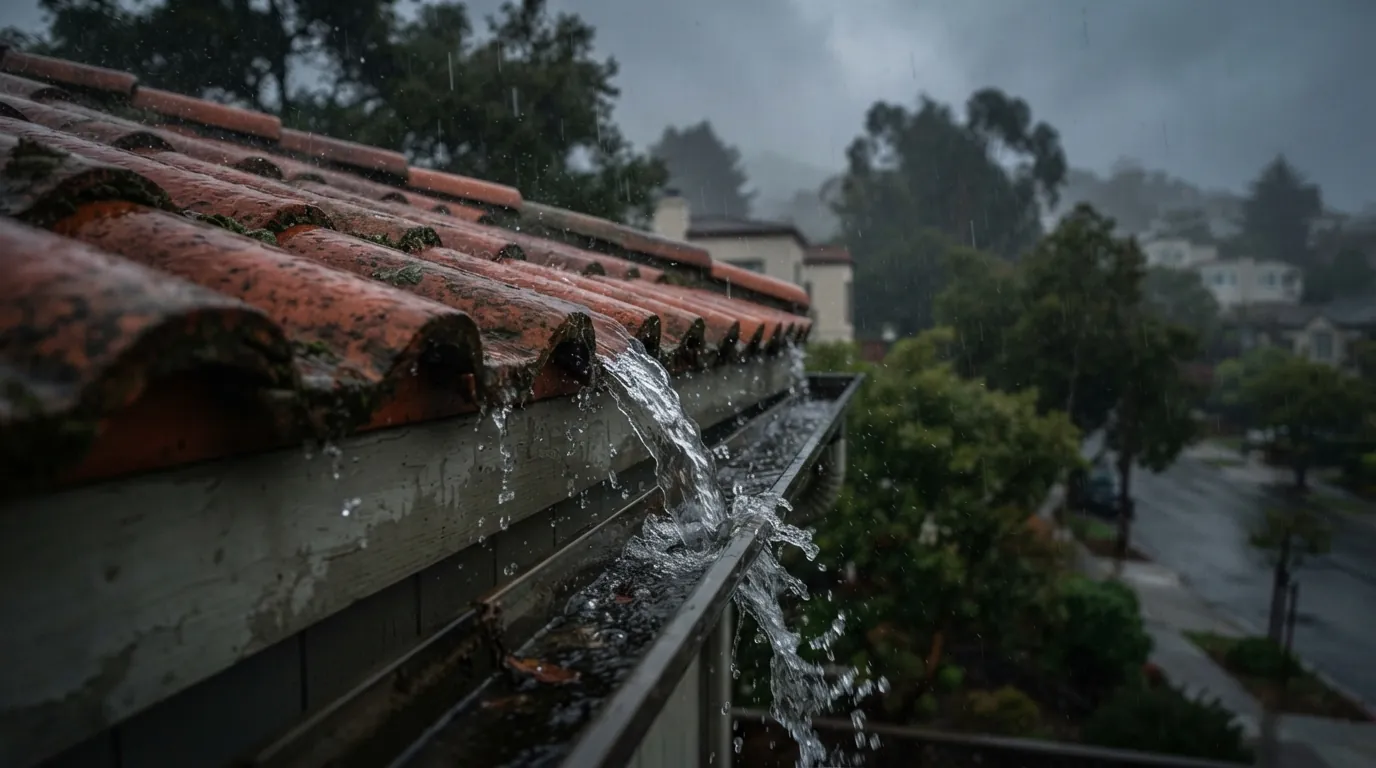
Quick answer. An Eichler foam roof in San Jose usually needs a recoat, not a replacement: when the protective coating has chalked or thinned but the foam underneath is dry and firm, cleaning, spot repairs and a new elastomeric coating reset the roof for years. Wet, soft or widely damaged foam needs repair or a new roof.
Why so many Eichlers have foam roofs
Willow Glen holds roughly 350 Eichler homes in three tracts, Fairglen, Hudson-Comstock and the small Dry Creek group, built between 1957 and 1962 with flat and barely pitched roofs over post-and-beam framing. The 218-home Fairglen Additions is listed on the National Register of Historic Places. San Jose has five Eichler tracts in all, including an early one in Rose Glen near San Jose City College and Fairhaven out toward Campbell.
Those roofs were never meant to shed water the way a pitched roof does, and most of them are now spray foam or built-up systems. Fairglen's neighborhood design guidance favors foam because it keeps the low profile and adds insulation the original roofs lacked.

How a foam roof ages
Most Eichler roofs are foam or built-up systems with a typical service life of ten to twenty years depending on maintenance. The foam itself does not wear out quickly; the coating on top does. San Jose gets something like 3,400 hours of sun a year, and ultraviolet light breaks the coating down until it chalks, thins and cracks. Once the sun reaches bare foam, the foam degrades and birds start pecking at it.
Water is the other enemy. Foam that has been cracked or punctured takes on water, and wet foam loses its insulation value and its bond to the deck. That is the difference between a roof that needs a recoat and one that needs real repair.
Recoat, repair or replace?
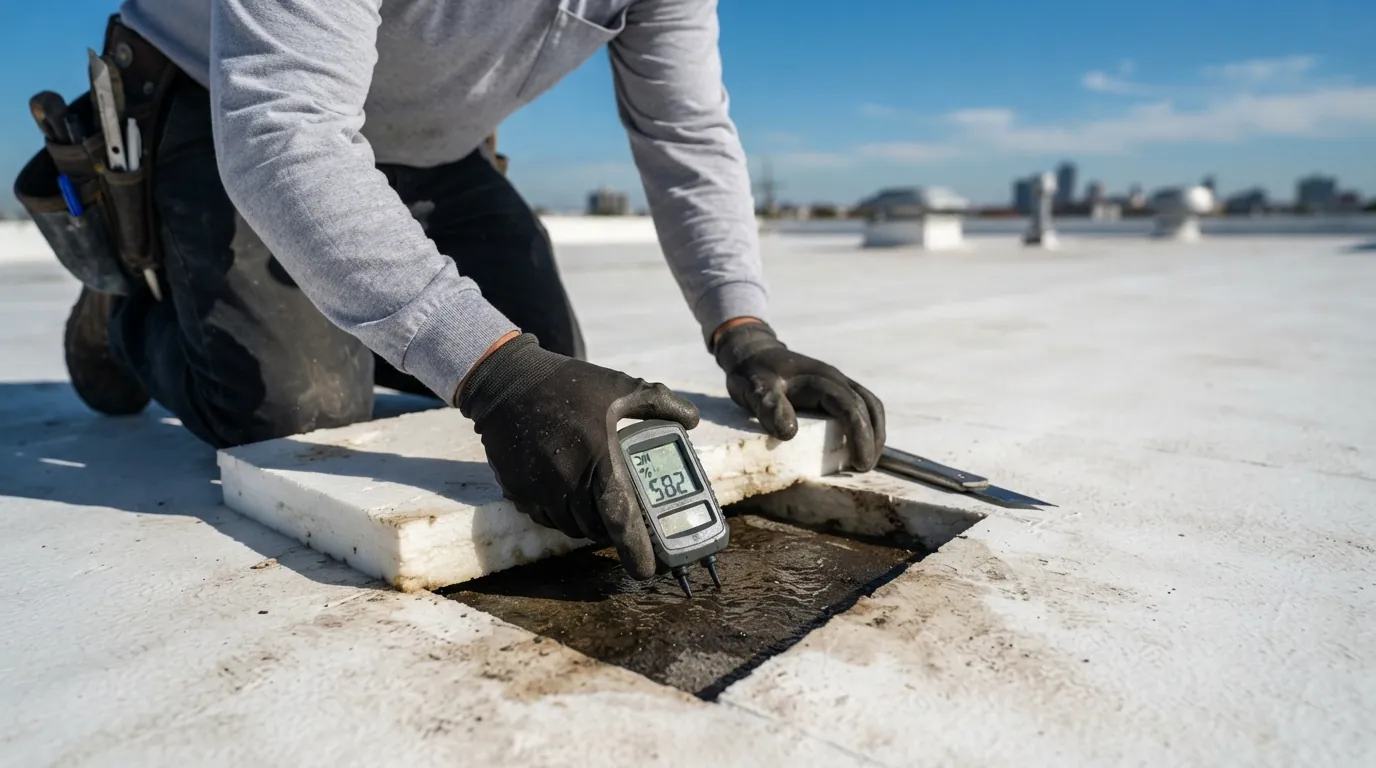
The condition of the foam decides it, and a moisture check is how we find out. The table is the short version.
| What we find | Recoat | Repair then recoat | Replace |
|---|---|---|---|
| Coating | Chalky or thin | Worn through in spots | Gone over large areas |
| Foam | Dry and firm | Some cracks, pecks or wet spots | Wet or soft widely |
| Ponding | Minor | Localized | Widespread |
| Typical outcome | Years added for the least cost | Damage cut out, then recoated | New foam or another system |
Eichler roof chalky, cracked or ponding? We check the foam before quoting anything.
(669) 259-7490What a recoat actually involves
A recoat starts with a pressure wash to remove dirt and chalked coating. Cracks and bird pecks are cut out and filled, and any wet foam found is removed down to dry material and replaced. Flashing at the edges, around skylights and at the clerestory walls gets detailed, then a base coat and a top coat of elastomeric acrylic or silicone go on to a specified dry thickness. Granules can be broadcast into the top coat where the roof sees foot traffic.
Done on schedule, recoats are what let a foam roof last decades. See how we handle spray foam roofing and roof coatings.
Skylights, edges and the details that leak
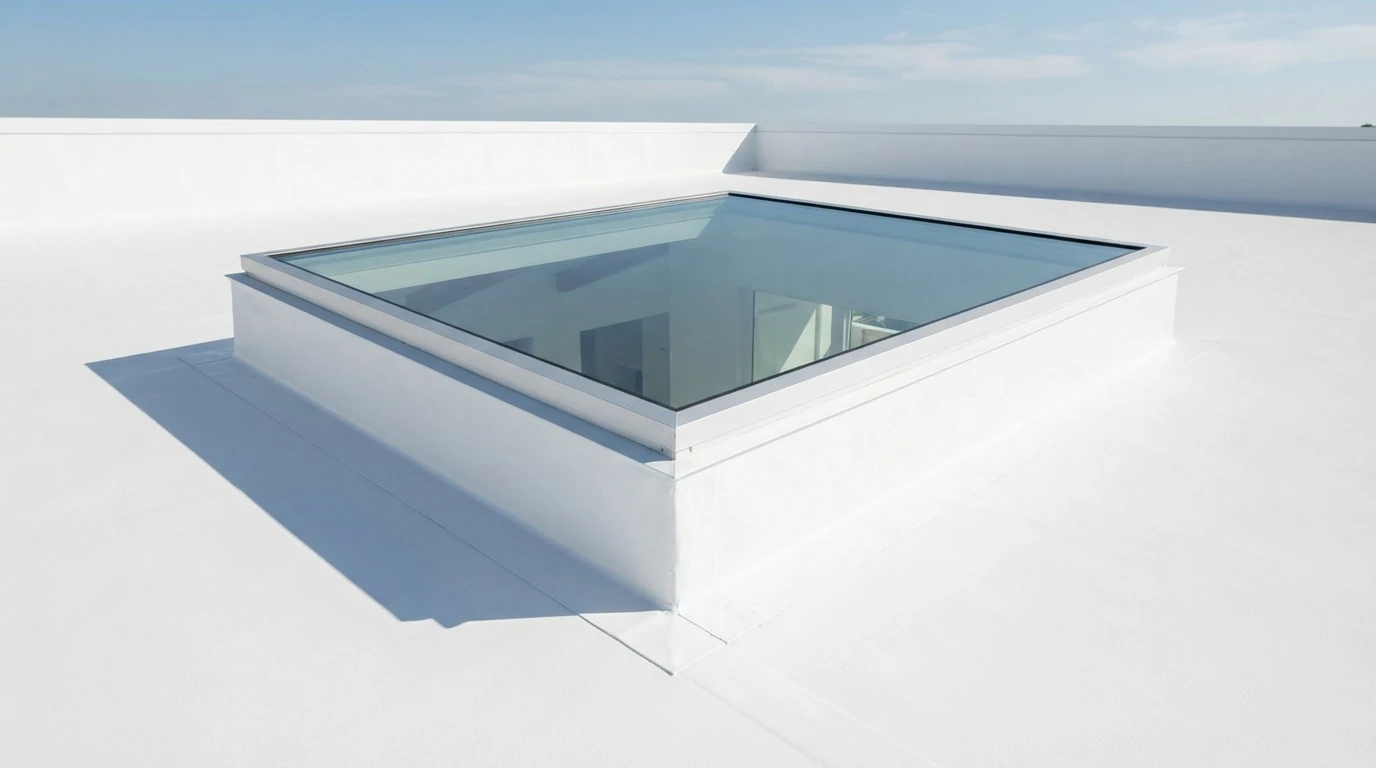
Eichler leaks rarely start in the middle of the roof. They start at skylights sitting on curbs too short for the flat roof, at the edges where the foam meets the fascia, and along the clerestory walls. Each recoat is the chance to raise a low curb, reseal the edges and build small crickets that push water away from them. If a skylight is leaking now, our skylight leak repair page explains how we find the cause.
When foam is not the answer
Some owners prefer single-ply TPO or a built-up roof, and those work well on low-slope homes too. Single-ply needs tapered insulation to fix ponding, which adds height; foam builds the slope into the roof itself. Whatever the system, permitted flat re-roofs in San Jose need a cool-roof rated surface under Title 24, which white foam coatings and single-ply meet. Our flat roof replacement page compares the systems.
FAQ
Eichler roof questions
On the coating manufacturer's schedule, commonly every several years, sooner on roofs in full sun.
Yes, if the foam around the leak is dry. Wet foam is cut out and replaced before recoating.
No. It keeps the low profile, which is why neighborhood guidance favors it.
Foam adds insulation and builds in drainage; TPO needs tapered boards for both. Both work.
A recoat is maintenance; a full re-roof over 25 percent of the roof needs a permit.
Yes, carefully. Granules in the top coat help on roofs that see traffic.
A moisture meter and small core samples tell us; soft spots underfoot are the obvious sign.