Emergency & Storm
Roof leak repair for San Jose homes
A ceiling stain is the end of the story, not the beginning. We find where the water gets in, fix that spot, and tell you what else the roof is doing.

What we treat
- Concrete and clay tile
- Composition shingle
- Flat, torch-down and TPO
- Spray foam
- Standing seam metal
Quick answer. Roof leak repair in San Jose starts in the attic, not on the ladder: water is traced uphill from the stain to the flashing, valley, pipe boot or cracked tile it actually came through, and that spot is rebuilt rather than caulked over. Most single leaks are fixed in one visit.
Updated September 2026
The job
Why the stain is almost never under the leak
Water enters at a high point, runs along a rafter or the underside of the deck, and drops where it meets a nail or a joint, so a stain mid-room can start at a vent ten feet uphill. Guessing from outside is how leaks get caulked three times and still drip; we trace from inside first.
The repair depends on the material: shingles and underlayment replaced, tile lifted and the paper beneath repaired, or a flat-roof seam cut out and welded. Then we walk the whole roof, because the leak you noticed is rarely the only weak spot.
What happens after you call
How a leak repair visit runs
- 1
Describe the stain
When it appeared, whether it grows after rain, where it sits.
- 2
Attic trace
We follow the water path on the framing uphill to the deck and mark the spot.
- 3
Roof confirmation
The marked area is opened to confirm the failed flashing, boot, tile or seam.
- 4
The repair
Failed parts are replaced, not caulked over, and wet underlayment is cut back to dry paper.
- 5
Whole-roof walk
Every other penetration and valley gets checked.
- 6
Photos and notes
Photos of the cause and the fix.
Jobs this page covers
Ceiling stains and drips
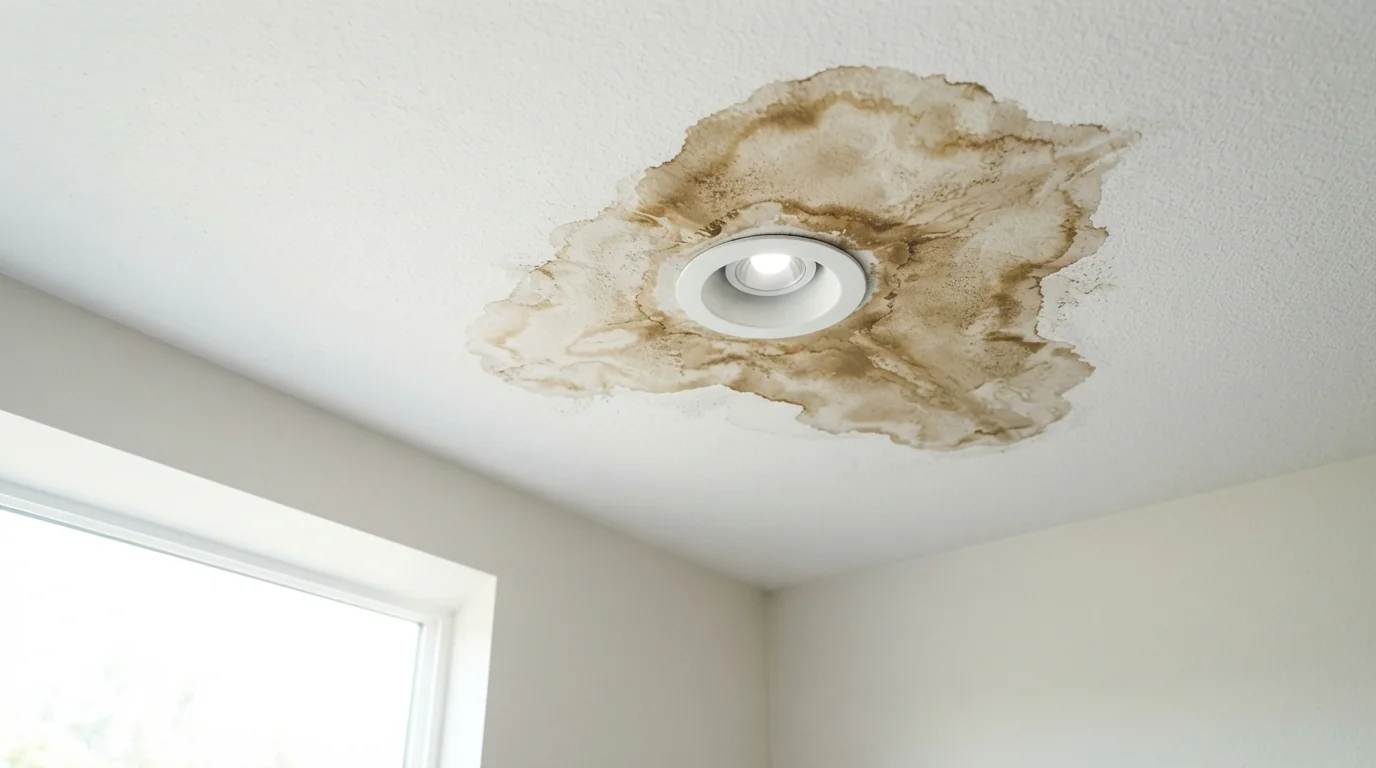
A fresh stain is soft and dark at the edges; an old one is dry, ringed and yellowed. Fresh means the leak is live and the attic will show wet insulation along the water path; old and ringed usually means a leak that was already fixed. We open the attic, follow the discoloration on the framing uphill, and mark the deck from below so the search on the roof starts at the right place instead of directly above the stain.
Valley and pipe-boot leaks
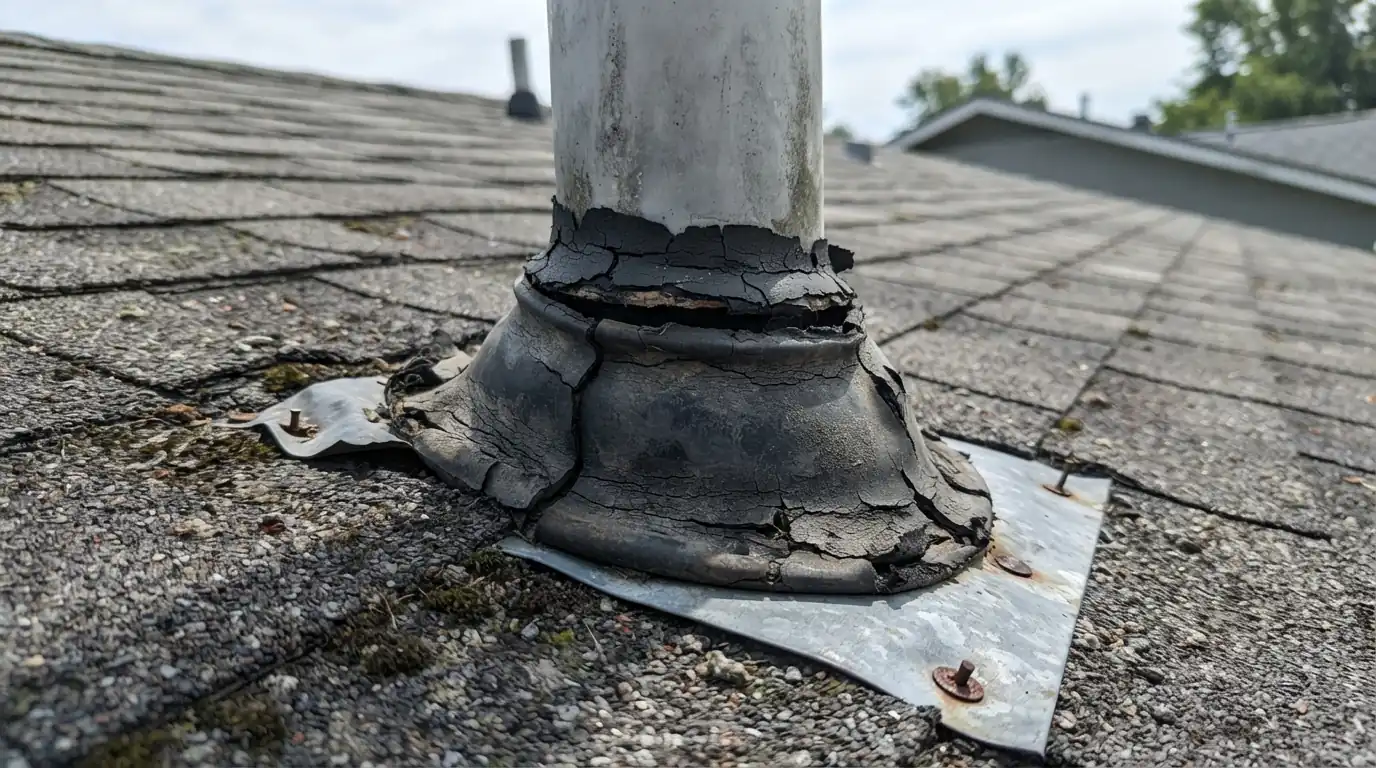
Rubber pipe boots split after years of sun, and the crack sits right against the pipe where water runs. Valleys fail when debris dams them or the metal rusts through under the shingle edges. Both are quick fixes when caught: a new boot with a proper flashing base, or a valley cleared and re-lapped, and a new section of valley metal where the old one has rusted through. Together they account for most of the leaks we trace on older tract homes.
Chimney and wall leaks
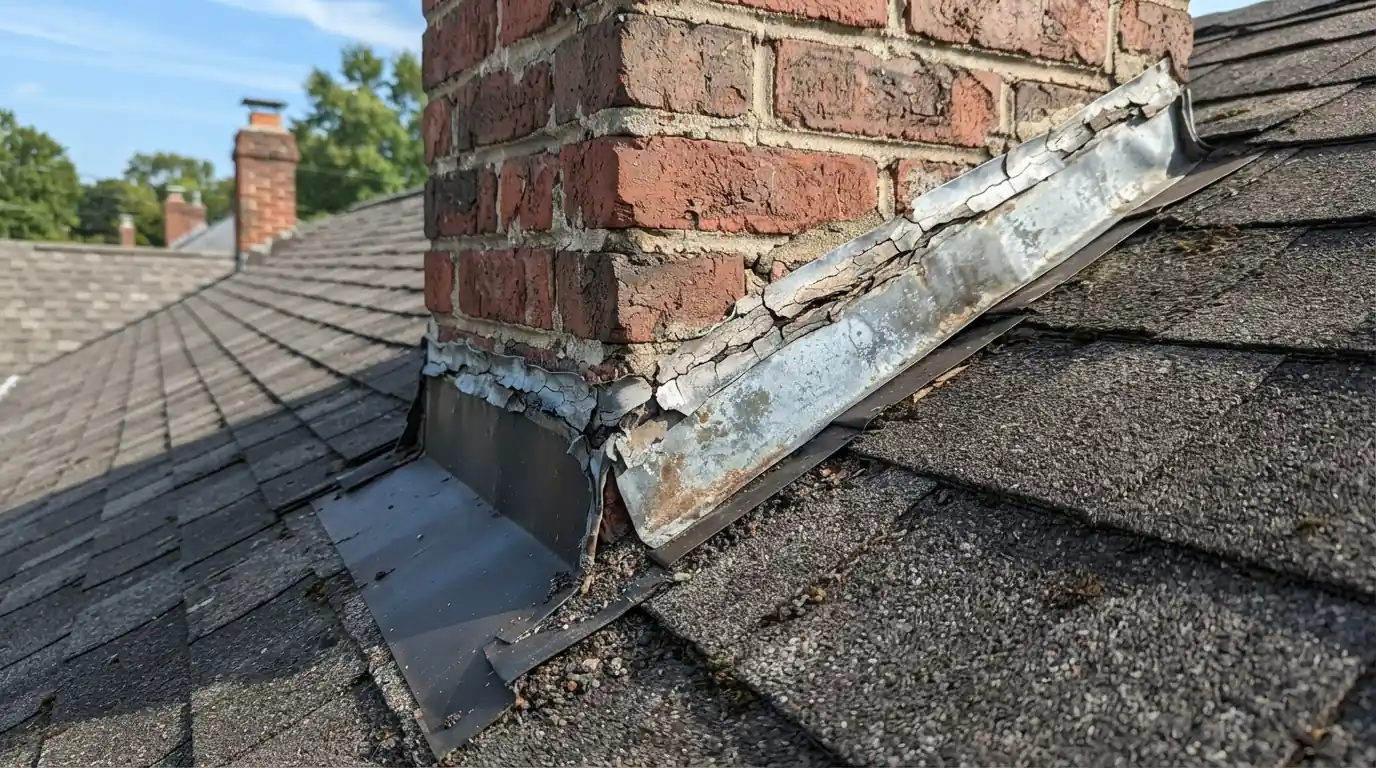
Where a roof meets a chimney or a second-story wall, the water is stopped by step flashing under the shingles and counterflashing let into the mortar or behind the siding. Caulk on top of failed flashing lasts about one season before it opens again. The lasting fix removes the shingles along the joint, sets new step flashing course by course, and reseats the counterflashing in the mortar, adding a cricket behind the chimney where the slope dumps water against the brick.
Leaks under solar panels
Panels sit on stanchions lagged through the shingles, and each one is a hole in the roof that depends on its flashing and sealant. A leak that appeared after the array went in almost always traces to a mount. We locate the wet stanchion from the attic, then reflash or reseal it, lifting the panel only when the mount has to come out. We coordinate with your solar company before touching a panel so the warranty on the array stays intact.
What we see on San Jose roofs
Most leaks we trace in San Jose are on tract homes from the 1950s through the 1980s, the median build year here being 1976, and many of those roofs are on a second or third covering. About 3,400 hours of sun a year dry out the sealant at pipe boots, vents and skylights, so a roof holds all summer and opens at exactly those points in the first November storm.
Stain getting bigger? Book a leak trace before the next storm.
(669) 259-7490Do it yourself or call us
What you can safely check yourself, and what to leave to us
Ground and attic checks help; the roof surface is ours.
| Task | Doing it yourself | Having us do it |
|---|---|---|
| Look in the attic with a flashlight | Fine if the attic has flooring; wet insulation shows the path | We trace the path to the deck and mark it |
| Caulk the suspected spot | Hides the problem for one season and traps water | Failed flashing or boots are replaced |
| Walk the roof to look | Not on tile, not when wet, not on two stories | Roped, booted, matching stock on the truck |
Cost
What decides the cost of a leak repair
One-visit repairs are priced on the spot; wet decking is the usual reason for a second quote.
- The entry point A pipe boot is a small job; chimney flashing rebuilt course by course is not.
- Roof material Tile has to be lifted and reset; flat membranes need welding or torch work.
- Wet decking Soft plywood under the leak means replacing the sheet.
- Attic access Tight or unfinished attics slow the trace.
- Height and pitch Two-story and steep roofs add setup and safety gear.
- Number of leaks The roof walk often finds a second weak point; fixing it in the same visit is cheaper.
FAQ
Questions we get asked
Most single leaks are traced and repaired in one visit of two to four hours.
Wind-driven rain reaches flashing that ordinary rain never touches, usually at walls, chimneys and skylights.
No. Caulk over failed flashing lasts a season; we replace the failed part.
Usually not. One penetration or valley is repairable. A roof leaking in several places with brittle covering is the case for replacement, and you see the photos either way.
Yes. Tiles are lifted, the underlayment repaired, and the tiles reset; cracked ones come from matching stock.
Same category
Related roofing work
Emergency Roof Repair
Active leaks, wind damage and storm calls handled the same day, any hour.
Learn moreEmergency Roof Tarping
A secured tarp that holds through the next storm until the repair is done.
Learn moreStorm Damage Roof Repair
Wind, water and tree damage repaired with photos and a report for your claim.
Learn moreShingle Roof Repair
Torn, missing and curling shingles, nail pops and ridge caps on composition roofs.
Learn moreGet the leak traced before the next rain
Tell us where the stain is and when it started. We book the trace, fix the entry point, and walk the rest of the roof.