Commercial Roofing
Roofing for San Jose HOAs, condos and apartments
An HOA or apartment roof project has more people to answer to than a single house: a board, a manager, residents, and a reserve budget. We plan the work, the paperwork and the schedule for all of them.
What we treat
- Concrete and clay tile
- Composition shingle
- Flat, torch-down and TPO
- Spray foam
- Standing seam metal
Quick answer. HOA and multifamily roofing in San Jose covers repairs, re-roofs and maintenance on condo, townhome and apartment buildings, with written bids a board can compare, phasing that keeps residents living normally, and photo documentation for reserve planning. Shingle, tile and flat roofs are all handled, often on the same complex.
Updated September 2026
The job
What is different about roofing a complex
A complex usually has several roof types, dozens of units and a board that needs to compare bids line by line and justify the spend to owners. Leaks affect neighbors below, and work has to fit around parking, noise and move-ins.
We write scopes by building and roof section, price them so they can be phased across budget years if needed, and give the manager one point of contact for residents' questions.
Jobs this page covers
Condo and townhome re-roofs
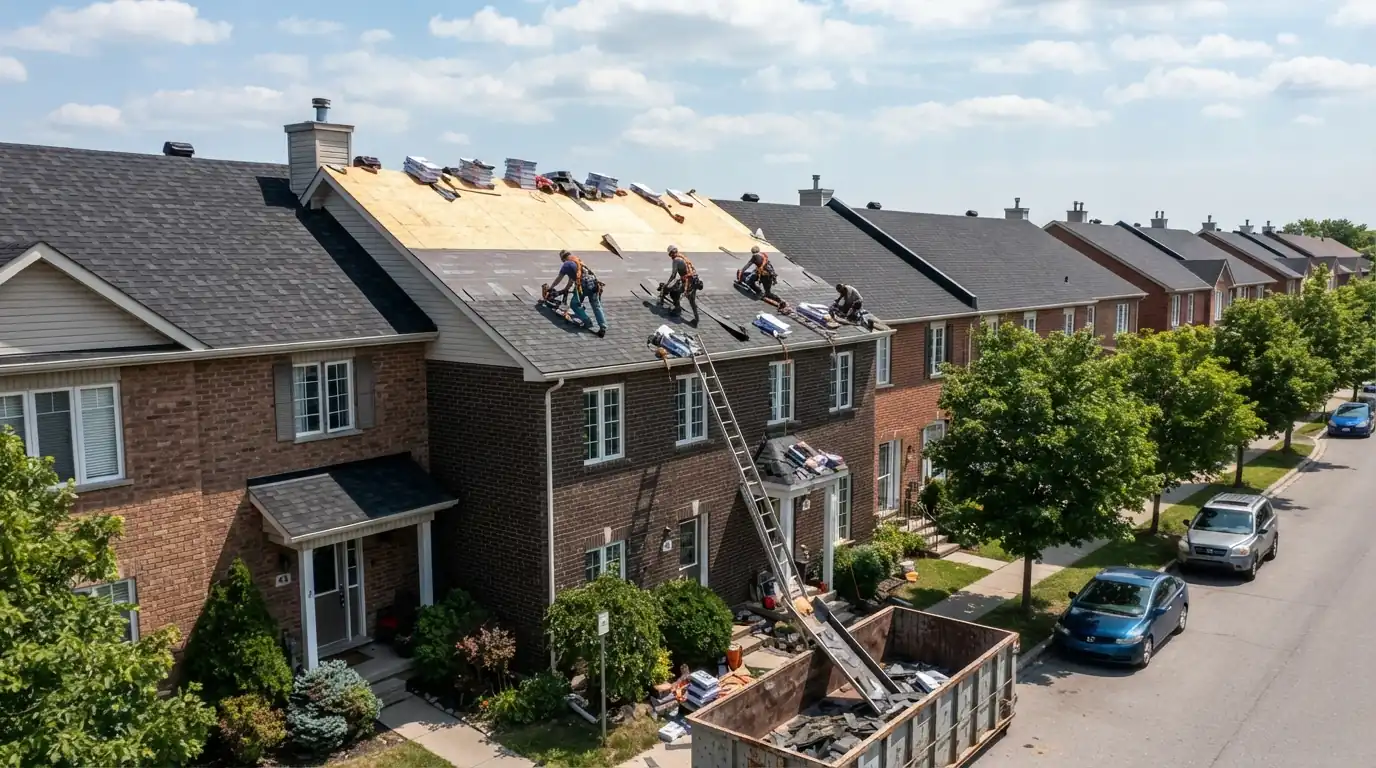
Townhome and condo complexes are usually pitched shingle or tile roofs over attached units. We scope each building separately, match materials and colors across the complex, and schedule building by building so each one is torn off and closed up in its own window. Residents get notice of their building's dates, cars are moved only for their days, and every unit's attic and ceiling is photographed before and after, which settles questions later. Gutters and downspouts are replaced building by building at the same time when they are due.
Apartment building flat roofs
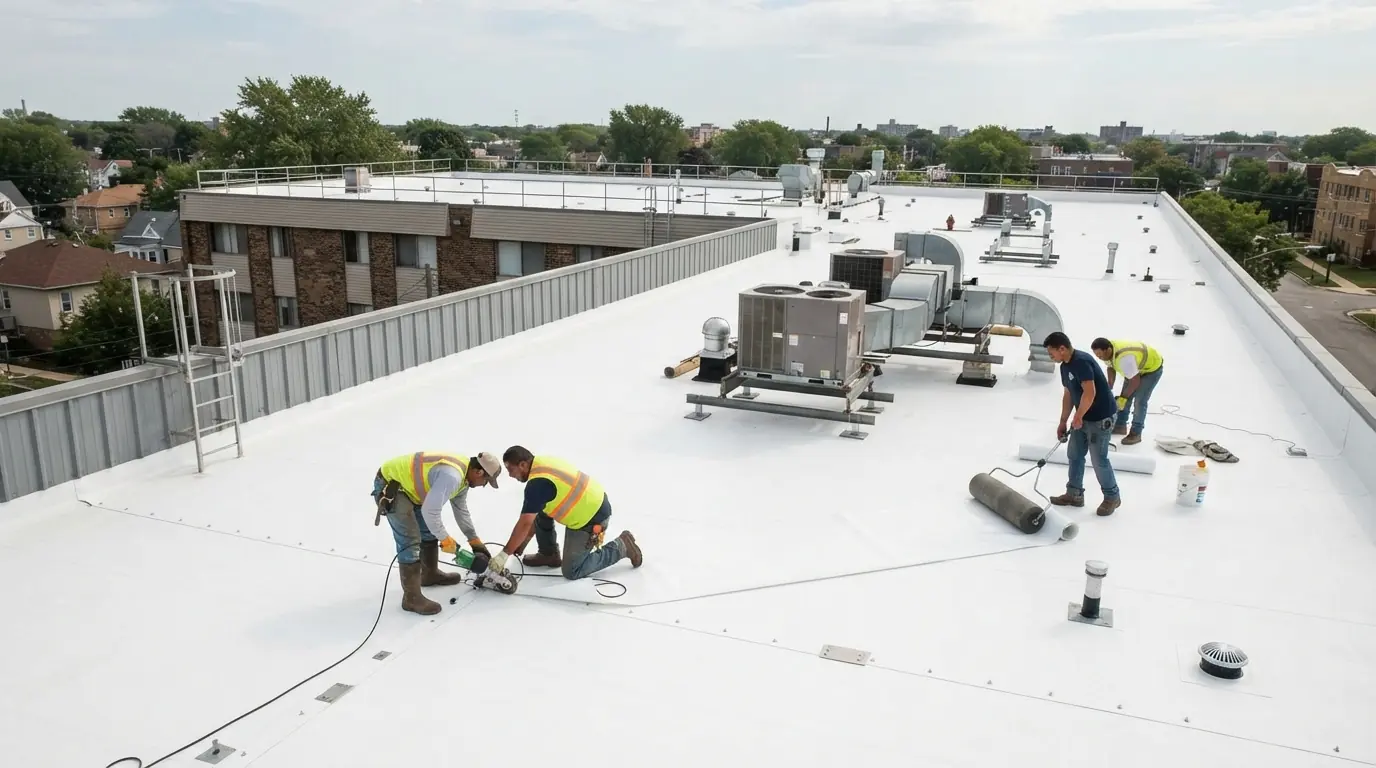
Apartment buildings more often carry flat or low-slope roofs with rooftop equipment, drains and parapets. We repair or replace them in single-ply or modified bitumen, coordinate with the HVAC contractor for units that must be lifted, and keep the roof watertight every night because there are occupied units directly below. Drain and scupper service is part of every visit, since a blocked drain on a flat roof affects several units at once. Tenants get notice of noisy days, and roof access is kept away from common areas where possible.
Reserve study and bid support
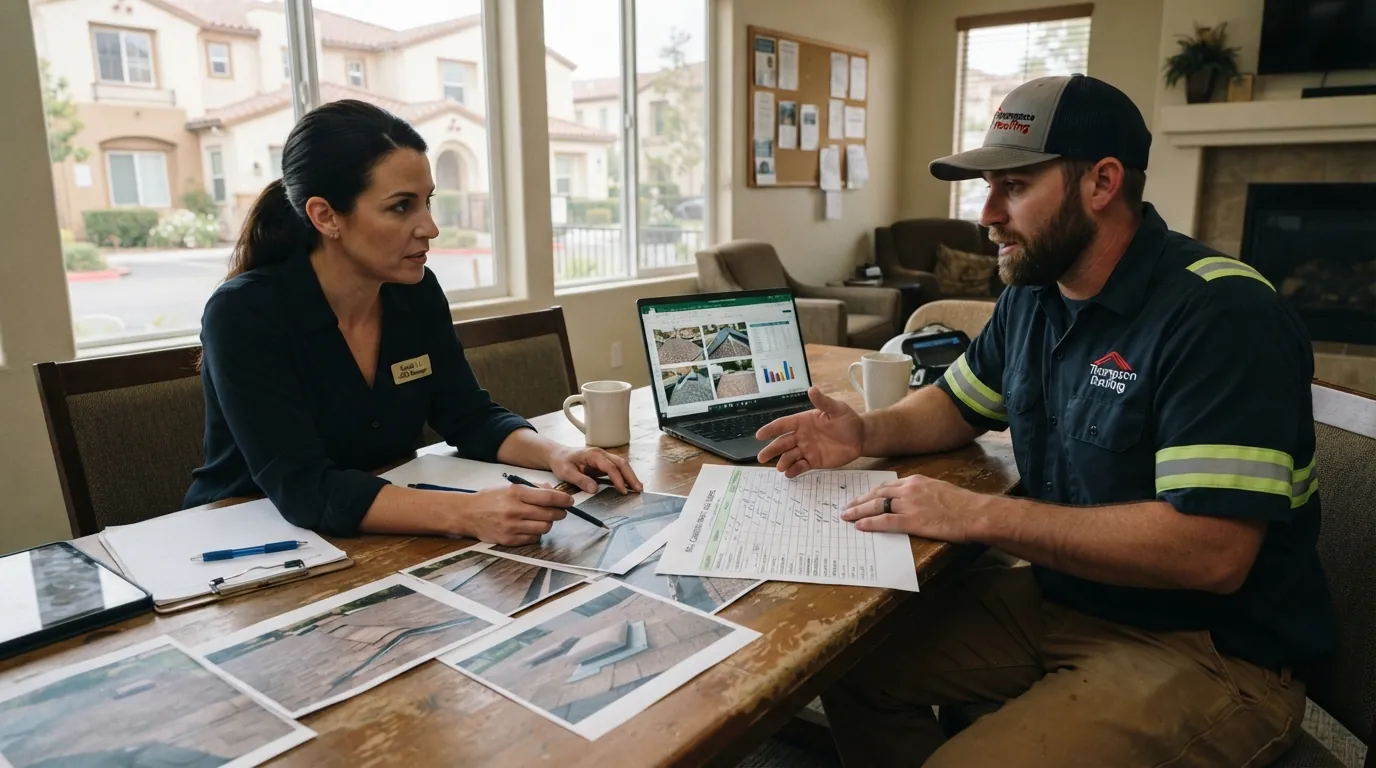
Boards plan roof work years ahead through their reserves. We provide condition surveys with photos, estimated remaining life by building, and priced options that a reserve specialist or the board can use. Bids are written line by line so they can be compared with other contractors' honestly. When a building can wait, the report says so, which is as useful to a board as knowing which one cannot. Surveys are repeated at the interval the board chooses, so the photos show how each roof is aging.
Cost
What an HOA or multifamily project costs depends on
Complex projects are priced by building and roof section so boards can phase them.
- Number of buildings Each is scoped and priced on its own.
- Roof types Shingle, tile and flat sections priced separately.
- Decking and rot Allowances per building, documented with photos.
- Rooftop equipment Units lifted and reset with the HVAC contractor.
- Phasing Work spread across seasons or budget years.
- Access and staging Parking, material drop zones and resident notices.
What we see on San Jose roofs
About one in nine homes in San Jose is an attached home such as a townhouse or duplex, with a large share of the rest in multifamily buildings, so a good deal of the city's roofing sits under an HOA or a property manager. Permitted re-roofs on those buildings go through Title 24 cool-roof review, which San Jose enforces at a moderate level, so the rated product documentation for each building is assembled with the permit rather than scrambled together at inspection.
Scope
What an HOA roofing scope includes
The items boards and managers ask us for most.
- Condition survey with photos for each building
- Scope and price by building and roof section
- Material and color schedule across the complex
- Permit and Title 24 documentation per building
- Resident notice and parking plan
- Daily dry-in and cleanup
- Closeout package with photos and paperwork
What happens after you call
How a complex project runs
- 1
Condition survey
Every building walked and photographed.
- 2
Scope and bid
Priced by building, line by line.
- 3
Board review
Questions answered at a meeting if useful.
- 4
Permits and notices
Filed per building; residents notified.
- 5
Phased work
Building by building, closed up nightly.
- 6
Closeout
Photos, warranty paperwork and maintenance notes.
Timeline
How long a complex takes
A single townhome building usually takes a few days; a whole complex is scheduled building by building over several weeks. Phasing across seasons or budget years is common, and the schedule is agreed with the board or manager before the first building starts.
Brands we install and service
FAQ
Questions we get asked
Yes. Our bids are line by line so the board can compare them fairly.
Yes, and we price each section separately.
Notices by building, parking plans, and a single contact for questions.
Yes. Scopes are written so buildings can be phased with the reserves.
Yes, with photos and estimated remaining life by building.
Same category
Related roofing work
Commercial Roof Repair
Membrane, built-up and drain repairs on commercial and multifamily roofs.
Learn moreCommercial Roof Replacement
TPO and PVC installs and recovers scheduled around tenants.
Learn moreRoof Coating
Silicone and acrylic coatings that extend a sound flat or metal roof.
Learn moreCommercial Roof Maintenance
Scheduled inspections, drain service and written reports.
Learn moreTalk through your complex's roofs
Tell us about the buildings and the timeline. We survey, scope by building and bring a bid the board can compare.