Inspections & Maintenance
Roof certification for San Jose home sales
A lender, a buyer or an escrow officer wants a piece of paper that says the roof will keep water out. We inspect, list what needs fixing, do the repairs and issue the certification.
What we treat
- Concrete and clay tile
- Composition shingle
- Flat, torch-down and TPO
- Spray foam
- Standing seam metal
Quick answer. A roof certification in San Jose is a roofer's written statement that a roof is free of active leaks and expected to perform for a stated period, issued after an inspection and any repairs it calls for. Most certifications are completed within a week of the inspection, sooner when escrow is tight.
Updated September 2026
The job
What a certification covers and what it does not
A certification states that the roof is watertight today and should stay that way for the period written on it, commonly two to five years depending on its condition. It is not a warranty on a new roof and does not cover storm damage, and we say exactly what it covers on the document.
If the inspection finds problems, the roof is certified after they are fixed. Some roofs are too far gone to certify; you hear that plainly, with photos, so the price can be negotiated rather than discovered after closing.
Jobs this page covers
Certification for a home sale
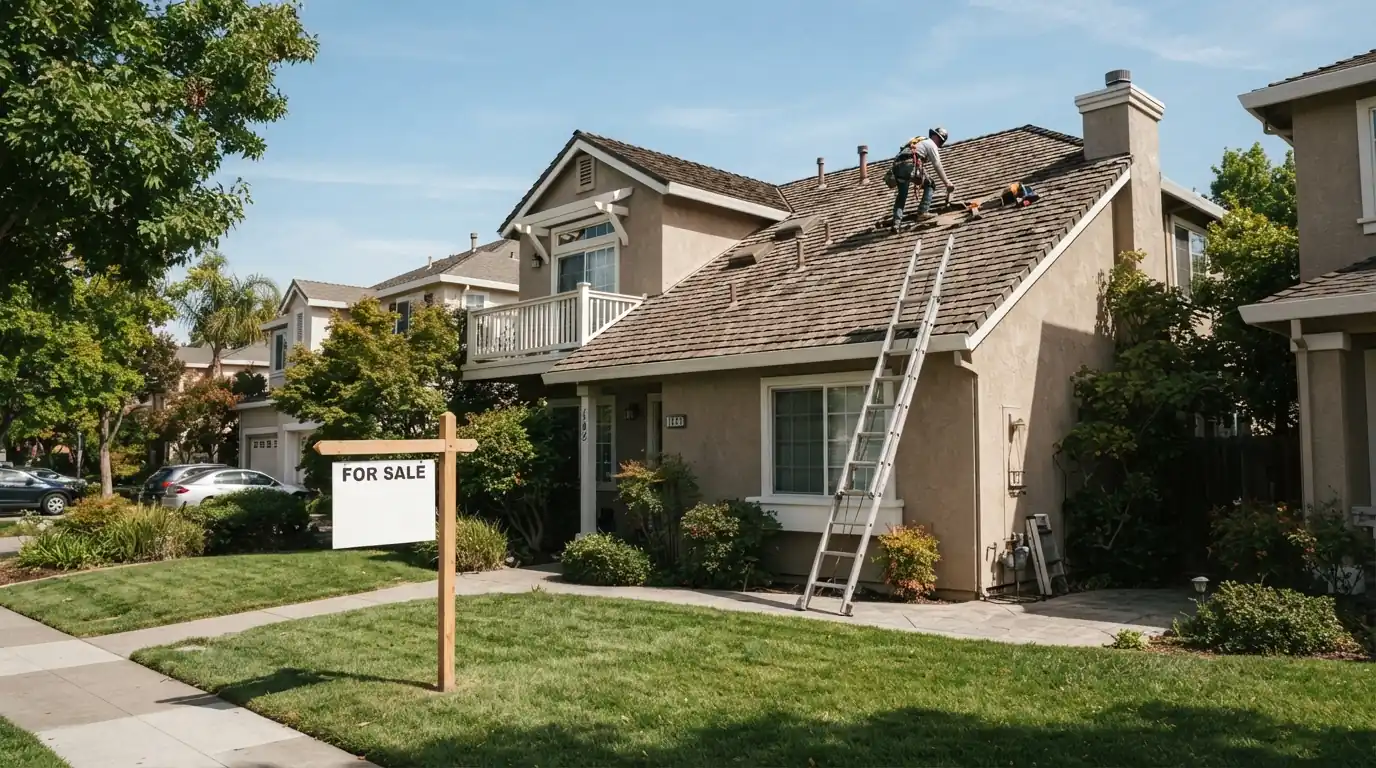
Sellers usually order the certification before listing so the roof is not a surprise in the buyer's inspection. Buyers order one during the contingency period to know what they are taking on. Either way the inspection covers the covering, flashing, penetrations, valleys, gutters and the attic underside, with photos of every item and a written list of what must be done before we sign. Certifying before listing also gives a seller time to fix things at normal pricing, not in the last week of escrow.
Repairs required before certification
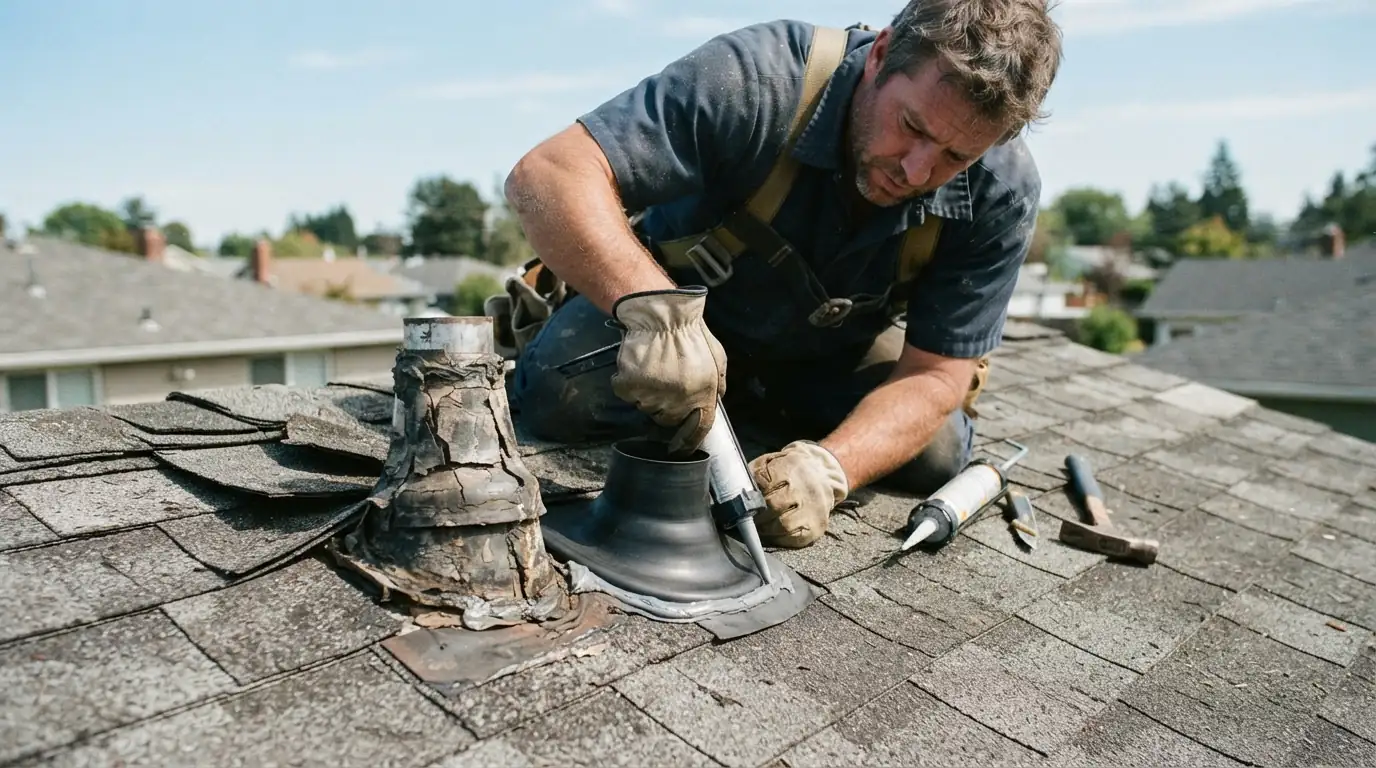
Typical pre-certification repairs are small: pipe boots, cracked or slipped tiles, lifted shingles, open flashing at a chimney or wall, and clogged valleys. Each is priced on the inspection report, and the certification issues once they are done and rechecked. When the list gets long, we price a replacement alongside it so the parties can decide which makes more sense before the deadline. Repairs by another roofer can be accepted, but we recheck them before signing, because the certification carries our name.
Lender and escrow paperwork
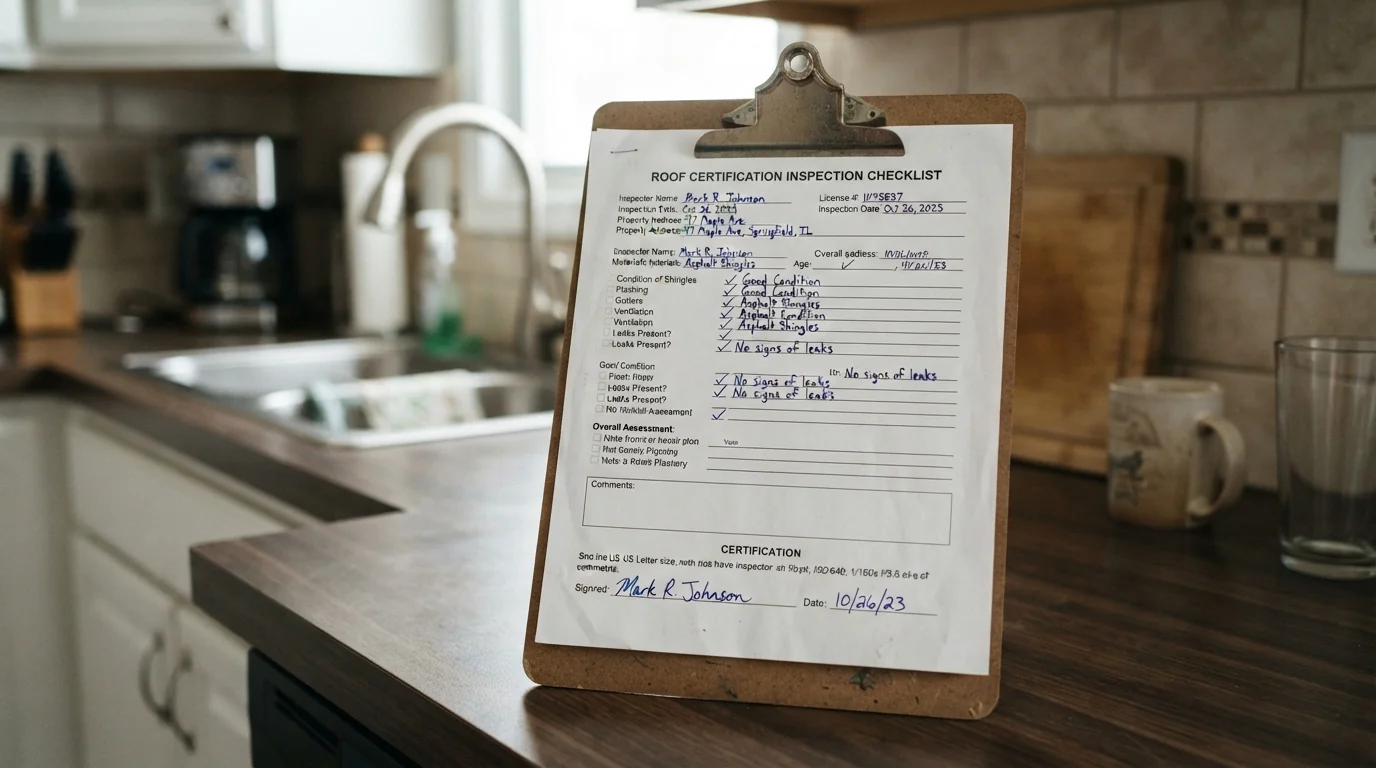
The certification states the property address, the roof type, the date of inspection, what was repaired, and the certified period. We send it to whoever you name, the agent, escrow or the lender, and keep the photo set on file in case a question comes up later. Rush timelines are common in escrow; tell us the closing date on the first call. If a buyer's inspector questions an item later, those photos usually answer it faster than another visit to the roof.
Scope
What the inspection checks
Every certification inspection covers these points and photographs each one.
- Covering condition and remaining life
- Flashing at walls, chimneys and skylights
- Pipe boots, vents and other penetrations
- Valleys, ridges and hips
- Gutters and downspouts
- Attic underside, decking and stains
- Evidence of past leaks and repairs
What happens after you call
How a certification runs
- 1
Schedule
Give us the address, the closing date and who needs the paperwork.
- 2
Inspect
Roof, flashing, gutters and attic, photographed.
- 3
Report
Pass, or a priced list of required repairs.
- 4
Repair
Items done on the report, usually within days.
- 5
Recheck
We confirm the repairs and the roof overall.
- 6
Issue
Certification sent to agent, escrow or lender.
What we see on San Jose roofs
With San Jose's median home built around 1976, most houses changing hands here are on their second or third roof, and plenty carry an older overlay. That is why the certification inspection spends time in the attic looking at the deck, not only at the shingles. Most pre-sale repairs stay well under the city's 25 percent threshold, so they need no permit and do not hold up escrow; if the report points toward a larger re-roof, we flag the permit timeline early.
Timeline
How long certification takes
The inspection takes one to two hours. A roof that passes is certified within a day or two. When repairs are needed, most are done within the week, and the certification follows the recheck; tell us the closing date and we schedule backward from it.
Cost
What a certification costs depends on
The inspection is a set visit; repairs are priced line by line on the report.
- Roof size and type Tile and multi-level roofs take longer to inspect.
- Repair list Each required item is priced separately.
- Certified period A longer period needs a roof in better condition.
- Attic access A hatch in a closet is quicker than no access at all.
- Rush timing Tight escrow dates may need a weekend visit.
- Re-inspection Included when repairs are ours; extra when done by others.
FAQ
Questions we get asked
No. A home inspector looks at the whole house briefly; a roofer inspects the roof in detail and stands behind a written statement about it.
Whoever the purchase contract says. Sellers often pay to avoid renegotiation later.
No. A roof near the end of its life may need replacement first. You get photos and a price either way.
The period is written on it, commonly two to five years depending on condition.
Yes, all the roof types we work on.
Same category
Related roofing work
Roof Inspection
A roof and attic walk with photos, before the rains or before a purchase.
Learn moreRoof Maintenance
An annual tune-up: sealants, boots, debris and minor resets before winter.
Learn moreRoof Cleaning
Debris, moss and algae cleared without damaging tile or shingle.
Learn moreAttic Ventilation
Ridge, soffit and ember-resistant vents sized for the attic.
Learn moreClosing soon? Book the inspection
Tell us the address and the closing date. We inspect, price anything required, and get the paperwork to escrow on time.