Commercial Roofing
Commercial roof maintenance programs in San Jose
Most commercial roof failures start as small, visible problems that nobody went up to see. A scheduled visit twice a year finds them while they are cheap, and leaves a record the owner, the manager and the warranty holder can all use.
What we treat
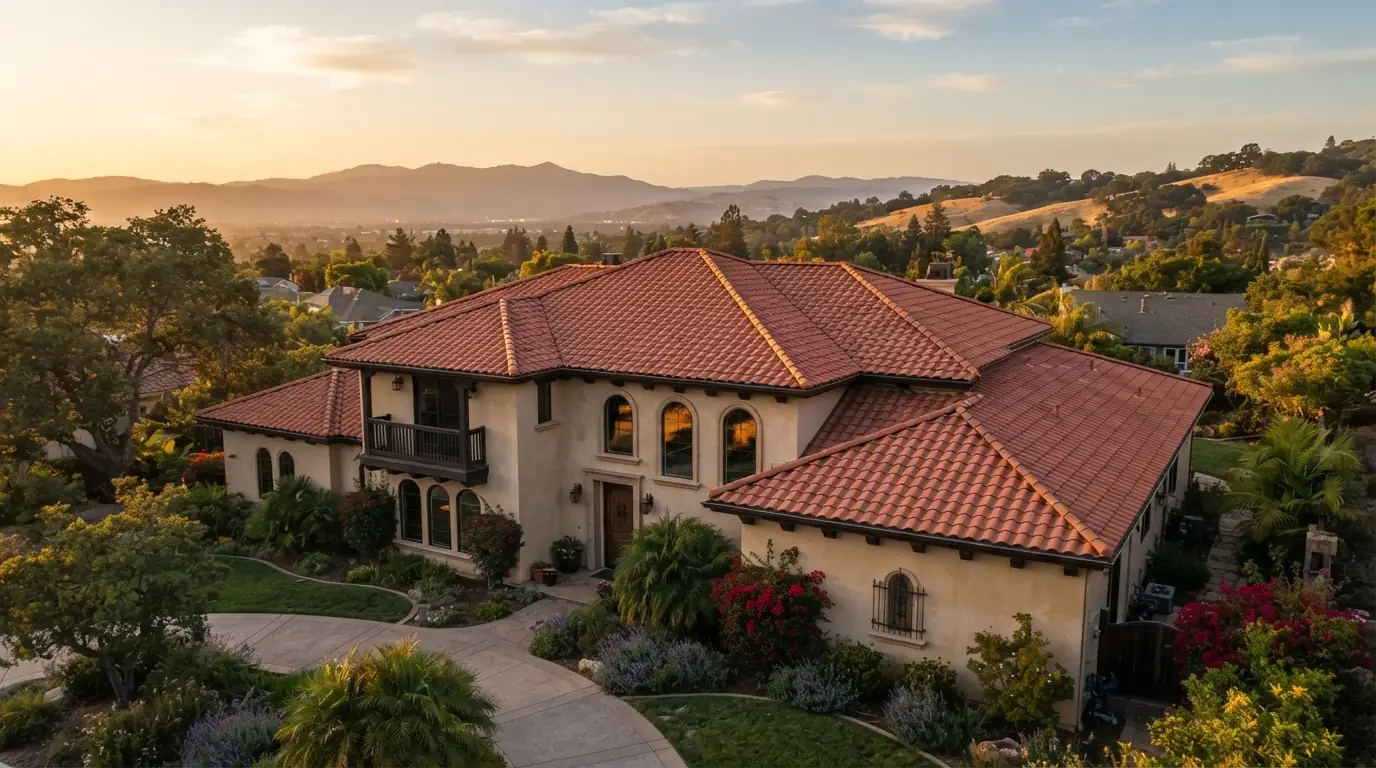
- Concrete and clay tile
- Composition shingle
- Flat, torch-down and TPO
- Spray foam
- Standing seam metal
Quick answer. Commercial roof maintenance in San Jose is a scheduled program, usually two visits a year before and after the rainy season, that clears drains and debris, reseals seams, curbs and flashing, fixes small defects on the spot, and documents the roof's condition in a written photo report for the owner or property manager.
Updated September 2026
The job
What a maintenance program covers
Every visit follows the same walk: field membrane, seams, perimeter and parapets, every curb and penetration, and every drain and scupper. Small items like a loose termination bar or an open pitch pan are fixed on the spot within an agreed dollar limit; anything larger goes on the report with a price.
Over a few years the reports become the roof's history, which is what makes budgeting for replacement a plan instead of a surprise.
Jobs this page covers
Semi-annual inspections with reports
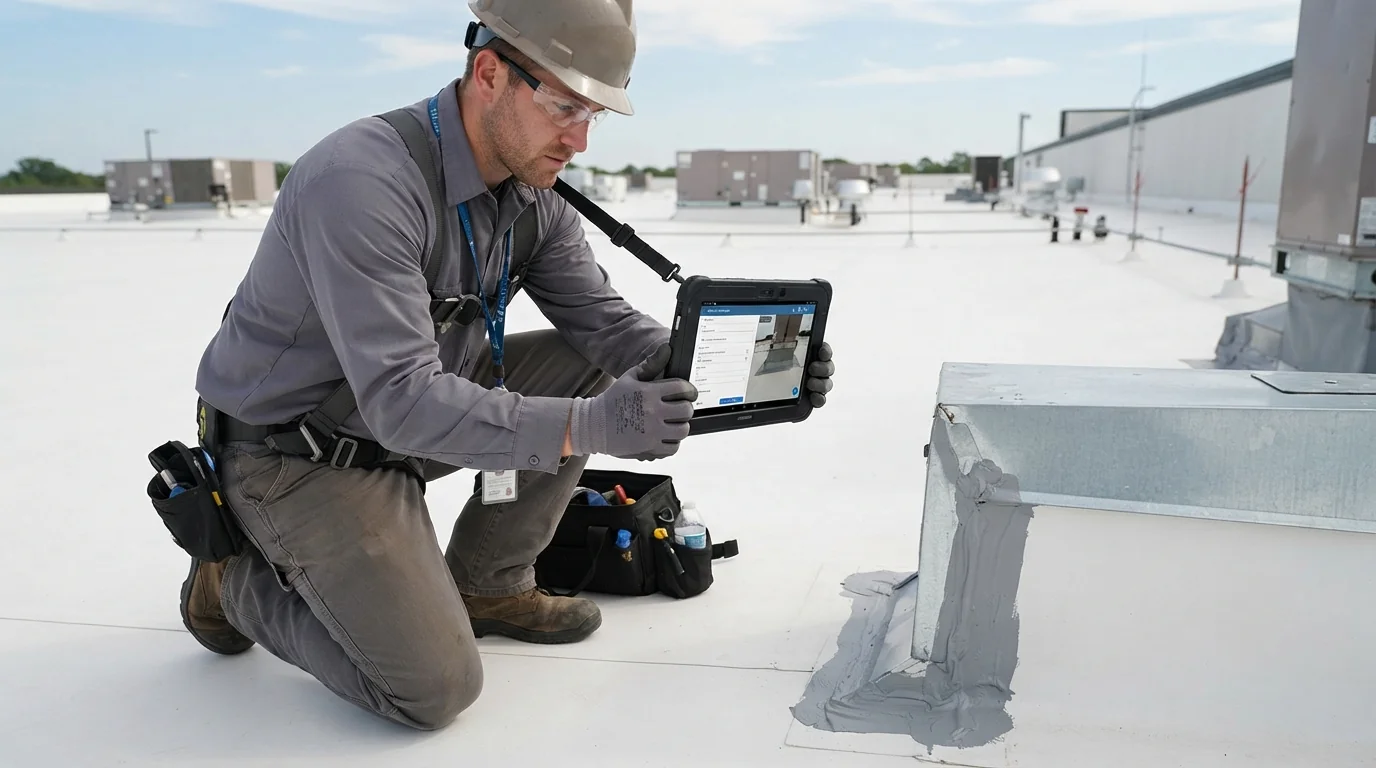
The fall visit gets the roof ready for the rain; the spring visit checks what the rain did. Each report lists the roof's condition by area, numbered photos, what was repaired on the visit, and a priced list of recommended work sorted by urgency. Reports go to whoever you name, and we keep the history so a new manager can see how the roof has aged. The format stays the same from visit to visit, so changes are easy to spot.
Drain and debris service
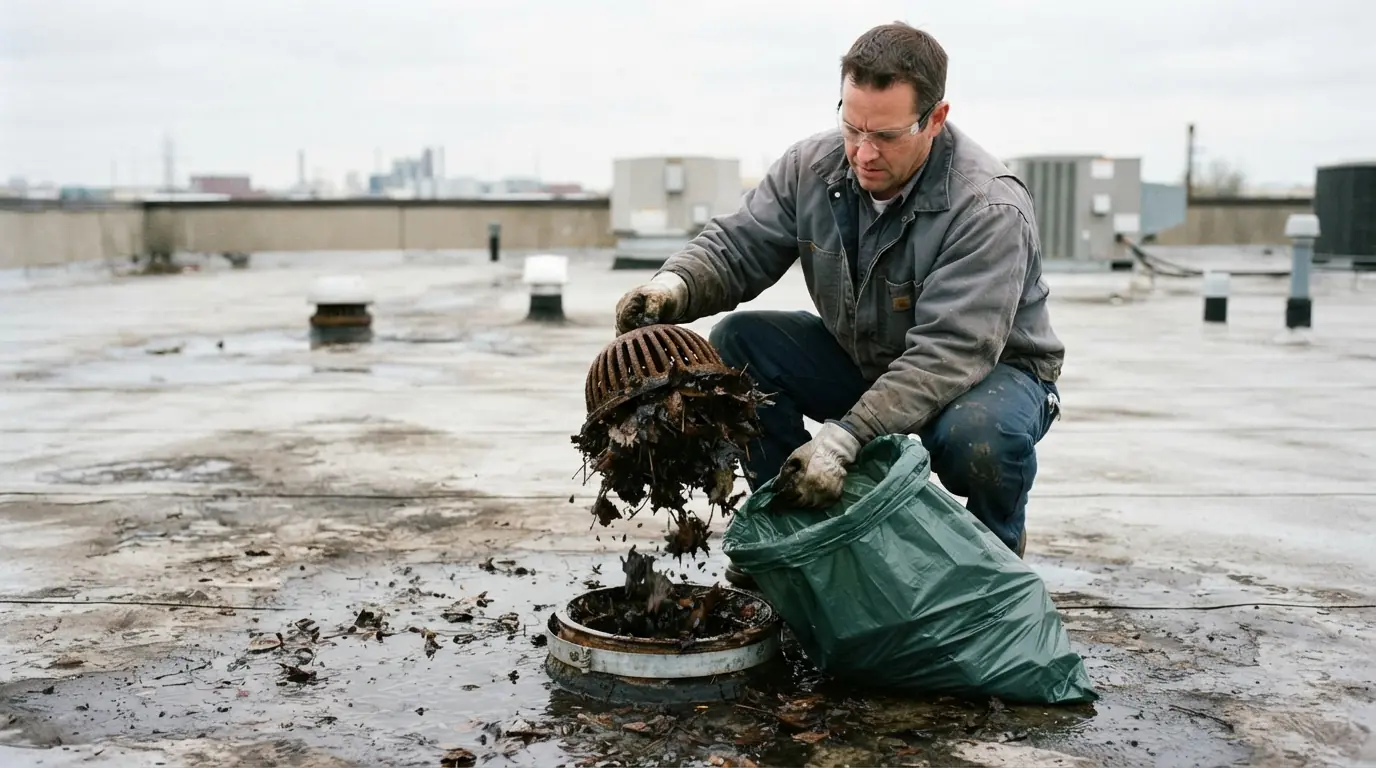
Drains and scuppers are cleared and flushed, strainers replaced where missing, and debris bagged off the roof. Leaves, packing material and trash from service calls collect around rooftop units and against parapets, and they hold water against the membrane for days. On roofs under trees we schedule an extra clearing in late fall, because a single blocked drain in the first storm can put inches of water over a large area of the roof. Overflow scuppers are checked too, since they are the backup when a drain fails.
Seam and flashing resealing
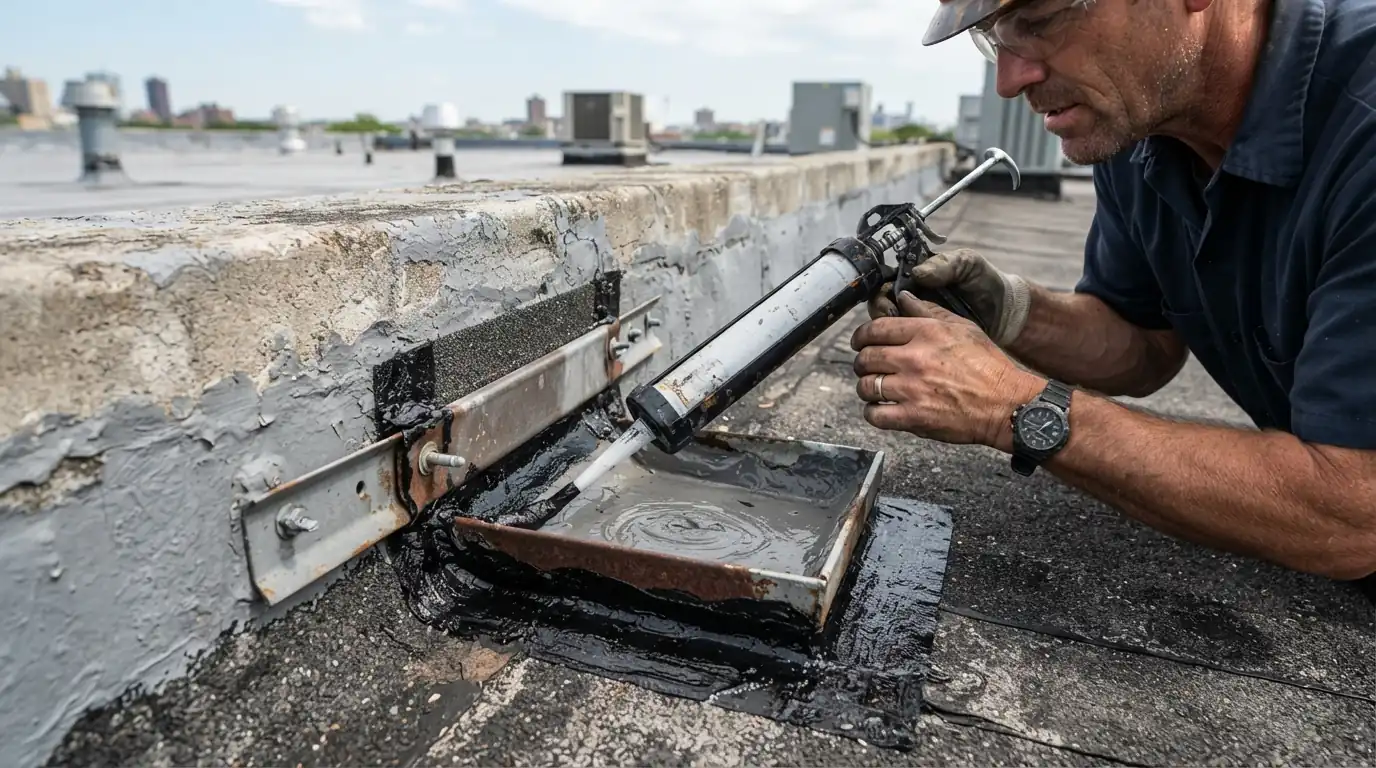
Seams opened by traffic, termination bars pulled loose, pitch pans shrunk away from their pipes and counterflashing slipped out of its reglet are the small defects that turn into leaks. We reweld or patch in the same membrane, refill and hood pitch pans, and reset termination bars with new sealant. Each fix is photographed before and after, so the report shows exactly what changed between visits and why. Walk pads worn through along service paths are replaced so the membrane beneath stops wearing.
Warranty-compliant maintenance records
Many manufacturer warranties require the owner to maintain the roof and keep records, and some void coverage when unauthorized repairs are made. Our reports are dated, photographed and tied to the specific areas of the roof, and repairs use the same membrane and the manufacturer's details. When a warranty claim comes up, the owner has a clean record to hand the manufacturer, and we can walk their inspector through the history on site. Owners switching roofers mid-warranty get a baseline report first, so the record starts clean.
Scope
What every maintenance visit includes
The same walk every time, so reports can be compared.
- Field membrane walked and photographed
- Seams and laps checked
- Perimeter, parapets and coping inspected
- Curbs, pitch pans and penetrations resealed as needed
- Drains, scuppers and strainers cleared
- Debris removed from the roof
- Written photo report with priced recommendations
What happens after you call
How the program runs
- 1
Baseline survey
First visit documents the whole roof.
- 2
Set the schedule
Visits booked before and after the rains.
- 3
Walk and clear
Drains, debris and every detail checked.
- 4
Fix small items
Within the agreed on-site limit.
- 5
Report
Photos, repairs made and priced recommendations.
- 6
Plan ahead
Budget notes for the next few years.
What we see on San Jose roofs
With roofing labor in San Jose averaging around $94 an hour, above the national average, the numbers favor catching problems small. A resealed curb flashing on a scheduled visit is a few minutes of work already paid for by the trip; the same curb found after it has soaked the insulation beneath is a membrane cut, a board replacement and a separate service call. Most programs we run pay for themselves by the second rainy season.
Cost
What a maintenance program costs depends on
Programs are priced per visit by roof area and complexity, with an agreed limit for on-the-spot repairs.
- Roof area Larger roofs take longer to walk and document.
- Equipment count More curbs and penetrations to check and seal.
- Visit frequency Two visits a year is typical; tree cover may add one.
- Repair allowance Small fixes done on site up to an agreed amount.
- Access Hatches, ladders and escort requirements.
- Report distribution Multiple owners or managers on the list.
Your options
How often should a commercial roof be serviced?
Most buildings do well on two visits a year.
| Question | Twice a year | Quarterly | Only after problems |
|---|---|---|---|
| Best for | Most offices and retail | Restaurants, heavy tree cover, busy equipment | Not recommended |
| Drains cleared | Before and after the rains | Every season | After a leak |
| Warranty records | Consistent | Consistent | Gaps |
| Cost over time | Low and predictable | Higher, fewer surprises | Lowest until the first big leak |
FAQ
Questions we get asked
Twice a year for most buildings, plus after any major storm.
Small items within an agreed limit, yes. Larger work is priced on the report.
Yes. They are dated, photographed and tied to specific areas of the roof.
Yes. The first visit documents it as it is.
Yes, and we flag equipment issues we see so the right trade gets called.
Same category
Related roofing work
Commercial Roof Repair
Membrane, built-up and drain repairs on commercial and multifamily roofs.
Learn moreCommercial Roof Replacement
TPO and PVC installs and recovers scheduled around tenants.
Learn moreRoof Coating
Silicone and acrylic coatings that extend a sound flat or metal roof.
Learn moreHOA & Multifamily Roofing
Condo, townhome and apartment roofs, bid and phased for boards and managers.
Learn moreSet up a maintenance program
Tell us the building and roof type. We do a baseline survey, set the schedule and send the first report.