Roofing guide
Roof permits in San Jose: when you need one and how it works
Most small repairs need no permit at all. Most re-roofs do. The line between them is a simple percentage, and a few other rules decide what the application has to show.
By Norman Eastwood, Roofing Guides Editor. Updated September 2026.
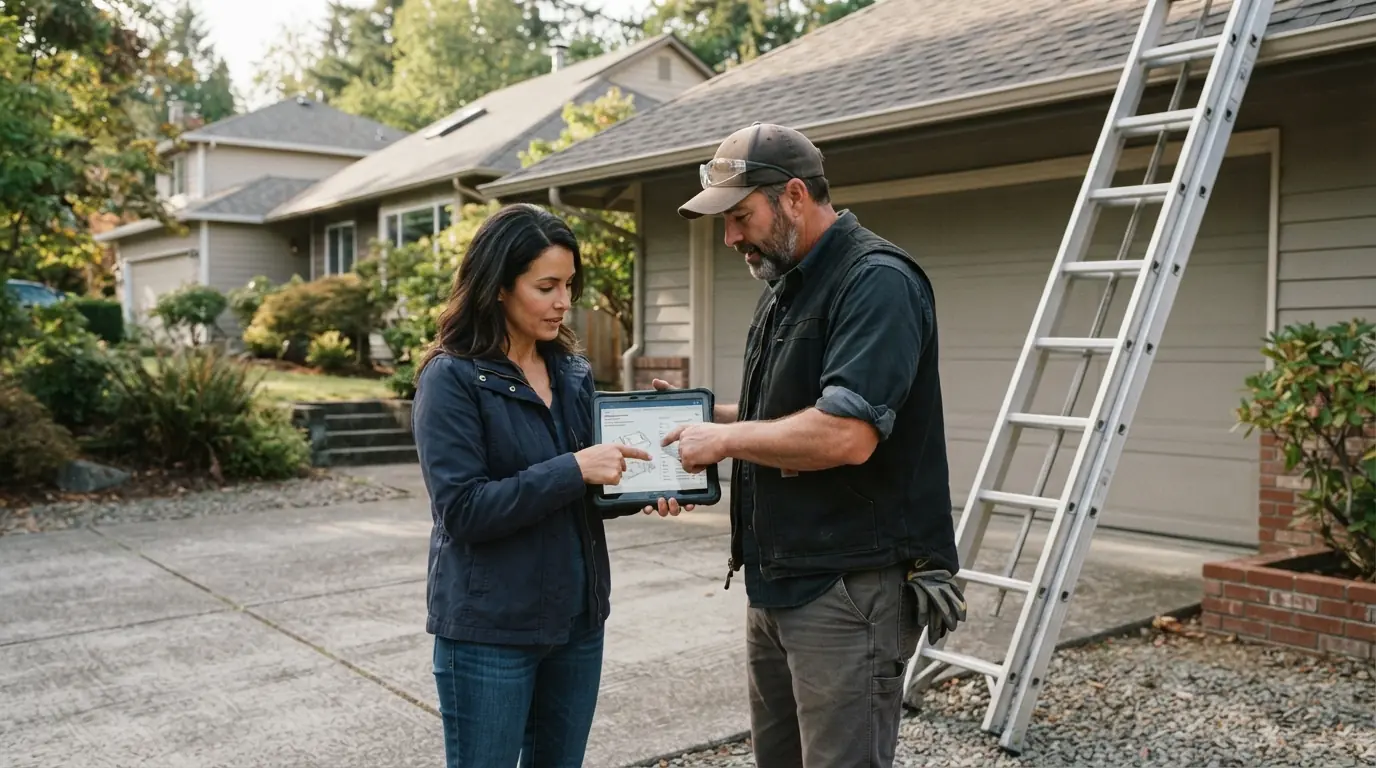
Quick answer. San Jose requires a reroof permit when 25 percent or more of a roof is replaced in any 12-month period; anything smaller counts as a repair and needs no permit. Each structure needs its own permit, except that a single-family home and its detached garage can share one. Most reroof permits are applied for online through SJPermits.
The 25 percent rule
The city draws the line at 25 percent of the roof replaced within any 12-month period. Below that, the work is a repair: a leak fix, a few squares of shingle, a tile section relaid. At or above it, the work is a reroof and needs a permit, a final inspection and compliance with the current code for roofing.
The 12-month window matters. Two repairs of 15 percent each, six months apart, add up to a reroof in the city's eyes. If you are patching the same roof repeatedly, the permit question comes up sooner than you might expect.

Each structure is its own permit
A permit covers one structure. A detached garage, a studio or an accessory unit with its own roof needs its own permit if its re-roof passes the threshold. The exception is a single-family home and its detached garage, which can be re-roofed under one permit. For complexes with several buildings, that means one permit per building, which is worth knowing when planning an HOA project.
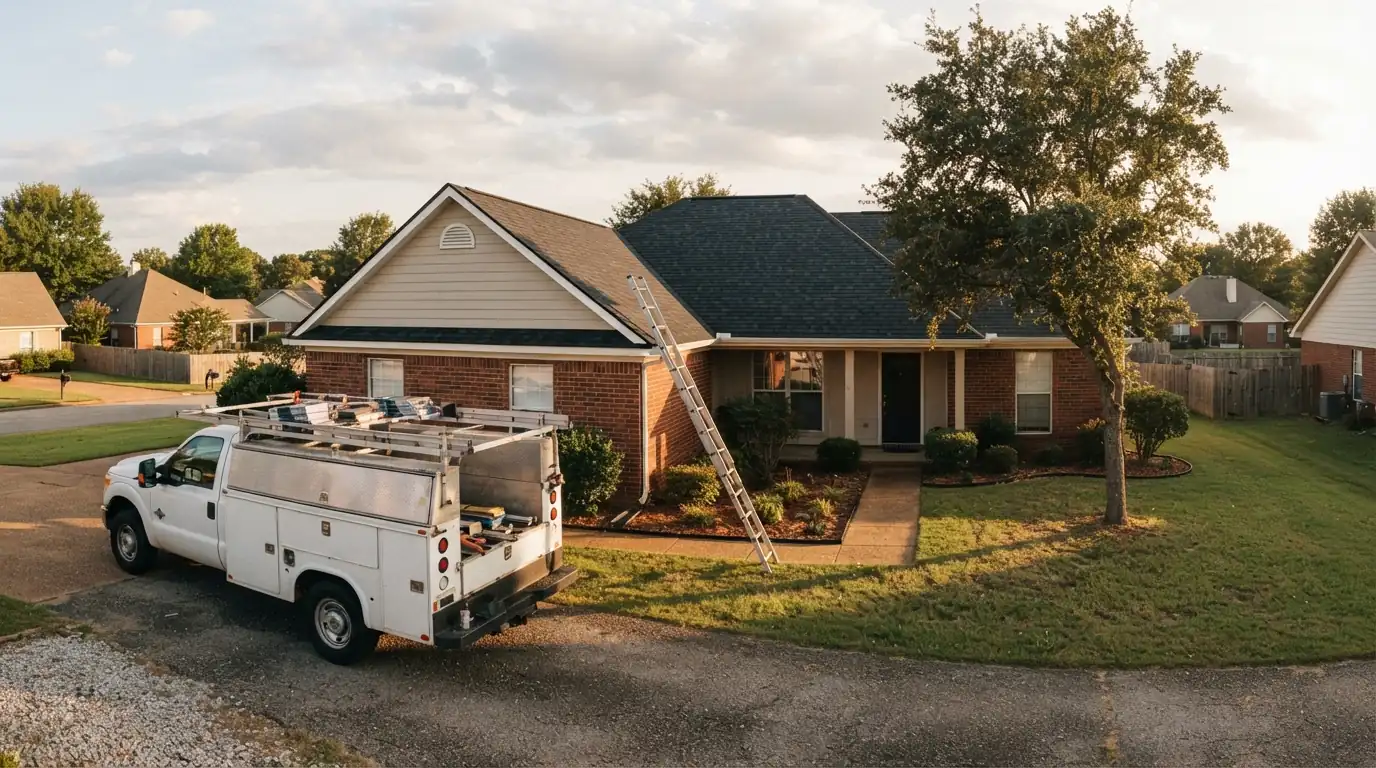
Not sure whether your job needs a permit? Call and we will tell you.
(669) 259-7490What the application asks for
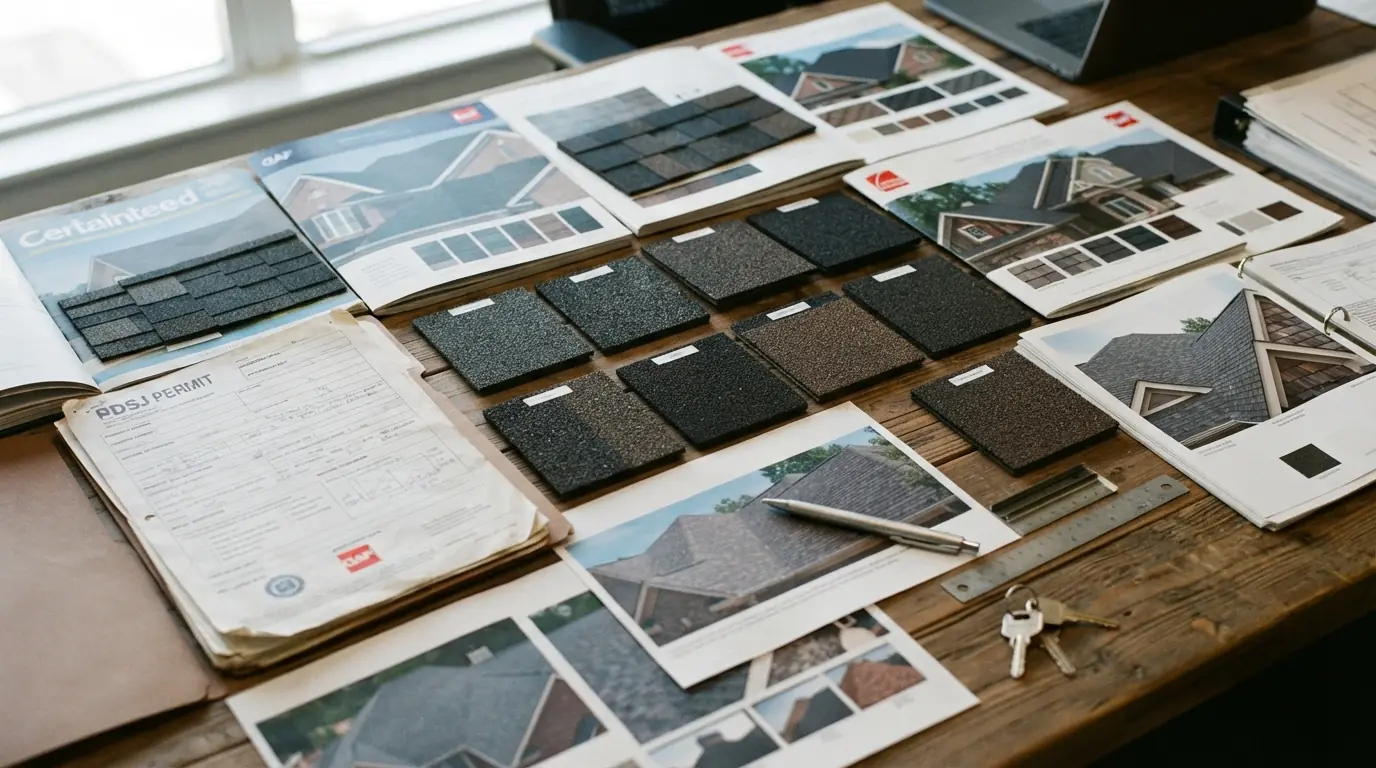
Most reroof permits go through SJPermits.org. When a project needs Planning or Building review instead, the city asks for photos of the existing roof, the existing roofing material, the proposed product's manufacturer, style and color, and a completed reroof worksheet. The worksheet also asks for the minimum fire class required and the fire class of the new roof.
Homes in historic districts need Planning clearance first. There, the new roof should match the scale, color and texture of what was used historically, and the city notes that black and dark gray are generally not appropriate.
The code checks that come with a permit
A permitted re-roof has to meet today's code, not the code the house was built under. Three checks come up most. Title 24 sets cool-roof reflectance values for most permitted re-roofs, with full compliance triggered when more than half the roof is replaced in 12 months. Homes in mapped Fire Hazard Severity Zones need a Class A roof assembly. And if the new roofing pushes total weight above 7 pounds per square foot, the city requires an engineering analysis of the framing before the permit issues.
Our guides on Title 24 cool roofs and Class A roofs in fire zones cover the first two in detail.
What the permit costs and who should pull it
Published cost guides put San Jose reroof permit fees at roughly $400 to $800, and one calculator lists the county reroof permit at about $241 for unincorporated addresses. The contractor doing the work should file the permit, list the product and its ratings, and schedule the final inspection. An offer to skip the permit is a red flag: unpermitted work tends to surface at sale time, and it leaves you without the city's inspection of the job.
Our roof replacement scopes include the permit, and we attend the final.
FAQ
Roof permit questions
Not for repairs under 25 percent of the roof in a 12-month period.
Yes, when 25 percent or more is replaced within 12 months.
A detached garage can share the house's permit on a single-family property; other structures need their own.
Most reroof permits are applied for through SJPermits.org.
You need Planning clearance first, and the roof should match historic scale, color and texture.
When the new roofing weighs more than 7 pounds per square foot in total.
The contractor should file it and schedule the final inspection.